




A Taste of Tradition
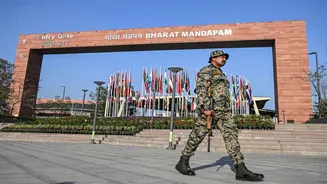
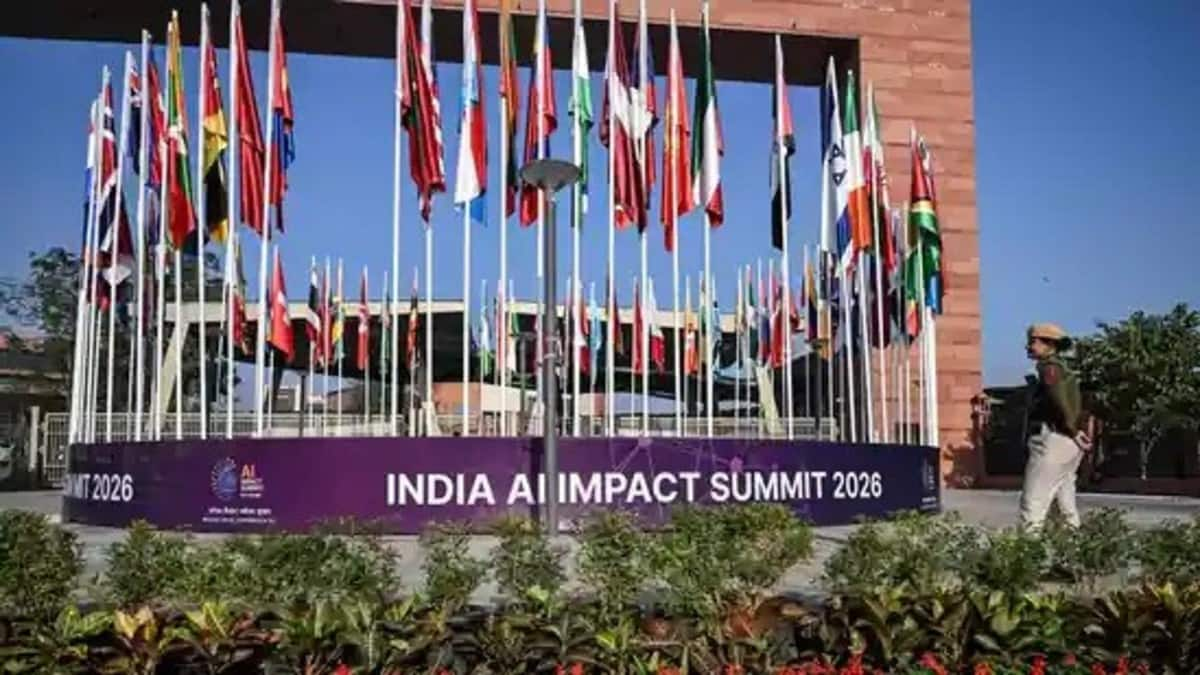
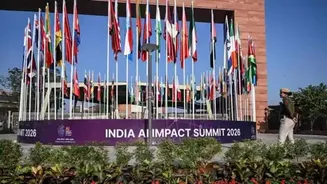
The India-AI Impact Summit 2026 hosted a special dinner at Bharat Mandapam, where Prime Minister Narendra Modi treated global dignitaries to a menu that
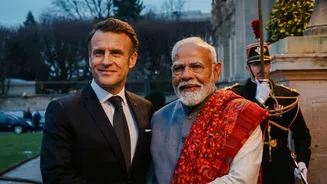
beautifully merged India's deep-rooted farming practices with its advancements in artificial intelligence. This culinary experience, orchestrated by ITC Group, was themed around 'Shishir Ritu,' the traditional Indian winter season, embodying the philosophy of 'Vikas bhi, Virasat bhi' – development alongside heritage. The selection of dishes focused on locally sourced millets and produce designated with Geographical Indication (GI) tags, aiming to provide nourishing and restorative flavors. Among the distinguished guests were French President Emmanuel Macron and Brazilian President Luiz Inácio Lula da Silva, alongside prominent figures in technology and policy from around the world, all gathered to explore the intersection of AI and India's future.
Vibrant Start: 'Varnila'
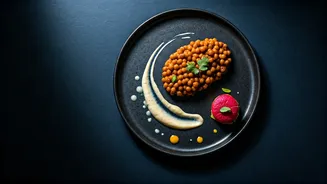
The culinary journey commenced with 'Varnila,' a starter designed to captivate the senses with a burst of color and texture, drawing inspiration from the bustling streets of Old Delhi. This artistic rendition of Indian street food featured delicate baby spinach crisps accompanied by smooth yogurt spheres. The dish offered a delightful interplay of sweet and tangy notes, expertly balanced with a combination of tamarind-date chutney and a refreshing cilantro relish. A finishing touch of classic Old Delhi masala and a crisp made from multifloral Jowar (Sorghum) millet added a unique and wholesome dimension. Each serving of 'Varnila' contained approximately 213 kcal per 100 g, providing an energizing beginning to the meal.
Main Course: 'Sasya'
The main course, aptly named 'Sasya' (The Harvest), was a profound tribute to the distinctive 'Pahadi' (mountain) flavors of the Kumaon region in Uttarakhand. Central to this dish was the celebrated Rajma Gilawat, prepared with the GI-tagged Munsyari Rajma, renowned for its exceptionally creamy consistency and subtle nutty essence. This was complemented by a fragrant pulao, a delightful medley of Pahadi rice and Jhangora (Barnyard Millet), offering a wholesome grain base. Accompanying this was Kumaoni Aloo Gutke, tender potato chunks seasoned with the aromatic Himalayan spice Jakhya, served alongside a smooth, tangy tomato-anari (pomegranate) sauce. This segment of the meal provided an average of 331 kcal per 100 g, showcasing the hearty and traditional tastes of the mountains.
Artisanal Breads
Accompanying the main course was a thoughtfully curated selection of artisanal breads, each representing a unique facet of India's diverse baking traditions. From Uttar Pradesh came Taftaan, a leavened flatbread infused with saffron, celebrated for its wonderfully light and flaky texture that melts in the mouth. Representing the flavors of the Kashmir Valley was Kashmiri Girda, a distinctive round bread characterized by its signature dimpled center, baked fresh to embody the spirit of the region. These breads offered a delicious and authentic complement to the main dishes, highlighting the craftsmanship and regional diversity inherent in Indian culinary arts.
Dessert: 'Nisarga'
The grand finale of the meal, titled 'Nisarga' (Nature’s Creation), presented a modern fusion that artfully combined beloved Indian sweets with sophisticated global pastry techniques. The standout dessert was the Rasmalai Tres Leches, a delectable creation featuring a chena cake sponge meticulously soaked in sweetened milk, offering a rich and creamy indulgence. This was artfully presented on a bed of Bajra (Pearl Millet) streusel, providing a delightful textural contrast, and accompanied by a vibrant winter berry preserve. Guests also had the option of enjoying traditional beverages like Kashmiri Kahwa, South Indian Filter Coffee, or Darjeeling Tea, with the evening concluding with an exquisite Indian Rose and Mishri Gulkand Chocolate Leaf, a modern take on the traditional Paan.
Millet Mission Highlight
The strategic inclusion of various millets – Jowar, Jhangora, and Bajra – throughout the dinner served a dual purpose: celebrating India's rich agricultural heritage and visibly supporting the nation's 'Millet Mission.' This conscious culinary choice sent a powerful message to the global leaders present, underscoring India's commitment to sustainable and climate-resilient farming practices. It demonstrated how these ancient grains, known for their nutritional value and low environmental impact, are integral to India's modern vision for food security, which is increasingly intertwined with advancements in AI. The menu acted as a tangible representation of India's innovative approach to addressing global challenges through a blend of tradition and technology.