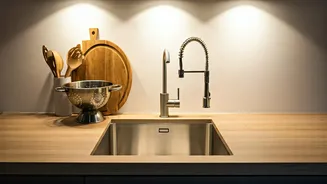







Sink Design Trends
The kitchen sink has evolved from a purely functional item to a statement piece. Several trends are shaping kitchen sink designs in 2025. One prominent
trend is the use of sustainable materials, reflecting a growing consumer interest in eco-friendly products. Stainless steel continues to be a popular choice due to its durability, ease of maintenance, and sleek appearance. However, there's also a rise in alternative materials like composite granite and quartz, offering unique textures and colors. Another key trend is the integration of smart technology. Some sinks now incorporate features like touchless faucets, built-in water filtration systems, and even integrated food waste disposals, creating a more streamlined and efficient kitchen experience. Furthermore, minimalist designs are gaining traction, with clean lines and simple shapes favored for their contemporary appeal. Undermount sinks are particularly popular, as they create a seamless look that's easy to clean, while farmhouse sinks remain a timeless choice, adding a touch of rustic charm.
Stainless Steel Sinks
Stainless steel sinks remain a favorite for their classic appeal and practical benefits. They're praised for their resilience and ease of care. In 2025, stainless steel sinks come in various styles. Consider a single-bowl sink for its simplicity and ample washing space, ideal for large pots and pans. Alternatively, a double-bowl sink offers the convenience of separate basins for washing and rinsing. The gauge of the stainless steel matters; a lower gauge (like 16 or 18) indicates thicker, more durable steel that is less prone to dents. Look for sinks with sound-dampening pads to reduce noise. Many models feature brushed finishes, which resist scratches and water spots, keeping your sink looking new for longer. Beyond their functionality, stainless steel sinks offer a modern aesthetic that complements any kitchen design. Their neutral tones blend well with various countertop materials and cabinetry styles, making them a versatile option.
Composite Granite Sinks
Composite granite sinks offer a unique blend of beauty and durability. These sinks are made from a mix of granite dust and acrylic resins, which results in a material that's highly resistant to scratches, stains, and heat. The composite nature of these sinks allows for a wide range of colors and finishes, allowing you to match your sink to your kitchen decor. Unlike stainless steel, composite granite sinks absorb sound, reducing noise. They are also non-porous, making them hygienic and resistant to bacteria. Installation typically involves either undermount or drop-in configurations. Undermount sinks create a seamless look, while drop-in sinks are easier to install and can be a good option for those on a budget. Consider the sink's depth and size to ensure it accommodates your typical kitchen tasks. Composite granite sinks offer a touch of elegance and are perfect for those seeking a durable, stylish, and low-maintenance option.
Quartz Composite Sinks
Quartz composite sinks share many of the benefits of composite granite sinks but often have an even higher quartz content, which enhances durability and aesthetic appeal. Quartz, known for its hardness and resistance, makes these sinks incredibly resilient to daily wear and tear. They are highly resistant to scratches, stains, and heat, making them an excellent choice for busy kitchens. Like composite granite, quartz composite sinks are available in a variety of colors and finishes, providing flexibility in design. They provide a sleek, modern aesthetic and seamlessly integrate into contemporary kitchens. The non-porous surface of quartz composite sinks prevents the growth of bacteria and is very easy to clean. Installation options mirror those of composite granite, with both undermount and drop-in styles available. Weigh the cost, the design possibilities, and the level of maintenance required when considering quartz composite sinks. They offer a premium feel and long-lasting performance.
Farmhouse Kitchen Sinks
Farmhouse sinks, also known as apron-front sinks, continue to be a stylish addition to many kitchens, offering a blend of traditional charm and modern functionality. These sinks feature a deep basin and a front panel that extends beyond the countertop. This design element adds a focal point to the kitchen and provides a comfortable workspace. Farmhouse sinks come in various materials, including stainless steel, cast iron, and fireclay. Fireclay sinks are particularly popular for their smooth, durable surfaces and resistance to chipping and staining. The deep basin provides ample space for washing large pots and pans, making them practical for everyday use. Installation requires careful planning, as the front apron must be properly supported. They pair well with classic and contemporary kitchen styles. Ensure you have adequate space, especially in smaller kitchens. They offer a warm, inviting feel.
Undermount Sinks Features
Undermount sinks are favored for their seamless appearance and streamlined functionality. These sinks mount beneath the countertop, creating a continuous surface that's easy to clean. Without a lip around the edge, you can sweep crumbs and spills directly into the sink, making them a practical choice for busy kitchens. They can be installed with various countertop materials, including granite, quartz, solid surface, and more. Consider the material of the sink when choosing an undermount model; stainless steel and composite materials are common choices. Stainless steel provides durability and a modern look. Composite options offer a range of colors. Proper installation is critical to ensure a watertight seal and prevent leaks. The undermount design provides a modern and clean aesthetic, fitting effortlessly into any kitchen. Think about the overall design of your kitchen and the countertop material before committing to an undermount sink. Their sleek appearance is a significant advantage.
Smart Sink Technologies
Smart sinks are emerging as a notable trend in kitchen design. These sinks integrate cutting-edge technology for enhanced convenience and efficiency. Touchless faucets are one such feature, activating the water flow with a wave of your hand, minimizing the spread of germs. Some smart sinks include integrated water filtration systems, providing clean, filtered water directly from the tap. Another innovation is the built-in food waste disposal unit. These units grind food waste, making it easier to manage and reducing the need for separate waste bins. Many models incorporate LED lighting, which can illuminate the sink area and add a touch of modern sophistication. Some smart sinks also connect to smart home systems, letting you control the faucet and other features via voice commands. While smart sinks can increase your initial investment, the added convenience and features can make them a great long-term choice.
Selecting the Right Sink
Choosing the right kitchen sink depends on individual needs and preferences. Start by considering the size and layout of your kitchen. Measure the available space and determine the maximum sink size. Consider your cooking and cleaning habits. A large family might benefit from a double-bowl sink, while someone who does a lot of dishwashing might prefer a single, deep basin. Think about the material. Stainless steel offers durability and a modern look, while composite options provide a wide array of colors. Factor in your budget. Prices vary widely depending on the material, features, and brand. Installation is another important factor. Undermount sinks require more complex installation. Finally, consider your personal style. Farmhouse sinks offer a classic charm, while sleek, undermount sinks create a modern look. Evaluate all these elements to choose a kitchen sink that perfectly combines functionality and style for your home.