
Budget Overview Announced
The Union Budget 2026, delivered by the Finance Minister, showcased the government's economic strategy. The budget aimed to propel India's development
trajectory by prioritizing infrastructure development, agricultural support, and enhancements to social welfare programs. These strategies were meticulously designed to stimulate economic expansion and improve the standard of living for all citizens. The plan incorporated significant investments in digital infrastructure, with an aim to boost technological advancements across several sectors. A strong emphasis on sustainable practices was also visible, suggesting a transition to a greener economy with increased investments in renewable energy initiatives and initiatives to address climate change. The government underscored its commitment to fiscal discipline while allocating resources for these critical growth drivers.
Infrastructure Boost Planned
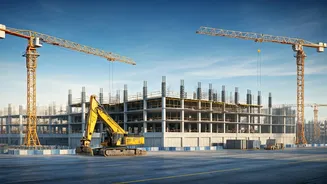
A significant portion of the budget was allocated to infrastructure development. The allocation included substantial investment in road construction, railway modernization, and port development. This strategic focus aimed to improve connectivity and logistical efficiency, which is important for promoting economic activity and attracting investment. Furthermore, the government had plans to support the creation of new airports and upgrade existing ones, facilitating both domestic and international travel and trade. In addition to physical infrastructure, digital infrastructure received a significant boost with funds earmarked for expanding broadband networks and enhancing digital connectivity in rural areas. The combined infrastructure investments were designed to create jobs, spur economic growth, and improve the quality of life for people across the nation.
Agriculture and Rural Focus
The Union Budget 2026 placed considerable emphasis on the agricultural sector and rural development. Policies and financial provisions were designed to support farmers, enhance agricultural productivity, and improve rural infrastructure. Key measures included the allocation of funds for irrigation projects and agricultural research and development. The government introduced measures to improve access to credit for farmers and to promote crop diversification to reduce the vulnerability to market fluctuations. Additionally, there were plans to strengthen the rural healthcare infrastructure, including the creation of primary health centers and programs to boost healthcare facilities in rural areas. The budget highlighted a commitment to improving the well-being of rural communities through investments in agriculture, healthcare, education, and infrastructure.
Social Welfare Initiatives
Several social welfare programs were allocated funds in the Union Budget 2026. These programs were aimed at supporting the economically disadvantaged and improving the social security network for all citizens. Key initiatives included enhanced funding for the healthcare programs that focused on making healthcare affordable and accessible to the poor. The budget outlined measures to extend financial assistance through direct benefit transfer schemes, particularly for vulnerable groups. There was a continued dedication to education, which was reflected in allocations for improving the education system, expanding access to quality education, and providing skills development opportunities. The collective social welfare measures underscored the government’s commitment to an inclusive and equitable society, with a focus on ensuring that the benefits of economic growth reach all segments of society.
Fiscal Discipline and Reforms
The Union Budget 2026 emphasized the government’s commitment to maintaining fiscal discipline and implementing reforms to ensure sustainable economic growth. Measures were outlined to manage the fiscal deficit within acceptable limits, which was a strategic approach to maintain investor confidence and economic stability. Fiscal reforms included tax policy adjustments aimed at simplifying the tax system and promoting tax compliance. The government continued its efforts to improve efficiency in public spending, targeting waste reduction and enhanced resource allocation in key sectors. The budget included plans to improve the ease of doing business and attract foreign investment, which was viewed as vital for promoting economic expansion. These fiscal strategies were designed to create a conducive environment for long-term economic development and fiscal sustainability.