




Pilates for Core Power
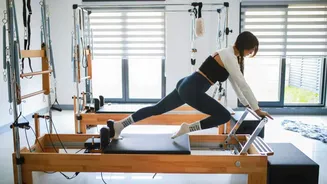
Mrunal Thakur incorporates Pilates into her routine twice a week, a practice that expert Garima Goyal highlights for its crucial role in building foundational
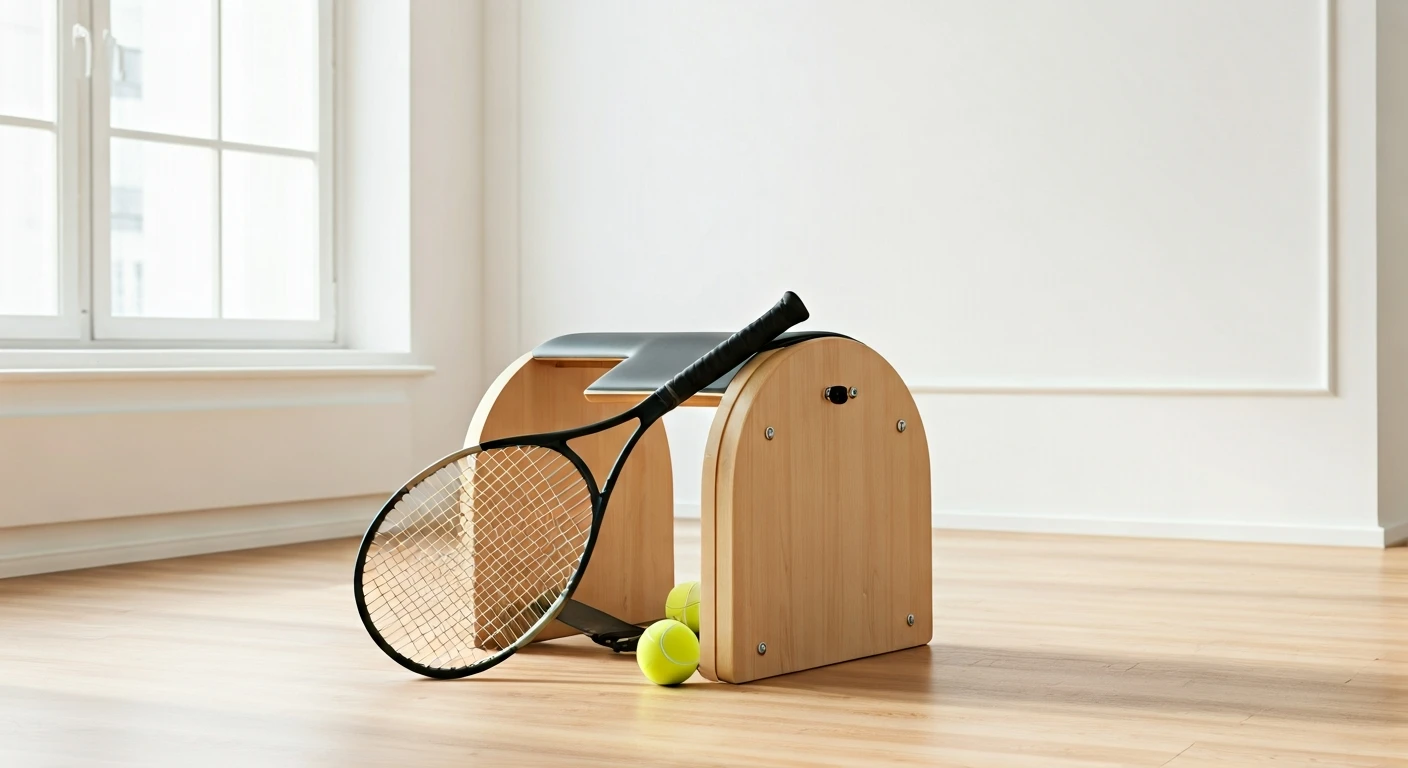
strength. Pilates focuses on engaging and strengthening the deep stabilizing muscles, particularly those supporting the spine and core. This targeted approach significantly enhances posture, leading to improved body alignment. Furthermore, it refines neuromuscular coordination, which is vital for executing movements with precision and control. By fortifying the body's core stability, Pilates effectively reduces the likelihood of injuries during more demanding physical activities like strength training or sports. It optimizes movement efficiency, ensuring that when Thakur engages in other exercises, her body is optimally positioned and prepared to generate force safely and effectively, setting a strong base for overall athletic performance and injury prevention.
Strength Building Benefits
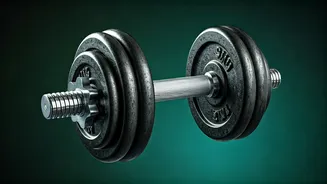
Complementing her Pilates sessions, Mrunal Thakur also dedicates time to strength training, a cornerstone for maintaining and enhancing lean muscle mass. This type of training goes beyond aesthetics, playing a significant role in metabolic health, including improved glucose regulation. It also contributes to long-term functional independence, ensuring mobility and capability as one ages. Regular resistance exercises stimulate muscle protein synthesis, a process essential for muscle repair and growth. Moreover, they bolster bone density, offering protection against conditions like osteoporosis. Strength training is particularly effective in counteracting the natural muscle loss that occurs with age. When coupled with proper nutrition, it stands out as one of the most potent strategies for safeguarding overall health and vitality, ensuring the body remains robust and resilient.
Tennis for Dynamic Fitness
The inclusion of tennis in Mrunal Thakur's routine adds a dynamic and unpredictable element often absent in more structured workouts. Playing tennis twice a week with her father, this activity profoundly challenges cardiovascular endurance, pushing the heart and lungs to perform at higher capacities. It also sharpens agility, demanding quick directional changes and rapid responses to the ball. Reflexes are honed through the constant need to react to varying ball speeds and trajectories. Furthermore, tennis engages a broad spectrum of muscle groups in an integrated and dynamic fashion, moving beyond isolated movements. This varied stimulus enhances neuromuscular adaptability, ensuring the brain and body work together seamlessly. The inherent variability in the sport keeps the training stimulus fresh and engaging, which is key for sustained motivation and preventing plateaus in fitness progress.
Smart Weekly Scheduling
The strategic distribution of Mrunal Thakur's diverse fitness activities across the week is a key factor in its effectiveness and sustainability. By alternating between the controlled, precise movements of Pilates, the progressive overload of strength training, and the high-energy, reactive nature of tennis, her body benefits from both targeted stimulus and adequate recovery. This balanced approach minimizes the risk of overuse injuries that can arise from repetitive, high-intensity training. It ensures that her body remains consistently challenged and engaged without being constantly overstressed. This thoughtful scheduling allows for optimal adaptation and progress, making her fitness regimen robust and resilient over the long term, contributing to her overall well-being and performance.
Adapting for Everyone
While Mrunal Thakur's routine exemplifies a well-rounded fitness model, its core principles are highly adaptable for most individuals. The crucial aspect is scaling the intensity and type of exercise based on personal fitness levels, any pre-existing medical conditions, and individual recovery capacities. For beginners, a starting point might involve fundamental strength exercises, gentle mobility work, and low-impact activities such as walking or light sports. The underlying philosophy remains consistent: a combination of strength development, mobility enhancement, and engaging, enjoyable activities creates a more comprehensive and enduring approach to fitness than focusing on a solitary exercise discipline. This personalized scaling ensures that the benefits of a balanced routine are accessible and effective for a wide range of people.