





The Cards' Heritage
The origins of Tarot are as mysterious as the cards themselves. While their exact beginnings are debated, it's widely believed they emerged in mid-15th
century Europe, initially as playing cards for a game called 'tarocchi.' Over time, they evolved from mere entertainment to incorporate symbolic imagery. These images, infused with esoteric knowledge, eventually became central to divinatory practices. Initially, Tarot decks were primarily for the elite, as they were hand-painted and expensive. The images depicted were often influenced by various sources, including Renaissance art, mythology, and philosophical concepts. From there, the cards' symbolism and application branched out into different schools of thought, and it continued to evolve.
Deck Structure Overview
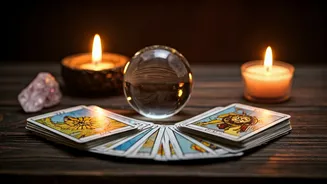
A standard Tarot deck comprises 78 cards, split into two main sections: the Major Arcana and the Minor Arcana. The Major Arcana contains 22 cards, each representing a significant life lesson or archetype. Cards like 'The Fool,' 'The Lovers,' and 'The Death' convey deeper themes and narrative aspects of the human experience. These cards are often seen as the backbone of a reading, addressing key themes and events. The Minor Arcana, on the other hand, consists of 56 cards, divided into four suits: Wands (representing fire, action, and will), Cups (representing water, emotions, and relationships), Swords (representing air, intellect, and challenges), and Pentacles (representing earth, material possessions, and security). Each suit contains ten numbered cards and four court cards (Page, Knight, Queen, and King), adding layers of detail to the reading.
Deciphering Card Meanings
Understanding individual card meanings is fundamental to Tarot reading. Each card has both upright and reversed meanings, which depend on their position in a spread. These meanings can be derived by studying the imagery, symbolism, and associated concepts of each card. For example, 'The Sun' typically represents joy, success, and positivity, whereas in reverse, it might suggest a lack of enthusiasm or temporary setbacks. The meanings of each card aren't set in stone; personal intuition and context also play a crucial role. A card’s meaning can also be impacted by surrounding cards in a reading. It’s important to research the cards and develop one's own interpretations, based on personal experience and understanding. There are various books, websites, and courses available to aid in the study of Tarot meanings.
Reading Card Spreads
A Tarot spread is the arrangement of cards used during a reading, and the layout impacts how the reading is understood. Various spreads exist, each tailored for different questions or purposes. The 'One-Card Spread' is simple, providing a quick answer or insight. The 'Three-Card Spread' explores past, present, and future, or mind, body, and spirit. More complex spreads, like the 'Celtic Cross,' offer in-depth analyses of specific situations, with various card positions representing different aspects of the matter. Before a reading, it’s best to consider a clear question, as the cards are usually consulted to gain insights on specific matters. The choice of a spread depends on the reader's skill and the complexity of the query. During a reading, the reader considers the cards' meanings, their positions, and their relationships to each other.
Using Tarot Intuitively
Tarot reading is not just about memorizing card meanings; intuition is crucial. Intuition involves connecting with the cards on a deeper level, allowing them to communicate. This intuitive connection requires practice and self-awareness. It's often cultivated by meditation, journaling, and regular practice with the cards. To develop intuition, begin by studying the cards closely, noticing their images and the feelings they evoke. Then, during readings, trust your instincts and see how the cards resonate with the questions at hand. It's important to be open to receiving messages from the cards. You should be willing to interpret their messages based on your personal experiences and the context of the reading. Over time, the reader's intuition will develop, providing more profound insights and connections.
Tarot for Self-Reflection
Beyond fortune-telling, Tarot can be an effective tool for self-reflection and personal growth. By asking questions and analyzing the cards, one can gain insight into their feelings, thoughts, and behaviors. The cards can unveil hidden aspects of the self and offer guidance on how to navigate difficult situations. For instance, if you're facing a challenge in your relationship, a Tarot reading might reveal patterns or beliefs that are contributing to the issues. Tarot encourages self-awareness by helping you recognize your strengths, weaknesses, and potential. It provides a framework for understanding life's challenges and opportunities, fostering a deeper connection with your inner self. When used this way, Tarot serves as a valuable tool for personal development and emotional well-being.
Ethical Tarot Practices
When working with the Tarot, ethical considerations are essential. Readers should always approach readings with respect and integrity. Never use the cards to manipulate or control others. Tarot readings should be offered as guidance and insight, not as a definitive prediction of the future. The reader must also maintain confidentiality and respect the client's privacy. Refrain from making promises about outcomes or encouraging dependency on the cards. Avoid giving readings that address serious medical, legal, or financial decisions. Focus on helping individuals gain clarity and self-awareness rather than offering absolute answers. Always respect the individual's free will and ability to make their own choices. Ethical readings promote trust and build a responsible approach to the practice.