






Growing a Sustainable Supermaterial
A significant scientific advancement has emerged from the collaborative efforts of researchers at Rice University and the University of Houston. They have
successfully engineered a novel material using bacterial cellulose, boasting mechanical and functional attributes that position it as a strong contender to replace conventional petroleum-based plastics in various manufacturing sectors. This groundbreaking research details a sophisticated method where living bacteria are precisely guided to construct cellulose structures. The key innovation lies in the ability to tailor the strength, flexibility, and even multifunctioal capabilities of the resultant material during its creation. This level of control over bio-based materials is a substantial leap forward, addressing a long-standing challenge in developing sustainable alternatives that can match the performance of engineered polymers, thereby offering a greener path for product design and production.
Structural Control in Synthesis
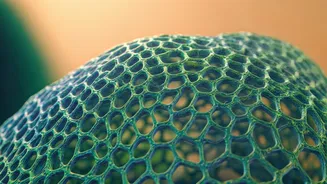
Bacterial cellulose, a naturally occurring polysaccharide, is synthesized by specific bacterial strains, notably _Komagataeibacter xylinus_. Unlike cellulose derived from plants, which often contains lignin and hemicellulose, bacterial cellulose is produced as a remarkably pure, highly crystalline network of nanofibrils. This intrinsic purity contributes to its exceptional tensile strength relative to its weight at the nanoscale. The innovation from the Rice and Houston team lies in their developed fabrication process, which meticulously manages the orientation and assembly of these nanofibrils as the bacteria grow. By actively directing fibril alignment, scientists can imbue the final material with programmed mechanical responses. This means the material can be made stiff along one axis while remaining flexible in another, all without the need for synthetic polymer additives. The resulting composite is remarkably versatile, capable of being rendered electrically conductive, optically clear, or even antimicrobial by simply introducing specific elements into the bacterial growth medium during its synthesis, mirroring the adaptability of engineering polymers like ABS or polycarbonate for diverse applications.
Plastic's Current Advantages
The widespread dominance of conventional plastics in manufacturing stems from a confluence of desirable attributes: they are cost-effective, remarkably lightweight, inherently resistant to many chemicals, and can be processed efficiently on a massive industrial scale. While bacterial cellulose theoretically addresses the first three characteristics—affordability, lightness, and chemical resistance—the challenge of achieving scalable and cost-competitive production remains a significant hurdle. Bacterial cellulose is typically cultivated in liquid cultures, which inherently limits output volume based on the size of fermentation vessels and the rate at which bacteria produce the material. To match the colossal production volumes of industrial plastics, which amount to hundreds of millions of metric tons annually, would necessitate either a vast expansion of bioreactor infrastructure or a dramatic improvement in bacterial productivity—neither of which has been definitively achieved by the current research. Furthermore, this bio-based material tends to absorb moisture more readily than most common plastics, potentially compromising its mechanical integrity in humid conditions. Comprehensive long-term performance data, comparable to the decades of durability testing that engineering plastics undergo before market adoption, has yet to be fully demonstrated.
Niche Market Entry Points
Given the current production scale and cost considerations, the most probable initial applications for this novel bacterial cellulose material are likely to be within specialty or high-value market segments, rather than directly replacing bulk commodity plastics. Areas such as electronics packaging, advanced biomedical devices, and the development of flexible sensors present compelling opportunities. In these domains, the material's unique tunability—its ability to be precisely engineered for specific properties—coupled with its inherent biocompatibility, could readily justify the potentially higher production costs associated with current yield rates. This trajectory is not uncommon in the evolution of bio-based materials; early breakthroughs in materials science often find their first commercial success in niche applications where superior performance outweighs cost sensitivity. As manufacturing processes advance and economies of scale are realized, these materials can then gradually move towards wider adoption. The work by the Rice and Houston teams adds to a growing field of research focused on bio-synthesized materials as alternatives to plastics. While other groups are exploring options like spider silk proteins, mycelium composites, and polyhydroxyalkanoates (PHAs), this bacterial cellulose approach stands out due to its demonstrated level of structural programmability directly at the fabrication stage, rather than relying on subsequent post-processing steps. The crucial question for future research is whether this inherent advantage can be translated into a truly manufacturable product at an industrial scale.