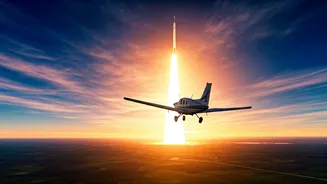








Unconventional Launch View
While NASA often provides extensive video coverage of its rocket launches, a particularly captivating clip from the recent Artemis II liftoff emerged not
from a high-tech satellite or ground camera, but from an officially contracted small aircraft. This Cessna, identified by its unmemorable designation 'Cam 11 View' within a compilation of the SLS rocket's launch, provided an extraordinary perspective. The camera onboard this humble, 14-seat plane tracked the colossal rocket from its pad all the way through critical flight phases like Max-Q (the point of maximum aerodynamic pressure), the separation of its solid rocket boosters (SRBs), and beyond. The resulting footage bears a striking resemblance to what one might expect from a sophisticated drone, showcasing the raw power of the launch from a dynamic, orbiting viewpoint that highlights the scale and force involved in sending humans on deep space missions. This unique angle truly brought the monumental event closer to viewers.
The Mighty SLS Rocket
The Artemis II mission, which saw four astronauts journey farther from Earth than any humans before, relied on the immense power of the Space Launch System (SLS) rocket. This colossal vehicle is designed for deep space exploration, enabling journeys to destinations like the Moon and potentially beyond. The SLS rocket consumes all its fuel in approximately eight minutes, generating an astonishing 8.8 million pounds of thrust, making it the most powerful rocket NASA has ever launched. Despite its groundbreaking capabilities, the SLS is slightly shorter than the Saturn V rockets that powered the Apollo missions, which produced around 7.5 million pounds of thrust. The modern SLS is not merely an upgrade; it's a reimagining of capability and adaptability, incorporating lessons learned from previous programs and designed for future configurations, including those for cargo transport as well as crewed missions. This evolution ensures NASA's continued pioneering role in space exploration.
Safety and Aerial Dynamics
A crucial element of the SLS rocket's design is its Launch Abort System (LAS), a critical safety feature for crewed missions. This relatively small rocket, perched atop the Orion spacecraft, is designed to swiftly pull the crew capsule away from the main rocket in the event of an emergency during ascent. The footage from the Cessna captured the separation of this vital system when the SLS was approximately 78 miles from its launch point. The Orion capsule itself is significantly smaller than the towering 322-foot SLS rocket, which is notably taller than the Statue of Liberty. The dynamic maneuvers of the Cessna, specifically its circular flight pattern around the launch site, were essential for maintaining its position and capturing the unfolding events. Unlike drones that can hover, the fixed-wing nature of the Cessna required this orbiting technique to keep the powerful rocket within its frame throughout its dramatic ascent and early flight phases. This strategy was vital for obtaining the comprehensive views of the launch sequence.
Cessna's Role in Filming
The unique perspective on the Artemis II launch was facilitated by a chartered Cessna Caravan, also known as the 'Model 208'. This single-engine aircraft, capable of carrying between 10 to 14 passengers, was repurposed to accommodate camera equipment, allowing for unprecedented aerial filming of the rocket's powerful liftoff. Enthusiasts tracking the flight on platforms like FlightRadar noted the presence of the Cessna circling the launch complex, a testament to NASA's innovative approach to capturing such significant events. While the concept of orbiting for dramatic visual capture might be familiar from drone technology, the use of a manned aircraft highlights the scale and complexity of the Artemis missions. This method of aerial observation, while requiring careful planning and execution, proved highly effective in delivering breathtaking imagery that brought the awe-inspiring spectacle of the SLS rocket's launch directly to audiences worldwide, mirroring the exciting possibilities of modern tracking features in consumer drones.