


Shifting Menswear Narratives
The menswear landscape is undergoing a significant transformation, moving away from the predictable monotony that has often characterized it. For years,
the male wardrobe was perceived as limited, a repetitive cycle of shirts, trousers, and jackets, starkly contrasting with the vast stylistic explorations seen in women's fashion. However, the recent fashion weeks in Paris and Milan for the 2026 collections signal a profound expansion of menswear's expressive capabilities. This upcoming era diverges from the frantic experimentation that marked the beginning of the decade, steering clear of overt branding and loud statements. Instead, designers are championing a more deliberate and sophisticated approach. The focus is now on creating a wardrobe that transcends fixed identities, offering pieces that seamlessly transition between structured formality and relaxed comfort. The modern man's attire is no longer about embodying a single archetype but rather about assembling a collection of adaptable garments suited for diverse situations and emotional states. This season's highlights underscore an intensified focus on the very essence of a garment: its material composition and internal construction. Designers are delving into how clothes are engineered, how they interact with the body's movement, and the tangible experience that fabric affords the wearer. The emphasis has clearly moved from showy spectacle to garments that allow for breathability, fabrics that are pleasing to the touch, and clothing whose sophistication is revealed through graceful movement rather than ostentatious design.
Tactile Richness Reigns Supreme
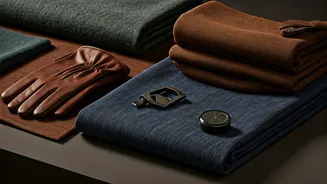
A pivotal development this season is the decisive abandonment of dull, unengaging textiles in favor of materials that actively invite touch and sensory exploration. At Dries Van Noten, designer Julian Klausner’s Autumn/Winter 2026 menswear collection was a testament to this, deeply exploring texture and layered patterns. The collection featured opulent jacquards, lustrous satins, and plush corduroy juxtaposed with richly adorned outerwear. Furthermore, blurred floral prints and intricately patched coats contributed significant visual depth. Knitwear also assumed a prominent role, appearing in robust Fair Isle designs and integrated as layered accents within tailored ensembles. The narrative of self-discovery and personal style, central to Klausner’s vision, was further emphasized through experimental elements like paper-bag trousers with distinct waistbands and deliberate, eye-catching pattern clashes, reinforcing the collection’s avant-garde spirit.
Reinterpreting Heritage Styles
Generational style cues are making a notable comeback, but with a fresh, contemporary interpretation rather than a purely nostalgic outlook. Zegna’s artistic director, Alessandro Sartori, unveiled 'A Family Closet,' a collection conceptually built around the idea of garments passed down through generations. This ensemble was grounded in classic motifs such as substantial checks, warm russet color palettes, and tailoring directly inspired by traditional northern Italian loden coats, all presented with relaxed, modern silhouettes that imbue them with contemporary ease. Sartori thoughtfully combined these heritage references with innovative textiles, including jacquards crafted from recycled fibers and lighter wool blends, envisioning a wardrobe that respects its historical roots while being designed for future adaptability and evolution.
Effortless Elegance Defined
One of the most conspicuous trends emerging this season is the notable softening of traditional sartorial formality. At Dior’s Autumn/Winter 2026 menswear presentation, creative director Jonathan Anderson paid homage to the maison's storied past with a lighter, more playful sensibility. The stage design, drawing inspiration from the gallery rooms of Berlin’s Gemäldegalerie and incorporating paintings by Jean Siméon Chardin, perfectly set the tone for a collection that artfully balanced cultural allusions with modern comfort. Established pieces like the iconic Dior Bar jacket, refined coats, waistcoats, Donegal tweeds, and regimental ties were reimagined and styled with a distinctively relaxed attitude. Subtle decorative touches, such as delicate rose embroideries and charms reminiscent of the house’s Diorette line, elegantly echoed the romantic aesthetic long associated with Dior. The accessories also served as crucial narrative components; the Dior Book Tote displayed literary covers from renowned works like Charles Baudelaire's 'Les Fleurs du Mal' and Truman Capote's 'In Cold Blood,' while a crossbody bag bore a motif referencing Bram Stoker's 'Dracula.' The beloved Lady Dior bag also received an artistic reimagining by Sheila Hicks, infusing the collection with a unique artisanal dimension.
Modern Utility Explored
While many designers gravitated towards softness and ease, Rick Owens presented a more introspective and darker take on contemporary dressing. His Fall 2026 collection offered a stark vision of utility, transforming functional design elements into something almost theatrical and artistic. The use of technical fabrics and protective silhouettes resulted in garments that conveyed a sense of both industrial robustness and sculptural artistry. Yet, Owens masterfully balanced this intensity with moments of exquisite craftsmanship, notably through intricate knitwear and textured outerwear pieces that softened the collection’s more severe aesthetic. This approach served as a powerful reminder that utility in today’s fashion context extends beyond mere functionality; it now carries significant emotional and cultural weight, reflecting the intricate complexities of the world outside the fashion runway. Taken collectively, the Autumn/Winter 2026 collections indicate a new trajectory for menswear. The era of singular, dictatorial trends has yielded to a more nuanced landscape. Designers are actively exploring multiple facets of masculinity, creating space for softness, heritage, and experimentalism to coexist harmoniously. Textures are becoming richer, tailoring is adopting looser forms, and traditional fabrics are being rediscovered with renewed relevance. Rather than prescribing a uniform mode of dress, the season encourages men to curate wardrobes that feel authentically personal and thoughtfully assembled. In this vein, the defining characteristic of contemporary menswear might simply be intention. Clothing is evolving beyond being mere statements of status or adherence to trends; it is increasingly becoming a reflection of individuality, shaped as much by the meticulous craft and material choices as by the wearer's personal engagement.