
A Lunar Partnership
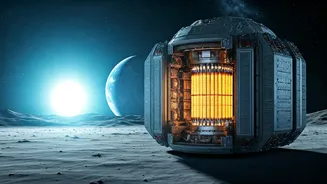
In a strategic move, NASA and the U.S. Department of Energy have fortified their alliance to create a nuclear fission reactor suitable for the Moon. This
collaborative effort is driven by the desire to bolster long-term lunar missions and propel exploration towards Mars. The completion target for this project is 2030, marking a significant stride in realizing the country’s ambition to lead in space dominance. The partnership, emphasized during a meeting at the Energy Department headquarters, signifies a commitment to leveraging nuclear power to usher in what is being termed the Golden Age of space exploration. The project’s ambitions align with the national space policy, ensuring the United States' commitment to returning to the Moon and beyond.
Powering Lunar Missions
The proposed fission surface power system is designed to provide at least 40 kilowatts of power, an amount comparable to the continuous electricity usage of approximately 30 households for a decade. This system is crucial because it ensures a dependable power source regardless of solar conditions or extreme temperature fluctuations. The reactor's capacity to operate for years without requiring refueling is essential to support NASA's Artemis program and various future space endeavors. The reactor's capabilities will support extended stays, enhance research possibilities, and establish crucial infrastructure necessary for sustainable operations on the Moon.
Facing Unique Challenges
The project encounters numerous technical obstacles, including effective waste heat dissipation within the Moon's near-vacuum and low-gravity environment. Traditional cooling methods, like those using water, are impractical in this context. Further challenges include safeguarding equipment against the Moon's abrasive, electrostatically charged dust, which tends to stick to surfaces. Additional complexities involve guaranteeing substantial radiation shielding to safeguard astronauts nearby and minimizing the necessity for repairs in a remote setting. These hurdles require innovative design and engineering solutions to ensure the reactor's reliability and operational longevity on the lunar surface.
Design & Innovation
The design phase of the reactor has been completed, but the process of advancing to testable hardware on Earth and, eventually, a flight-ready status is progressing deliberately, factoring in complex engineering requirements, stringent regulatory demands, and financial constraints. Potential solutions for heat dissipation include solid-state conduction or liquid-metal systems, each introducing their own set of design complexities. The project leverages more than five decades of collaborative experience in space technology and national security between the partnering agencies. This blend of expertise is crucial for successfully developing and deploying the lunar reactor, positioning the U.S. at the forefront of space commerce and technological innovation.