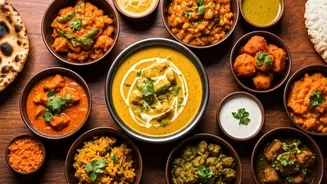








Puliyodharai: The Tangy Delight
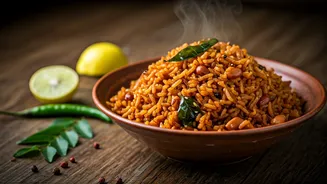
Puliyodharai, also known as Tamarind Rice, is a classic South Indian rice dish celebrated for its vibrant tang and delightful flavors. Prepared with tamarind
pulp, spices, and typically a mixture of roasted lentils, peanuts, and other seasonings, this dish offers a delicious blend of sour, spicy, and savory tastes. The dish is known to be a popular offering in many temples across Tamil Nadu. The instant Puliyodharai podi simplifies the process, allowing for quick and convenient preparation. When creating this dish, the rice is typically cooked to perfection, then mixed with the flavorful puliyodharai podi. The dish's appeal also lies in its portability; making it a convenient option for travel or lunchboxes. Puliyodharai is versatile; it can be served as a main dish or as a side, making it a beloved staple in many households.
Brinji: Aromatic Rice Dish
Brinji rice is a flavorful and aromatic rice dish, often associated with weddings and special occasions in South India. It is similar to a vegetarian biryani, but it typically has a lighter spice profile and often includes vegetables and fresh herbs. The preparation involves sauteing aromatic spices, such as cinnamon, cardamom, and cloves, along with onions, tomatoes, and other vegetables. Rice, often long-grain basmati, is then added and cooked to absorb the rich flavors of the spices and vegetables. Brinji rice is known for its fragrant aroma and is often garnished with fresh coriander leaves, adding a touch of freshness. It is a hearty and satisfying dish that can be enjoyed on its own or with a side of raita or a vegetable curry, making it a popular choice for celebrations and festive meals.
Melukote Puliyogare Temple Style
The Melukote Puliyogare Temple style recipe is a popular South Indian dish with a unique twist, inspired by the preparation method used in the Melukote temple. This recipe often involves using specific ingredients and techniques, resulting in a distinct flavor profile. The key to the dish's flavor lies in using high-quality tamarind and a blend of authentic spices. This recipe often differs from standard Puliyodharai, showcasing the cultural significance of the dish. It may use less oil than other versions, keeping the preparation simple while maintaining its flavour. Temple-style Puliyogare is often made in larger quantities to be served to devotees during festivals. This dish highlights the cultural importance of food within religious practices.
One-Pot Rasam Sadham
One-pot Rasam Sadham simplifies the traditional process of making rasam and rice separately, merging them into one convenient dish. Rasam is a flavorful South Indian soup made with tamarind, tomatoes, spices, and lentils. This method involves cooking the rice and rasam together in a single pot. This saves time and minimizes cleanup without compromising the authentic taste of rasam. The dish's creation begins with preparing the rasam base, which then simmers with the rice until it is cooked through. The resulting dish is a hearty and comforting meal that is both easy to prepare and rich in flavor. This one-pot method offers a practical solution for those seeking a quick and tasty meal, perfect for busy weeknights or when time is of the essence.
Kadamba Kootu: Vegetable Mix
Kadamba Kootu is a flavorful South Indian mixed vegetable curry made with a variety of vegetables and lentils, cooked in a coconut-based gravy. It showcases a diverse array of flavors and textures, with each vegetable contributing its unique taste. The preparation of Kadamba Kootu typically includes boiling vegetables like drumsticks, beans, carrots, and potatoes and combining them with cooked lentils. A blend of spices, including mustard seeds, asafoetida, and curry leaves, provides a fragrant aroma and a flavorful base. The use of coconut milk or grated coconut adds richness and creaminess to the dish. Kadamba Kootu is often served with rice, making it a complete and satisfying meal. The dish exemplifies the South Indian culinary tradition of utilizing seasonal vegetables.
Capsicum Rice: Quick & Tasty
Capsicum Rice, a simple yet flavorful rice dish, brings a delightful combination of flavors and textures to the table. This dish often uses finely chopped capsicum, sautéed with onions and spices, to create a base. Rice is added and cooked with the capsicum mixture until the flavors are absorbed. The capsicum lends a subtle sweetness and crunch to the rice, while spices like turmeric, coriander, and cumin provide warmth and depth. Capsicum Rice is a versatile dish that can be customized with different types of capsicum and spices. It can be a quick and convenient option for a weekday meal or a side dish for various occasions. The dish's simplicity and adaptability make it a popular choice for those seeking a tasty and effortless meal.
Millet Sakkarai Pongal
Millet Sakkarai Pongal is a nutritious twist on the traditional sweet pongal. It replaces the usual rice with millets and combines it with jaggery, nuts, and spices. Millets bring a host of health benefits, including being rich in fiber and minerals. The dish's preparation involves cooking the millets until softened and then mixing them with jaggery, cardamom, and ghee. Nuts like cashews and raisins add a touch of crunch and richness. The slow cooking process allows the flavors to meld together, resulting in a delightful and comforting dessert. Millet Sakkarai Pongal is often enjoyed during festivals and special occasions, representing a healthier alternative to the original recipe, which maintains the classic tastes.
Arisi Upma: Semolina Substitute
Arisi Upma is a South Indian breakfast dish that creatively replaces the standard semolina with rice. Prepared in a similar way to the traditional upma, it consists of rice, vegetables, and spices. Rice is toasted until it is lightly browned. The rice is then cooked with onions, mustard seeds, curry leaves, and other seasonings in boiling water until it absorbs the flavor and the grains are fully cooked. This provides a delightful twist on a classic dish, creating a lighter alternative. Arisi Upma offers a delicious and satisfying way to start your day. It also adds variety for those who enjoy the classic upma but want a change.
Beetroot Rice/Pulao
Beetroot Rice or Pulao introduces a vibrant and nutritious element to the rice dish by including beetroot. Beetroot offers a beautiful color and a slightly sweet, earthy flavor. The preparation typically starts with sautéing beetroot, onions, and spices. The rice is then added and cooked with the beetroot mixture, allowing the flavors to meld together. Freshly cut coriander leaves are frequently added as a garnish. Beetroot Rice provides a colorful and flavorful side dish that complements the rich array of flavors. This dish is not only delicious but also visually appealing, perfect for serving on special occasions. It makes use of simple ingredients to create a unique culinary experience.
Other Complementary Dishes
Besides the featured rice dishes, the source mentions several other South Indian recipes. These include Mani Kozhukkatai, a steamed rice dumpling, and Thiruvadirai Kali, a sweet porridge often made during the Thiruvadirai festival. Other dishes mentioned are Poricha Kuzhambu, a tangy and flavorful curry. Also included is Brinjal Gothsu, a savory dish made with brinjal. In addition to these dishes, the source also includes information on premix powders for Rasam and white and red gravy. These premixes provide convenience in the kitchen, simplifying the preparation of complex dishes. Similarly, the source also references Diwali sweets and snacks, highlighting the festival's culinary significance.