

Artemis Program's Evolution
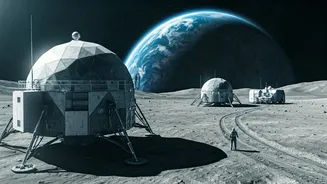
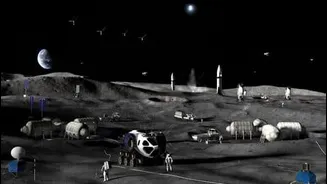
NASA is undergoing a significant recalibration of its Artemis program, signaling a departure from the lunar Gateway space station in favor of a more direct
approach to establishing moon bases. This strategic pivot aims to accelerate humanity's return to the lunar surface, emphasizing a 'more achievable' path forward. The agency is looking to condense its timeline for lunar missions, which may necessitate the streamlining or even exclusion of certain large-scale hardware components previously considered essential. This revised strategy reflects a dynamic approach to lunar exploration, prioritizing speed and practicality in the quest to establish a sustained human presence beyond Earth. The focus is now squarely on getting astronauts back to the Moon efficiently and effectively, laying the groundwork for future deep-space endeavors and scientific discovery on our closest celestial neighbor. This evolution underscores a commitment to adaptable planning in the face of complex and ambitious space exploration goals.
2026: A Year of Lunar Ventures
The year 2026 is poised to be an extraordinary period for space exploration, marked by a surge of lunar missions and ambitious private endeavors. NASA's Artemis 2 mission, with its crew set to orbit the Moon, represents a critical step in this renewed lunar focus, with its launch scheduled for April 1st. Beyond government-led initiatives, the landscape is buzzing with private spacecraft gearing up for lunar landings. This burgeoning 'moon rush' indicates a vibrant commercial interest in lunar resources and exploration. Furthermore, 2026 promises significant scientific advancements, including the potential resolution of long-standing astronomical mysteries, such as the peculiar X-ray emissions from certain stars. Spectacles like a blood moon rising over vast seas and rockets illuminated by the ethereal glow of the Northern Lights are also captured, reminding us of the breathtaking beauty of space. The international community also plays a role, with Europe planning an epic SpaceX mission to the International Space Station for four astronauts before its eventual retirement, highlighting collaborative efforts in space.
The Artemis Accords and Lunar Governance
As nations increasingly focus on lunar exploration through the Artemis program, the Artemis Accords are becoming a crucial framework for establishing guidelines and principles for activities on the Moon. These international agreements are designed to address complex scenarios, including how to manage emergencies that may arise during lunar missions and how to mitigate 'harmful interference' from various actors. The development of these accords reflects a proactive approach to space governance, aiming to ensure that lunar exploration is conducted safely, peacefully, and sustainably for all participating nations. This forward-thinking policy work is essential for fostering cooperation and preventing potential conflicts as humanity expands its presence beyond Earth. The ongoing discussions among Artemis Accords nations highlight the intricate diplomatic and logistical challenges that accompany ambitious off-world endeavors, laying the foundation for a responsible and collaborative future in space.
Scientific Milestones and Celestial Wonders
Beyond the headline-grabbing lunar missions, the realm of space science continues to yield remarkable discoveries and breathtaking phenomena. Scientists have recently achieved a significant breakthrough by solving a century-old enigma concerning stars exhibiting anomalous X-ray emissions, deepening our understanding of stellar evolution and extreme astrophysical environments. Meanwhile, the photographic capture of a rocket shining brilliantly under the aurora borealis offers a stunning visual testament to the beauty that can be found at the intersection of human endeavor and natural cosmic displays. Earlier in March 2026, a photographer documented an incredible moment capturing a total lunar eclipse over Malaysia, a celestial event that mesmerized observers. These scientific advancements and awe-inspiring visual records underscore the continuous pursuit of knowledge and the profound aesthetic experiences that space exploration provides, reminding us of the vastness and wonder of the universe.