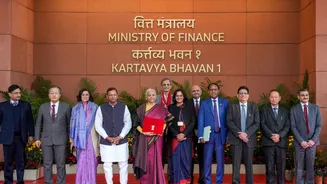








Budget's Investment Focus
The primary focus of the 2026 Union Budget was to enhance the Indian capital markets and attract a broader spectrum of investors, particularly from the global
Indian diaspora. The budget aimed to deepen the market's capacity and encourage long-term capital inflows, which would subsequently boost economic growth. A core component of this strategy involves revisions to the Portfolio Investment Scheme (PIS), specifically targeting NRIs. The objective was to simplify investment procedures and offer NRIs greater flexibility in managing their investments in Indian equities. Furthermore, the budget supported the development of financial hubs such as GIFT City, anticipating their crucial role in facilitating these financial transactions and creating a more vibrant investment ecosystem. The changes signal a proactive approach to opening up the market to global participation and streamlining financial operations.
NRIs: Expanded Opportunities
A significant feature of the 2026 Union Budget was the expansion of opportunities for NRIs to invest in Indian equities via the Portfolio Investment Scheme (PIS). This regulatory alteration included raising individual investment limits for NRIs, thereby enabling them to invest larger sums in Indian equities. Moreover, the overall foreign holding cap was revised to accommodate increased investment inflows, allowing a greater degree of participation from NRIs and other foreign investors. This strategic move was intended to leverage the financial resources and expertise of NRIs, offering them a more significant role in the Indian market. By streamlining investment processes and providing more flexible investment thresholds, the budget aimed to enhance NRI involvement and boost the liquidity and vitality of Indian stock markets.
Market Impact Analysis
The alterations within the 2026 budget are likely to have profound effects on the Indian financial markets. With higher investment limits and an overall increase in foreign holdings allowed, the markets could experience a rise in capital inflows, potentially stabilizing stock prices and reducing volatility. This infusion of capital may foster increased liquidity, resulting in a more dynamic trading environment. Furthermore, the participation of NRIs, supported by platforms like GIFT City, could attract more global interest, promoting the evolution of the Indian financial market into a key player on the international stage. These developments could also influence the value of the Indian rupee, strengthen market confidence, and support long-term economic growth by enabling a more stable and robust financial system.