





Rajasthan's Regal Aad
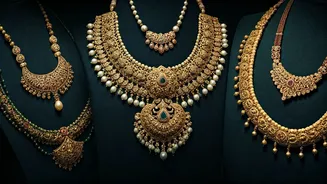
In Rajasthan, the 'aad' necklace reigns supreme, embodying a sense of royalty. These distinctive chokers are typically square-shaped and adorned with elaborate
Kundan work, a time-honored technique involving the setting of precious stones in gold. Often, the 'aad' is layered with longer 'raani haar' necklaces, further amplifying its majestic appeal and signifying the noble stature of the wearer. This style reflects the state's deep-rooted connection to its royal past and its appreciation for opulent craftsmanship, making it a cherished piece in traditional Rajasthani bridal trousseaus and ceremonial wear.
Karnataka's Bridal Addigai
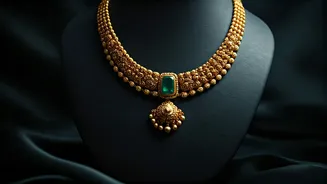
Karnataka showcases the 'addigai', a stunning choker-style necklace that has become an integral part of South Indian bridal adornment. These pieces are often embellished with vibrant red and green stones, adding a striking contrast and celebratory flair. Their popularity is closely linked to the historical Mysore royal ceremonies, where such elaborate jewelry was a symbol of prestige and tradition. The 'addigai' is not just an accessory; it represents a significant cultural practice, particularly favored in modern bridal fashion across the region for its elegance and historical resonance.
Kerala's Auspicious Kasu Mala
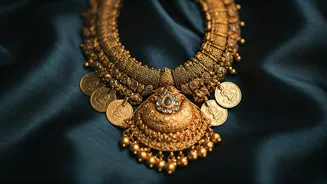
For Malayali brides, the 'kasu mala' is an essential and deeply symbolic piece of jewelry. Crafted from gold coins, this traditional necklace is a testament to prosperity and good fortune. The coins are intricately strung together, forming a beautiful and meaningful adornment. The 'kasu mala' is frequently presented as a cherished gift during wedding ceremonies, reinforcing its status as a symbol of wealth and well-being. Its enduring presence in Kerala's cultural landscape highlights the importance of traditional blessings and the celebration of marital union through exquisite artistry.
Punjab's Majestic Guluband
Punjabi brides often grace their special day adorned with the 'guluband', a short, choker-style necklace. This piece is typically fashioned from pure gold and features incredibly intricate filigree work, showcasing a remarkable level of artisanal skill. The 'guluband' possesses a majestic aura, exuding elegance and tradition. Its close fit around the neck accentuates the wearer's grace, making it a statement piece that resonates with the grandeur associated with Punjabi weddings and cultural celebrations. The delicate craftsmanship highlights a commitment to preserving age-old jewelry-making techniques.
Maharashtra's Thushi Choker
In Maharashtra, the 'Thushi' necklace is a beloved choice for brides, representing a blend of simplicity and charm. This necklace is characterized by its closely strung gold beads, forming a snug choker that adjusts with a short thread. It offers a delicate yet distinct look, becoming a popular fixture in Marathi bridal jewelry collections. The 'Thushi' embodies a unique aesthetic that is both traditional and fashionable, making it a cherished heirloom and a symbol of Maharashtrian marital traditions. Its understated elegance ensures it complements various bridal attire.
Himachal's Lunar Hansli
The tribal communities of Himachal Pradesh favor the 'hansli' choker, a substantial silver necklace. These striking pieces are distinguished by their crescent-shaped designs, which are elegantly inspired by the shape of the moon. This distinctive pattern is also known as 'Chandrahaar'. The 'hansli' is not merely an ornament; it signifies cultural identity and artistic expression within these communities. Its weight and intricate silverwork reflect a deep connection to nature and traditional aesthetics, making it a powerful symbol of heritage for the women who wear it.