
The Deep Side Part
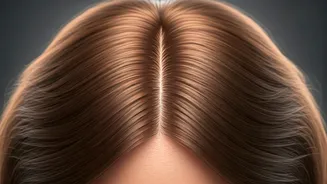
Begin with the simplest yet most impactful strategy: the deep side part. This technique is incredibly effective for areas experiencing thinning along your
natural centre part or on either side of your head. By shifting your hair to a more pronounced side part, you effortlessly create a greater expanse of hair to cover the affected scalp areas. This maneuver not only adds visual density but also tricks the eye into perceiving your hair as fuller and more voluminous. For an extra boost, consider applying a root-concealing spray or powder before parting to further blend any visible scalp. A touch of texturizing spray at the roots before styling can also provide lift and ensure your hair remains voluminous throughout the day, preventing it from falling flat and revealing sparse areas.
The Blunt Bob or Lob
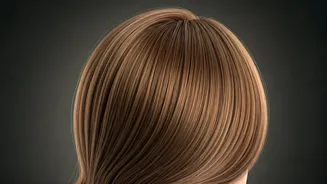
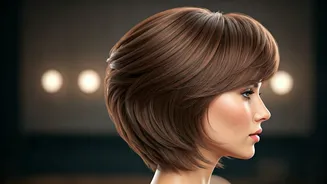
Consider the power of a blunt cut, whether it's a sharp bob or a slightly longer lob. Many people mistakenly believe layers always enhance volume, but this isn't always the case, especially when hair is thinning at the ends or sides. Excessive layering can actually exacerbate the appearance of thinness. In contrast, a blunt cut creates a clean, defined edge that gives the illusion of thicker, healthier hair. This style is particularly adept at balancing out areas with uneven hair density, providing a structured and fuller appearance. It’s a straightforward yet highly effective way to create a visually cohesive and robust look, making your hair appear more substantial.
The Half-Up, Half-Down
The classic half-up, half-down style is a versatile hero for concealing thinning at the crown or the area just below it. When you gather and secure the top section of your hair, the remaining lower portion naturally drapes over the back of your head, effectively masking any sparse spots. This allows you to enjoy the look of wearing your hair down while discreetly covering the areas you wish to conceal. It's a brilliant method to achieve the appearance of uninterrupted hair density in the areas most prone to thinning, such as the nape or upper back of the scalp, without resorting to heavy styling.
The Textured Pixie Cut
Opting for a shorter length, like a textured pixie cut, can be surprisingly beneficial for those experiencing general thinning or multiple smaller patches. Shorter hair naturally reduces the stark contrast between the scalp and the hair strands, making thinning less noticeable. When styled with strategic layers, the hair falls in various directions, which inherently helps to camouflage sparse areas. Beyond its concealing properties, a textured pixie cut is a contemporary and chic choice, offering a stylish aesthetic and remarkable ease of maintenance for daily wear. It simplifies your routine while delivering a significant visual improvement.
The Messy Top Knot/Chignon
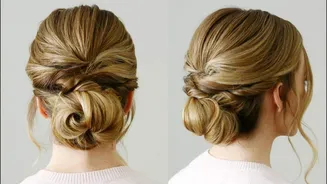
For effortless elegance on busy days, a loosely styled top knot or low chignon is an excellent option, particularly for thinning around the crown or nape. The key to success with these styles lies in their relaxed execution; avoid pulling your hair too tightly, as this can stress the roots and worsen hair loss. A soft, unstructured bun, perhaps with a few wisps of hair left to frame your face, creates a gentler aesthetic and is far more effective at hiding thinning areas. This approach not only looks softer but also provides superior coverage compared to tightly pulled styles, offering a chic solution.