
The Orbital Rent
The concept of 'active avoidance' is pivotal as more items populate Earth's orbit. This isn't just about preventing collisions but also involves a complex
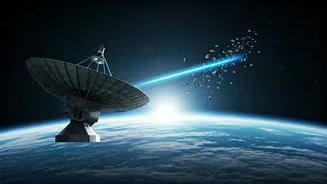
interplay of financial, technological, and strategic considerations. Imagine paying rent, but in space – that's essentially what operating in a safe orbital environment entails. The costs associated with the avoidance of collisions include continuous monitoring, debris tracking, and potentially maneuver-related expenses for operational satellites. Failure to actively avoid collisions could lead to damage, loss of function, and generate even more space debris, thereby increasing costs for all stakeholders in orbit, making it a critical aspect of ensuring the long-term sustainability of space activities.
Disaster's Mathematical Risks
The mathematics underpinning the potential for orbital disasters presents a chilling picture. As the number of objects in orbit increases, so does the probability of collisions, leading to the creation of more debris. These fragmented pieces then become hazards, threatening other satellites and further contributing to the debris cloud. This cycle, also referred to as the Kessler syndrome, shows how a single collision can trigger a chain reaction, where one collision begets another, accelerating the problem. Understanding the mathematical models and probabilities is crucial for developing effective mitigation strategies and predicting which areas of orbit are at greatest risk, informing proactive measures to avoid such scenarios.
Project Suncatcher's Place
The implications for projects like Project Suncatcher are significant in the realm of active avoidance. Innovative space projects often involve the deployment of new structures and technologies, thereby increasing the orbital population. The success of such projects hinges on accurate tracking of space debris and the ability to maneuver around potential collision threats. Active avoidance protocols thus become vital for ensuring the lifespan and functionality of advanced projects. Furthermore, the design of spacecraft must also incorporate considerations for resisting impacts and self-protection, as well as strategies to deal with unforeseen collision risks that can be vital for the durability and success of projects.
Orbiting Data Centers
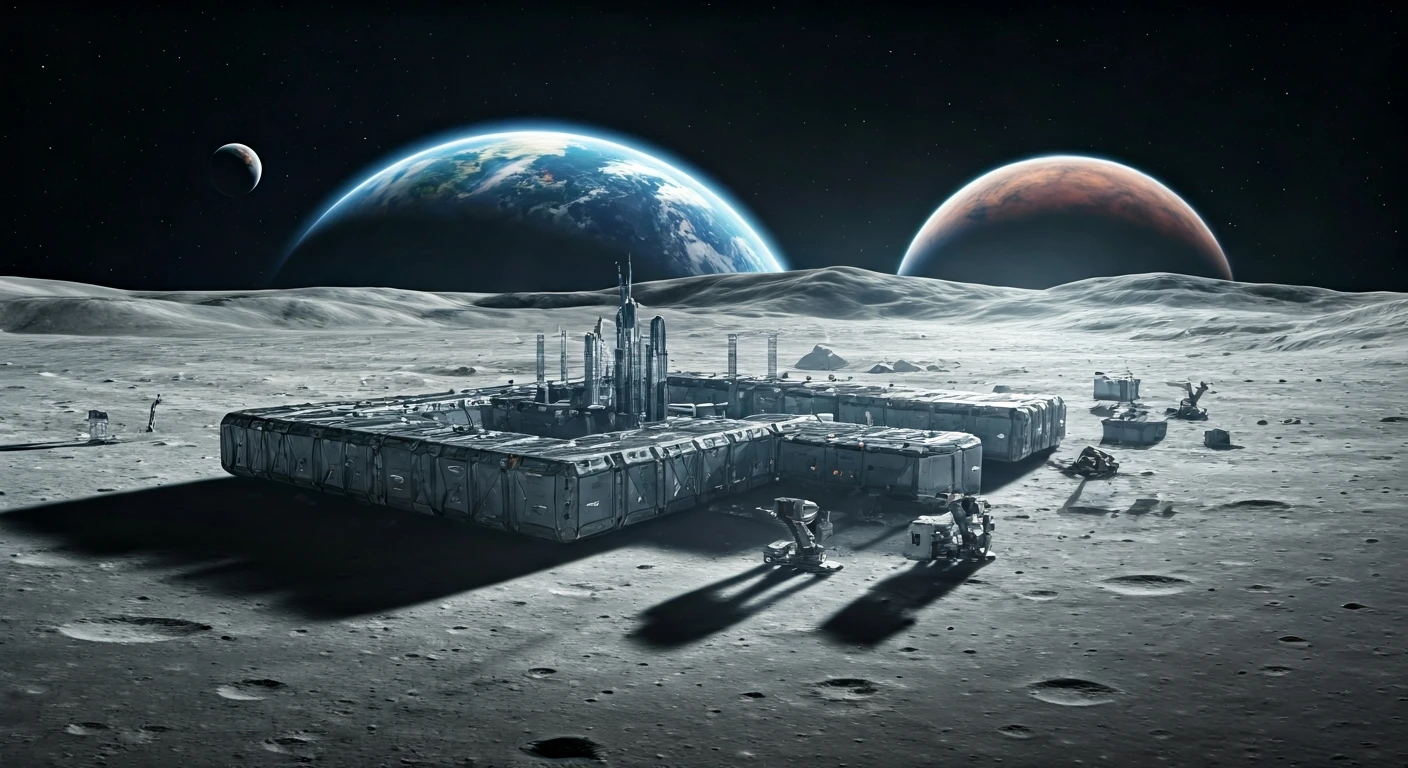
Google's proposal for an orbital data center adds a new dimension to active avoidance. The establishment of large-scale infrastructure in space brings forth unprecedented challenges of space traffic management. Data centers are critical infrastructure, so their survival and continuous operation depend on robust collision avoidance strategies. The financial risks of satellite damage or destruction are substantial, and the need for reliable data processing in space creates a dependency on successful active avoidance implementation. Consequently, these facilities must incorporate advanced debris monitoring, precise maneuvering systems, and collision prediction capabilities. The safety of a space-based data center also depends on the international cooperation required to monitor and manage space debris.