






Earth's Lunar Vista
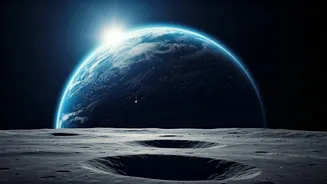
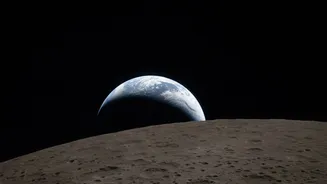
The Artemis 2 mission provided humanity with a profound new perspective on our home planet. Astronauts aboard the spacecraft captured stunning imagery
of Earth as seen from the vicinity of the Moon. These 'Earthset' photos, particularly a striking crescent Earth hanging above the lunar horizon, serve as powerful reminders of our planet's fragility and beauty within the vastness of space. One astronaut notably shared how being so distant from Earth deepened their appreciation for our world. This mission not only pushed the boundaries of human spaceflight but also offered indelible visual testimonies to our place in the cosmos, fostering a renewed sense of global connection and environmental awareness.
The Significance of Earth Day
Earth Day, established to raise awareness and encourage action for environmental protection, holds immense importance in our current global context. While the exact date of its inception isn't provided, its purpose remains crucial. The day serves as a global platform for discussions and initiatives aimed at safeguarding our planet's health. As human activities continue to impact ecosystems, understanding the 'why' behind Earth Day and its evolving themes is vital. This includes addressing challenges like light pollution, which has demonstrably brightened Earth by 16% since 2014 according to satellite data, and the urgent need for conservation efforts for vital natural resources.
Monitoring Our Planet
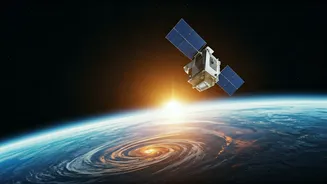
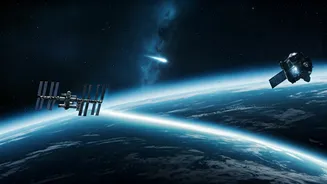
Satellites are indispensable tools for observing and understanding our planet's dynamic changes. Recent satellite observations have highlighted critical environmental shifts, such as the concerning trend of light pollution increasing by 16% since 2014. Furthermore, satellites are instrumental in monitoring natural phenomena, like a wall of dust rolling through Texas or an erupting volcano, providing essential data for disaster preparedness and scientific research. The 'gravity hole' in Antarctica offers insights into Earth's deep interior evolution, while satellite imagery can even predict the potential vanishing of vital wetlands. This constant surveillance is key to comprehending and mitigating environmental challenges.
Future Space Endeavors
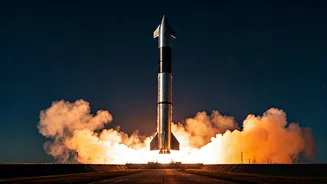
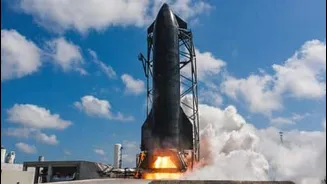
The horizon of space exploration is constantly expanding with ambitious new projects and events. SpaceX's next-generation 'Version 3' Starship is undergoing critical engine tests in preparation for a significant May test flight, signaling progress in reusable rocket technology. Beyond near-term missions, the astronomical community is anticipating the asteroid Apophis's close approach on April 13, 2029, a 'once-in-a-lifetime event' that is worth traveling for, and discussions about how nonprofits like the B612 Foundation are working to protect Earth from dangerous asteroids are gaining traction. The Artemis program, building on the success of Artemis 2, continues to aim for lunar exploration and beyond, promising a dynamic year for space in 2026, driven by both global cooperation and competition.
Celestial Events & Science
2026 promises a rich calendar of celestial events and scientific discoveries for skywatchers and space enthusiasts. The year includes an annular 'ring of fire' solar eclipse in February and a full moon calendar detailing monthly lunar phases, including the 'Flower Moon' in May. The Lyrids meteor shower is also expected to be visible. Scientifically, the James Webb Space Telescope is providing clues into the formation of supergiant exoplanets. Meanwhile, the discovery of rare glass from a 6-million-year-old meteorite strike in Brazil, despite the absence of a visible crater, adds another layer of intrigue to our understanding of cosmic impacts. These events and findings continually deepen our knowledge of the universe and our place within it.