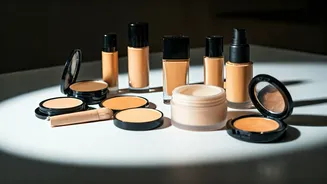

Foundation Fundamentals Explored
Choosing the right foundation is pivotal in achieving a flawless and natural-looking complexion. It begins with understanding your skin type—whether it's
oily, dry, combination, or sensitive—as this determines the ideal formula. Oily skin often benefits from oil-free or mattifying foundations, while dry skin thrives with hydrating formulas. Combination skin requires a balance, possibly using different foundations for various areas of the face. For sensitive skin, hypoallergenic and non-comedogenic options are vital. The next step is determining your undertone; it can be warm (golden or peachy), cool (pink or red), or neutral (a mix). Matching the foundation to your skin's undertone ensures a seamless blend. Swatch foundations on your jawline in natural light to assess the best match, ensuring the foundation disappears into your skin. Also, consider coverage level. Light coverage evens out skin tone, medium coverage conceals minor imperfections, and full coverage masks more pronounced issues. Finally, the application method—whether with a brush, sponge, or fingers—affects the final result.
Perfect Shade Selection
Selecting the right foundation shade is crucial. Begin by identifying your skin's undertone, crucial for finding the right match. This often involves looking at the veins on your wrist; green suggests a warm undertone, blue indicates cool, and a mix points to neutral. Once your undertone is identified, explore foundation shades within that category. Many brands offer a range of shades with various undertones. Testing foundation in natural light is indispensable. Apply small streaks of different shades to your jawline and observe how they blend. The perfect shade should disappear into your skin, creating a seamless transition. Consider also the time of year and sun exposure; your skin tone may vary, requiring different shades throughout the year. Don't be afraid to mix shades to achieve a custom match. Investing time in shade matching is essential for achieving a natural look. Consult with a beauty advisor at a store for personalized recommendations and to sample different formulas. Pay attention to how the foundation wears throughout the day, ensuring it doesn't oxidize or change color.
Application Techniques Demystified
The application method significantly influences the final look of your foundation. Start with a clean, moisturized face to create a smooth base. Depending on your preference and the desired coverage, choose from various tools: brushes, sponges, or even your fingers. For a natural finish, use a damp makeup sponge and gently bounce the foundation onto your skin, starting from the center of your face and blending outwards. This technique allows for buildable coverage and prevents a cakey appearance. If you prefer a brush, opt for a flat-top or stippling brush. Apply foundation in small, circular motions, blending carefully to avoid harsh lines. Fingers can also work well, especially for light coverage; warm the product between your fingers and gently pat it onto your skin. The key is to blend well, ensuring no visible edges. Setting your foundation with a translucent powder will ensure it stays in place throughout the day. Focus on areas prone to shine, like the T-zone. This helps absorb excess oil and sets the foundation for a long-lasting effect. Finally, consider using a setting spray for added longevity and a dewy finish. Experiment with different techniques to find what works best for your skin type and desired coverage.
Troubleshooting Common Issues
Even with careful selection and application, occasional foundation issues may arise. One common problem is the foundation looking cakey. This often results from using too much product or not properly prepping the skin. Ensure you moisturize well and apply a thin layer of foundation, blending thoroughly. If your foundation settles into fine lines or wrinkles, try using a hydrating primer before application. Opt for lightweight formulas designed not to crease. Foundation oxidation, where the color darkens over time, is another issue. This is usually caused by the reaction between the foundation and the oils in your skin. Choosing an oil-free formula or using a mattifying primer can help. If your foundation doesn't last throughout the day, consider setting it with a powder and a setting spray. If you find it difficult to match your skin tone, you may need to adjust your shade selection. Revisit your undertone assessment and experiment with different shades. Don't hesitate to consult a professional for personalized advice and troubleshooting tips.
Skincare Integration for Radiance
Incorporating your skincare routine into your foundation application can drastically enhance the final result. Start with a thorough skincare regimen that addresses your skin's specific needs. For dry skin, this means using a hydrating cleanser, moisturizer, and possibly a facial oil. Oily skin benefits from oil-controlling products and lightweight moisturizers. Prepping your skin with the right products creates a smooth canvas for foundation. Always apply a primer after your moisturizer; it creates a barrier between your skin and the foundation and helps smooth the skin's surface. A primer can also target specific concerns, such as redness, dullness, or large pores. Choose a primer that complements your skin type. For dry skin, use a hydrating primer; for oily skin, a mattifying primer; and for sensitive skin, a soothing primer. Allow each product to absorb fully before applying the next. This ensures that the products work effectively and prevents the foundation from pilling or looking uneven. Using a skincare-friendly foundation can further benefit your skin. Opt for formulas that contain beneficial ingredients such as antioxidants, vitamins, and hydrating agents. Consistent skincare will not only improve the look of your foundation but also the health of your skin over time.