

The Samosa's Familiarity
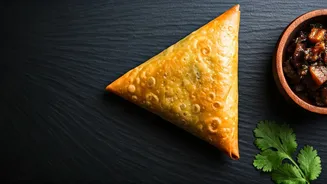
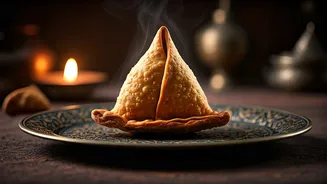
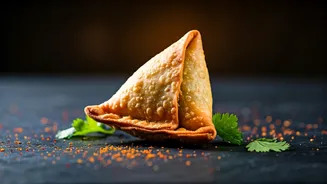
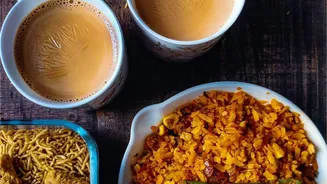
The samosa, a ubiquitous snack found from bustling street stalls to cozy home kitchens, often goes unnoticed in its everyday presence. Its comforting familiarity
makes it a constant in our culinary landscape. However, a recent viral online discussion has shifted the public's perception of this simple savory pastry, prompting a re-evaluation of its origins and, surprisingly, what it historically did *not* contain. The conversation isn't about current flavors or the best vendors, but rather a deep dive into the samosa's ancestral form and the ingredients that defined it centuries ago.
A Viral Historical Revelation
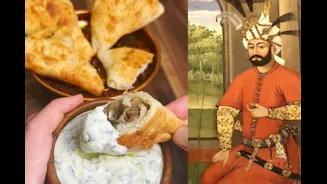
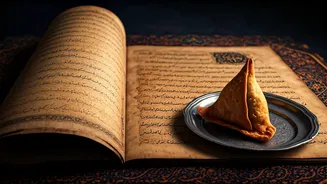
The spark for this widespread curiosity ignited on the social media platform X, where an intriguing post detailed an ancient samosa recipe. This culinary relic is estimated to be around 500 years old, originating from a Persian manuscript. This document, it's believed, journeyed through the hands of various historical figures, potentially including luminaries like Emperor Akbar and Tipu Sultan, before eventually making its way to the British East India Company. Today, this manuscript is preserved for public viewing within the esteemed British Museum, serving as a tangible link to India's rich gastronomic past.
Inside the 'Book of Delights'
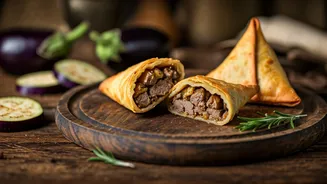
The remarkable recipe in question is purportedly found within a text known as Ni’matnama, often translated as the “Book of Delights.” This manuscript was meticulously compiled between the years 1501 and 1510, specifically for the Sultan of Mandu, who reigned in central India. At this historical juncture, the samosa was far removed from its current status as a common street food; it was an elaborate creation prepared exclusively within the confines of royal kitchens. The ingredients specified in this ancient recipe reflect its privileged status, emphasizing richness and intricate preparation. Instead of the prevalent potato filling we associate with samosas today, this 500-year-old version featured a luxurious blend of roasted aubergine pulp, dried ginger, and finely minced lamb, all expertly sautéed with aromatic onions and garlic. The final preparation involved frying the pastry in clarified butter, or ghee, lending it a distinct, decadent flavor profile.
Absence of Modern Staples
Perhaps the most striking revelation from this ancient recipe is the conspicuous absence of two ingredients that are now fundamental to most samosa fillings: potatoes and chillies. These particular food items were not integral to Indian culinary practices during the period when this Ni’matnama manuscript was authored. Their introduction and widespread adoption in Indian cuisine occurred much later. Consequently, the samosa of that era would have possessed a flavor profile dramatically different from the spicy, often potato-centric versions that have become the standard for contemporary palates across India and beyond.
Evolution from Royalty to Streets
Over the passage of centuries, the samosa embarked on a significant journey, transitioning from its exclusive domain within opulent royal kitchens to becoming accessible to the broader populace. As this beloved snack spread geographically and socially, its preparation and ingredients naturally began to adapt. The recipe evolved to incorporate more readily available and economical components, simplifying the cooking process to make it more manageable for everyday cooks. This gradual transformation over time led to the development of the familiar, widely consumed version of the samosa that is now a staple street food enjoyed throughout the Indian subcontinent.
Online Reactions and Debates
The viral dissemination of this historical samosa recipe has ignited a vibrant and extensive online discourse, extending far beyond mere culinary curiosity. Many internet users are engaging with the idea of how food serves as a potent conduit for history and cultural narratives. Comments reflect this sentiment, with one user remarking, “This shows how food is also a part of history and culture.” Another observation highlighted the samosa's journey, stating, “Everyone links the samosa to India today. It’s an immigrant.” However, not all online commentary universally accepted the premise. Some users offered counterarguments, with one post suggesting, “The samosa is an Indian invention. The Arabs brought it back from India after their invasion in the 7th century.” This ongoing debate underscores the complex and multifaceted history of many popular dishes.