





Beyond Dawn Chorus
While the familiar dawn chorus signifies the start of a new day for many, a curious phenomenon known as 'midnight melodies' reveals that avian vocalizations
aren't strictly tied to daylight hours. For a variety of compelling reasons, certain bird species choose to express themselves through song long after sunset. This nocturnal communication is often a strategic adaptation, allowing birds to navigate their environment and social dynamics when the world is quieter. Unlike their daytime counterparts, these night singers are not just making noise; they are engaging in vital activities that ensure their survival and reproductive success. Understanding these behaviors provides a deeper appreciation for the complex lives of birds, especially in our increasingly urbanized landscapes where natural rhythms are often disrupted. It challenges our conventional understanding of bird behavior and highlights their remarkable adaptability.
Territorial Declarations
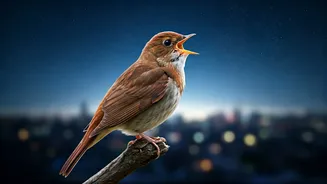
One significant driver behind birds singing at night is the assertion of their territory. In the quiet of the night, their calls can travel further and are less likely to be drowned out by the ambient noise of the day. This makes the darkness an ideal time for males to warn off potential rivals and to clearly mark their boundaries. This is particularly relevant in bustling urban settings where constant noise pollution can make daytime vocalizations less effective. The artificial glow from streetlights and buildings can also disorient birds, altering their natural light-dark cycles and prompting them to adjust their singing schedules. By vocalizing during quieter nocturnal hours, birds can communicate more efficiently and ensure their presence is acknowledged by others in their species, thereby safeguarding their resources and mating opportunities.
Love Songs in Darkness
Beyond establishing territory, nocturnal singing plays a crucial role in attracting mates. During the breeding season, male birds may use the cover of night to perform elaborate songs, designed to capture the attention of females and set themselves apart from competitors. This can be a strategic advantage, as a distinctive song heard in the stillness of the night might be more memorable. Furthermore, darkness can offer a sense of security, reducing the risk of predation. This allows birds to express themselves more freely and confidently, showcasing their vitality and suitability as partners without the constant threat of being spotted by predators. For some species, this nighttime courtship is an essential part of their reproductive cycle, ensuring the continuation of their lineage through effective mate selection.
Species-Specific Traits
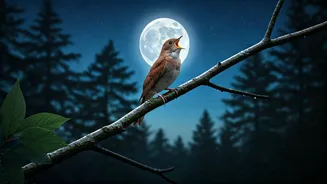
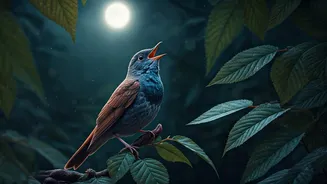
Certain bird species have evolved specific behaviors that inherently include nocturnal vocalizations. The common nightingale, for instance, is renowned for its incredibly complex and beautiful songs, which it frequently performs under the cloak of darkness. While the exact scientific reasons for this ingrained behavior are still under investigation, it is widely believed to be a dual function of both reinforcing their territorial claims and enhancing their appeal to potential mates. These birds exemplify how some species have naturally adapted their communication strategies to the night. Their enchanting melodies in the dark are not just random occurrences but are deeply rooted in their evolutionary history and ecological niche, showcasing a specialized form of avian communication that has persisted over time.
Environmental Triggers
Environmental factors can also act as catalysts for nocturnal bird vocalizations. Subtle shifts in atmospheric conditions, such as changes in temperature or humidity, can influence a bird's inclination to sing after dark. The pervasive presence of artificial lighting in urban areas, disrupting natural light cycles, is another significant environmental cue. For example, a sudden dip in temperature might prompt a bird to vocalize, perhaps as a way to maintain body heat or to signal its location to its flock. These external stimuli demonstrate the sensitivity of birds to their surroundings and their ability to adapt their behaviors in response to environmental cues, even if those cues are human-induced.