







A Unique Twist
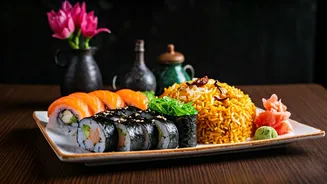
The culinary world recently witnessed a unique fusion when Japanese Ambassador Ono Keiichi decided to experience biryani in a novel way. His approach,
inspired by sushi, involved eating the flavorful rice and meat dish with a twist. This bold move captured the attention of many. This experiment highlights the cross-cultural exchange that food can facilitate. The ambassador's adventurous palate demonstrates how food can be a bridge connecting different cultures and traditions. It underscores the universal language of food, which allows us to appreciate and understand various culinary traditions. The experience was more than just a meal; it represented the embrace of diverse culinary expressions.
Cultural Reactions
The ambassador's unique biryani experience triggered a variety of reactions. Some people were astonished by the unorthodox consumption method. Others expressed genuine curiosity, eager to understand the ambassador's perspective. Many found the scenario humorous, while some, particularly those who are deeply connected to their culinary traditions, approached the situation with a more thoughtful assessment. They likely see this as a chance for cultural exchange and learning, as food frequently holds a special place within people's heritage and identity. The situation encouraged dialogue about the diverse ways in which various cultures approach food, highlighting the significance of both tradition and creativity in cuisine. This event highlighted how food can be a conversation starter and a means of promoting mutual understanding between different cultures.
The Biryani's Allure
Biryani, a beloved dish across India and beyond, has a special place in the hearts of many. The meal's wide popularity stems from its delicious, harmonious mixture of rice, meat, and spices. The dish's popularity is not restricted to any one group; instead, it's loved by a wide spectrum of people. It's a dish found at celebrations, family gatherings, and street food stalls. The appeal is deeply rooted in the dish's ability to provide comfort, satisfaction, and pleasure. The meal's adaptability is also a factor, as various regions have their own unique versions. This reflects the wide cultural variations in India and emphasizes biryani's position as a representation of culinary tradition.
Taste and Perception
Ambassador Ono Keiichi's experience underscores the subjective nature of taste and the effect of personal experiences on how food is perceived. The way someone eats food, whether with a fork and knife, chopsticks, or with their hands, may dramatically alter their enjoyment of it. This highlights how both cultural norms and personal preferences influence our experience with food. Food appreciation is not limited to flavor; it also encompasses the context in which a dish is eaten. The ambassador's experience demonstrates that people's encounters with food can be varied and that there is no 'right' way to enjoy a meal. The ambassador's attempt reveals how our preconceptions of a meal can shape our experience of it, and highlights the value of being open to new tastes.
A Culinary Dialogue
Ambassador Ono Keiichi's approach to biryani fostered a culinary dialogue. This discussion spanned different viewpoints on taste, culture, and culinary customs. Food serves as a bridge, bringing people together from various backgrounds, allowing for the sharing of information, as well as the creation of understanding. The ambassador's effort to incorporate various cultural aspects into the meal serves as an example of how cultural exchange can promote comprehension and cooperation. This event encouraged people to reconsider their own eating habits, prompting them to try new flavors and traditions. The incident provided a reminder that food can be a source of pleasure and connection.