
Understanding Flexibility's Importance
Flexibility is a crucial element of physical fitness, often overlooked but fundamentally important. It's not just about touching your toes; it encompasses
the ability of your joints to move through their full range of motion. Regular flexibility exercises offer a wide range of benefits beyond just physical performance. Enhanced flexibility can reduce the risk of injuries by improving joint stability and muscle elasticity. Increased flexibility can also alleviate muscle soreness and stiffness, allowing for more comfortable movement in daily activities. Moreover, improving flexibility promotes better posture and balance, contributing to overall physical well-being. Incorporating flexibility exercises into your routine is therefore an investment in your long-term health, helping to prevent injuries, improve physical function, and enhance overall quality of life. The inclusion of flexibility training alongside other forms of exercise offers a holistic approach to fitness, helping to achieve a balanced and robust physique.
The Cat-Cow Stretch
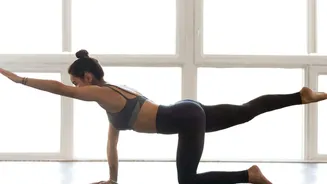
The Cat-Cow stretch, a dynamic yoga pose, is an excellent exercise for increasing spinal flexibility and body awareness. Start on your hands and knees, ensuring your wrists are aligned under your shoulders and your knees under your hips. In the 'Cat' pose, round your spine toward the ceiling, tucking your chin to your chest and engaging your abdominal muscles. Feel a gentle stretch in your upper back. Transition to the 'Cow' pose by arching your back, dropping your belly towards the floor, and lifting your chest and gaze. Feel a stretch in your lower back and abdomen. Cycle smoothly between these two poses, coordinating your breath with each movement; inhale as you move into the Cow pose and exhale as you move into the Cat pose. This rhythmic flow helps release tension in the spine, opens the chest, and stretches the abdominal muscles. The Cat-Cow stretch is also a fantastic way to gently massage the organs and improve circulation. Regular practice of this exercise can also boost your overall mood and reduce stress levels. It can be easily integrated into any daily routine, requiring minimal space and time, offering a quick and effective way to promote spinal health and overall physical well-being.
Hamstring Stretches
Hamstring stretches are essential for improving lower body flexibility and preventing injuries, especially for individuals who engage in activities like running or cycling. One simple hamstring stretch involves sitting on the floor with your legs extended in front of you. Reach towards your toes, keeping your back straight; you can bend your knees slightly if needed to avoid over-stretching. You will feel a stretch along the back of your thighs. Hold this stretch for about 30 seconds, breathing deeply, to allow your muscles to relax and lengthen. Another effective method is a standing hamstring stretch, where you place one foot on a slightly elevated surface, such as a low bench or step. Keeping your leg straight, lean forward from your hips, aiming to feel the stretch in your hamstring. Avoid rounding your back. Focus on maintaining a straight posture. Consistent hamstring stretching helps to enhance flexibility and reduce muscle tightness, reducing the risk of strains and improving athletic performance. It is important to perform these stretches regularly as part of a warm-up or cool-down routine. These stretches should be done gently, avoiding any sharp pain or discomfort, which may indicate over-stretching. Always listen to your body and adjust the intensity as needed.
Quadriceps Stretches
Quadriceps stretches are vital for counteracting the effects of prolonged sitting or activities that involve repetitive knee bending, ensuring balanced muscle function and reducing the risk of lower body injuries. One of the most effective ways to stretch the quadriceps is by standing and holding onto a stable surface for balance. Bend one knee, bringing your heel towards your glutes, and grasp your ankle or foot with the corresponding hand. Gently pull your heel towards your glutes, feeling the stretch in the front of your thigh. Keep your knees close together and avoid arching your back. Hold the stretch for about 30 seconds, breathing deeply. You can also perform this stretch lying down on your side, which might be more comfortable for some. The lying-down version provides additional support. Regular quadriceps stretches help to improve flexibility and increase the range of motion in the knee joint. This will lead to better overall lower body function. Include quadriceps stretches in your warm-up and cool-down routines to optimize muscle health and performance. Remember to keep the movements gentle and listen to your body, stopping if you feel any sharp pain.
Shoulder Stretches
Shoulder stretches are essential for improving upper body flexibility, reducing tension, and promoting better posture, especially beneficial for those who spend long hours at a desk. One easy shoulder stretch involves reaching one arm across your chest and using your other hand to gently pull your elbow closer to your body. Hold this position for about 30 seconds, feeling the stretch in your shoulder. Alternatively, you can clasp your hands behind your back and gently pull your shoulder blades together. This exercise opens up the chest and shoulders. The doorway stretch is also useful; place your forearms on a doorway frame and lean forward until you feel a stretch in your chest and shoulders. Holding this position for 20–30 seconds can alleviate tightness. Consistent shoulder stretching can improve your posture, reduce the risk of shoulder injuries, and increase your upper body's overall range of motion. Including these stretches in your daily routine can significantly reduce upper body stiffness. Perform these stretches gently, avoiding any jerking movements that might strain the muscles.
Spinal Twists
Spinal twists are beneficial for improving spinal flexibility, reducing back pain, and enhancing the health of the internal organs. One simple seated spinal twist involves sitting upright with your legs extended or crossed on the floor. Bend one knee and place your foot on the outside of your opposite thigh. Place your opposite hand on your bent knee and use your other hand as support behind you. Gently twist your torso towards the bent knee, looking over your shoulder. Hold the twist for about 30 seconds, breathing deeply, and feeling the stretch along your spine. In the lying-down position, you can also perform this exercise. Lie on your back with your knees bent and feet flat on the floor. Keeping your shoulders flat on the floor, gently drop your knees to one side and hold. Repeat on the other side. Spinal twists help to release tension in the spine, improve circulation, and stimulate the abdominal organs. Practicing spinal twists regularly can reduce stiffness, improve posture, and alleviate back pain. Remember to perform these twists gently, respecting your body's limits, and focusing on your breath to enhance the stretch.