





The Growing Orbital Congestion
The expanse of Earth's orbit is rapidly transforming from a frontier of exploration into a bustling hub of activity. With numerous space agencies and private
companies launching an increasing number of satellites for communication, observation, and navigation, the density of objects in orbit is reaching unprecedented levels. This proliferation, driven by ambitious projects like vast satellite constellations and expanded lunar exploration, presents a significant challenge. The sheer volume of spacecraft, from operational satellites to defunct hardware and fragments from past missions, means that the likelihood of accidental collisions is escalating. This congestion isn't just an abstract concern; it directly impacts the viability of future space missions and the continued use of essential orbital infrastructure. As more entities participate in space activities, the need for careful management and planning becomes paramount to prevent a cascade of failures and ensure continued access to space for all.
Space Debris: A Lingering Threat
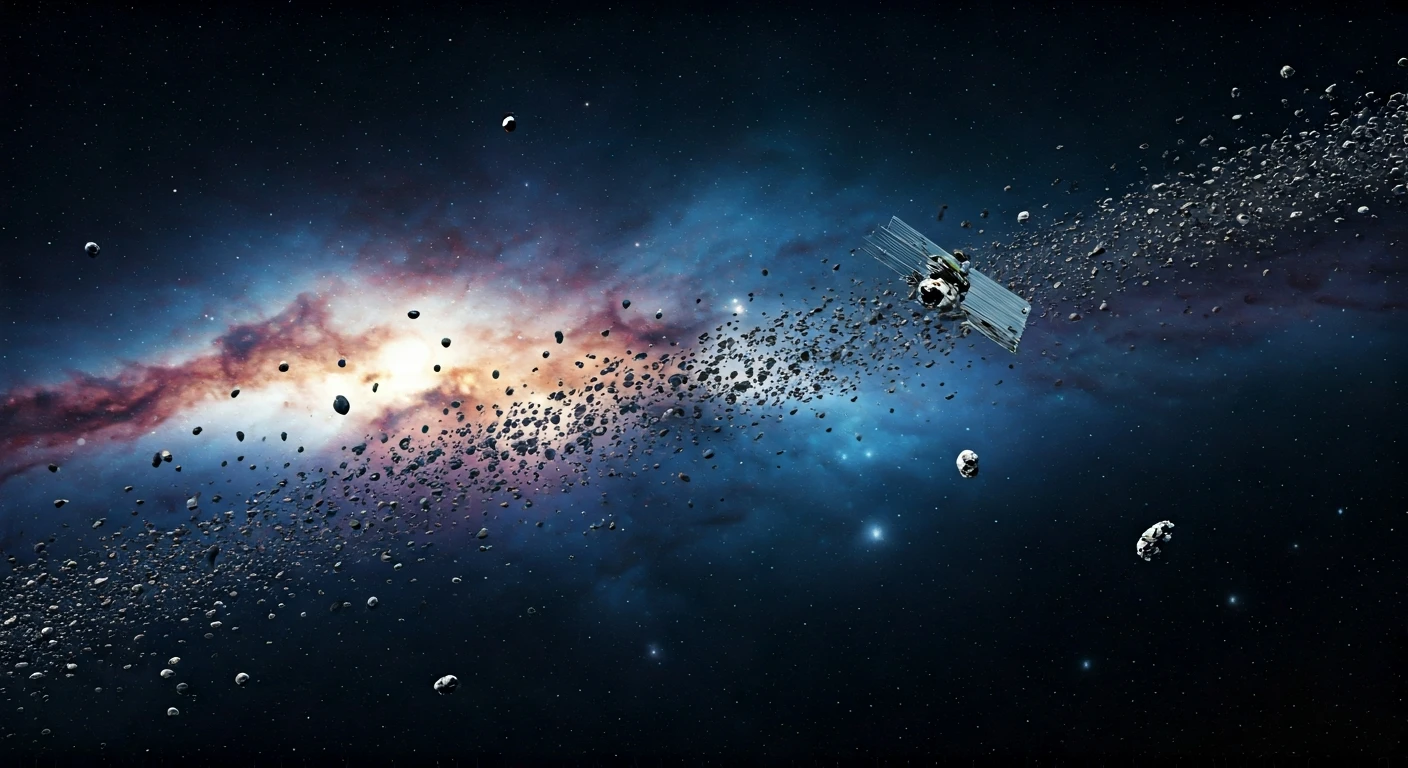
Beyond active satellites, Earth's orbit is a vast repository of space debris, a persistent threat to ongoing and future space endeavors. This debris encompasses everything from discarded rocket stages and defunct satellites to tiny paint flecks and fragments resulting from accidental breakups or deliberate anti-satellite tests. Even minuscule particles traveling at orbital velocities can inflict catastrophic damage upon impact with operational spacecraft, posing a severe risk to astronauts and expensive equipment alike. The consequences of such collisions are amplified, creating even more debris and exacerbating the problem in a dangerous feedback loop. The 'Crash Clock' concept illustrates the stark reality of how quickly a significant solar storm could trigger a cascade of satellite collisions, potentially rendering critical orbits unusable. Addressing this ever-growing problem requires not only better tracking but also active debris removal strategies to mitigate the long-term risks.
Innovative Solutions Emerge
The escalating challenge of orbital congestion has spurred innovation in tracking, management, and mitigation. Scientists are developing sophisticated mapping tools, such as a proposed map of one million routes around our planet, to visualize and navigate this complex environment, aiming to prevent collisions. Earthquake sensors are being adapted to track space junk as it re-enters Earth's atmosphere, providing valuable data on the trajectory and impact of falling objects. Furthermore, private companies are contributing to solutions, with plans for massive satellite constellations also necessitating advanced debris management protocols. Concepts like 'inspector' satellites are being developed to monitor and potentially de-orbit defunct objects. As space law grapples with the implications of this new space age, international cooperation and technological advancements will be crucial to ensure the sustainability of space exploration and prevent critical infrastructure from becoming vulnerable.