




Ajanta Caves' Artistry
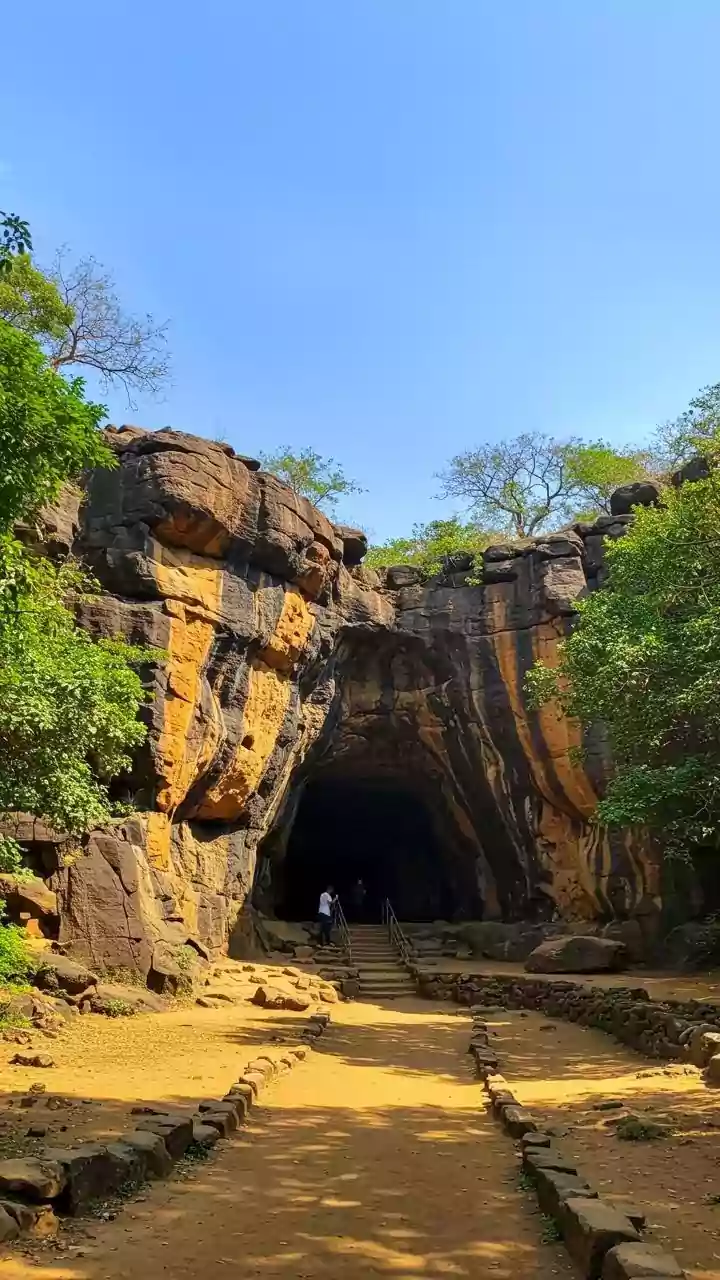
The Ajanta Caves, located in Maharashtra, are famed for their ancient Buddhist murals. These caves, dating back to the 2nd century BCE to the 5th century CE,
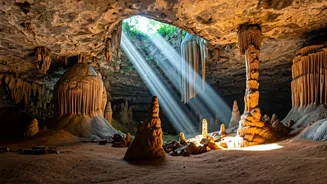
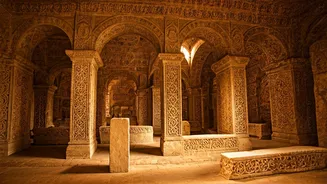
showcase vibrant paintings and sculptures depicting the life of Buddha and Jataka tales. The artistry in these caves displays the mastery of ancient Indian artists, using natural pigments to create stunning visual narratives. The Ajanta Caves served as monasteries and prayer halls, offering a space for spiritual reflection and artistic expression. The intricate details of the murals, preserved for centuries, reflect the cultural and religious beliefs of the time. The Ajanta caves are a marvel, offering a portal into the past, illustrating artistic styles and techniques of ancient India, while embodying the spiritual essence of Buddhism.
Ellora's Rock-Cut Wonders
Ellora Caves, also in Maharashtra, present a unique blend of three major religions: Hinduism, Buddhism, and Jainism. The site is a complex of rock-cut temples, monasteries, and chapels, carved out of the Charanandri hills. The most remarkable feature is the Kailasa Temple (Cave 16), a monolithic rock-cut structure, a feat of engineering that's truly astonishing. The Buddhist caves exhibit serene Buddha figures and monastic cells. The Hindu caves portray epic stories and deities. The Jain caves display intricate carvings illustrating their principles. Ellora's cave system is a testament to religious tolerance and the artistic brilliance of ancient India, with each structure showcasing unique styles and artistic expression.
Agra Fort's Grandeur
The Agra Fort, a UNESCO World Heritage site in Uttar Pradesh, is a majestic fort that served as the primary residence of the Mughal emperors until 1638. Built by Emperor Akbar in the 16th century, the fort exhibits a blend of architectural styles, incorporating both Hindu and Central Asian influences. The fort's red sandstone walls enclose a vast complex of palaces, halls, mosques, and gardens. Key structures include the Jahangir Mahal, Diwan-i-Am (Hall of Public Audience), and Diwan-i-Khas (Hall of Private Audience). The fort's design represents the Mughal empire’s power and artistic sophistication, reflecting the rulers' love for art and architecture, and showcases a blend of Persian and Indian architectural traditions. Agra Fort is a remarkable example of Mughal architecture, representing its rich history.
Taj Mahal's Timeless Beauty
The Taj Mahal, located in Agra, is an iconic mausoleum built by Mughal Emperor Shah Jahan in memory of his wife Mumtaz Mahal. Constructed in the mid-17th century, the Taj Mahal is renowned for its intricate marble work, symmetrical design, and stunning beauty. The structure is an amalgamation of Indian, Persian, and Islamic architectural styles, showcasing the exquisite craftsmanship of the artisans who built it. The mausoleum is surrounded by lush gardens, reflecting pools, and other structures, adding to its serenity. The Taj Mahal is a timeless symbol of love, artistic achievement, and is an outstanding example of Mughal architecture.
Khajuraho's Temple Complex
The Khajuraho temples in Madhya Pradesh are a collection of Hindu and Jain temples known for their intricate sculptures and erotic carvings. Constructed between 950 and 1050 CE by the Chandela dynasty, these temples showcase a blend of artistic creativity and religious devotion. The temples are renowned for their intricate detailing, depicting various aspects of life, including religious beliefs, mythological stories, and everyday activities. The complex includes both Saiva and Vaishnava temples. The carvings feature celestial figures, dancers, musicians, and erotic sculptures, displaying artistic and cultural richness of the era. The Khajuraho temples provide a unique window into medieval Indian art, spirituality, and societal norms.
Fatehpur Sikri's Splendor
Fatehpur Sikri, located near Agra, is a city built by Emperor Akbar in the late 16th century. It was intended to be the capital of the Mughal Empire. Constructed of red sandstone, the city includes impressive structures like the Buland Darwaza, Jama Masjid, and Panch Mahal, reflecting the architectural prowess of the Mughal era. Fatehpur Sikri is a complex that blends Islamic and Hindu architectural styles, showcasing Akbar's visionary leadership. The city was eventually abandoned due to a lack of water, but its well-preserved structures offer a fascinating glimpse into Mughal urban planning and architectural innovation. Fatehpur Sikri offers insights into the cultural synthesis of the Mughal period.
Hampi's Ruins Marvel
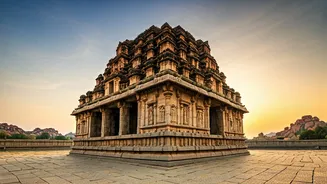
Hampi, in Karnataka, is an ancient village of ruins that was once the capital of the Vijayanagara Empire. The site comprises extensive remains of temples, palaces, and other structures. The Virupaksha Temple, the Hampi Bazaar, and the Stone Chariot are some of the most notable monuments. The Vijayanagara Empire reached its zenith in the 14th and 16th centuries. Hampi's architecture represents a unique blend of Dravidian and Indo-Islamic styles, showcasing the empire's wealth, power, and cultural richness. The intricate carvings, massive structures, and sprawling landscape reflect the glory of a bygone era. Hampi's ruins stand as a testament to the Vijayanagara Empire's legacy and are a unique historical destination.
Great Living Chola Temples
The Great Living Chola Temples, primarily located in Tamil Nadu, include the Brihadeeswarar Temple in Thanjavur, the Gangaikonda Cholapuram Temple, and the Airavatesvara Temple in Darasuram. Built during the Chola dynasty, these temples stand as exemplary examples of Dravidian architecture. The Brihadeeswarar Temple, completed around 1010 CE, is known for its towering gopurams (gateway towers), intricate carvings, and massive size. The Gangaikonda Cholapuram Temple is distinguished by its unique design and artwork. The Airavatesvara Temple, with its detailed carvings and sculptures, offers insights into Chola art and craftsmanship. The Great Living Chola Temples reflect the dynasty's artistic achievements and religious devotion, demonstrating a rich cultural and architectural heritage.
Sundarbans National Park
The Sundarbans National Park, located in West Bengal, is the world's largest mangrove forest. It is known for its rich biodiversity, including the Bengal tiger and various bird species. The park covers a vast area where the Ganges, Brahmaputra, and Meghna rivers converge into the Bay of Bengal. The mangrove ecosystem is crucial for wildlife habitat and coastal protection. The Sundarbans' dense forests and waterways are home to a wide range of flora and fauna, including estuarine crocodiles and various reptile species. This unique ecosystem, constantly shaped by tidal forces, offers exceptional views and an understanding of the relationship between nature and human life.
Kaziranga's Rhino Haven
Kaziranga National Park, located in Assam, is celebrated for its population of one-horned rhinoceroses. The park is a UNESCO World Heritage Site known for its biodiversity and conservation efforts. Spanning a large area, the park's landscape includes tall grasslands, wetlands, and dense forests, creating a diverse habitat for wildlife. Kaziranga is home to a variety of animal species, including elephants, tigers, and various bird species. Conservation efforts have greatly contributed to the increase in rhinoceros population. The park provides an excellent platform to showcase the importance of preserving natural habitats and their significance in maintaining biodiversity.
Manas Wildlife Sanctuary
Manas Wildlife Sanctuary in Assam, known for its rich biodiversity, is a UNESCO World Heritage site and a tiger reserve. This sanctuary is located in the foothills of the Himalayas. The landscapes include grasslands, forests, and rivers, providing a diverse ecosystem for various wildlife. The sanctuary is a critical habitat for endangered species, including tigers, rhinos, elephants, and many bird species. The wildlife and flora, along with a serene river flowing by make this sanctuary very scenic. Manas's conservation initiatives and efforts provide a glimpse into the importance of protecting endangered species and their habitats, showing the value of co-existence between humans and nature.
Western Ghats' Biodiversity
The Western Ghats, a mountain range along India's western coast, are recognized for their exceptional biodiversity and ecosystem services. The Ghats are home to a range of forests, from evergreen to deciduous, and are characterized by high levels of endemism, meaning many species are found only here. This region acts as a crucial watershed, providing water resources to millions of people. The Western Ghats also supports a diversity of wildlife, including elephants, tigers, and numerous species of birds, amphibians, and reptiles. The site includes various national parks, wildlife sanctuaries, and reserve forests. The Western Ghats is a vital ecosystem, which highlights the need for conservation and sustainable practices.
Hill Forts of Rajasthan
The Hill Forts of Rajasthan comprise six impressive forts: Chittorgarh, Kumbhalgarh, Ranthambore, Amber, Gagron, and Jaisalmer. These forts reflect the military and cultural achievements of the Rajput rulers. Built between the 8th and 18th centuries, these forts showcase unique architectural styles. The forts include palaces, temples, water harvesting structures, and fortifications. The architecture demonstrates the rulers' skills in defense, urban planning, and artistic expression. The forts stand as historical symbols, and provide insights into Rajput history, culture, and their lifestyle, each fort telling a unique story of bravery, chivalry, and regal splendor.
Nanda Devi's Alpine Beauty
Nanda Devi National Park and Valley of Flowers National Park, located in Uttarakhand, form a UNESCO World Heritage site known for their alpine ecosystems and scenic beauty. The Nanda Devi National Park is dominated by the second-highest peak in India, Nanda Devi, and is home to diverse flora and fauna. The Valley of Flowers is a high-altitude Himalayan valley renowned for its vibrant meadows, that are covered with a variety of wildflowers during the monsoon season. The region supports several endangered species, including the snow leopard and the Himalayan musk deer. The park shows the importance of preserving the natural beauty of the Himalayas, and the necessity to protect delicate alpine environments.
Buddhist Monuments at Sanchi
The Buddhist Monuments at Sanchi, in Madhya Pradesh, represent an early example of Buddhist art and architecture in India. The site includes stupas, monasteries, temples, and pillars, reflecting the development of Buddhist art from the 3rd century BCE to the 12th century CE. The Great Stupa, with its ornate gateways and sculptures, is the most well-known monument. The structures showcase the different phases of Buddhist art, from the earliest Aniconic phase to the later anthropomorphic representations of the Buddha. The site is a visual representation of Buddhist beliefs, practices, and artistic achievements. The Sanchi monuments provide insights into the religious practices and artistic styles of ancient India and the spread of Buddhism.
Champaner-Pavagadh's History
Champaner-Pavagadh Archaeological Park, in Gujarat, offers a blend of Hindu and Islamic architecture, showcasing a cultural exchange between the two faiths. The site includes fortifications, religious structures, residential areas, and stepwells, spanning the 8th to 16th centuries. The Champaner fortresses, along with the Jama Masjid, and Pavagadh Hill temples reflect a rich architectural and cultural diversity. The park shows the importance of the region as a significant historical site, where various dynasties and religious groups interacted. The site also highlights the city's strategic significance, and provides insights into the region's cultural exchange and social dynamics over the centuries.
Victorian Gothic & Art Deco
The Victorian Gothic and Art Deco Ensembles of Mumbai showcase the city’s architectural evolution during the British colonial era and the subsequent Art Deco movement. These ensembles include several buildings and structures. The Gothic structures, which include the Chhatrapati Shivaji Maharaj Terminus, are characterized by their ornate designs and details. The Art Deco buildings reflect the modern architectural styles that developed in the early 20th century. The collection represents Mumbai's transition to a modern metropolis, blending European and Indian influences. The buildings showcase the rich cultural landscape of Mumbai, and its historical development.
Historic City of Ahmedabad
The historic city of Ahmedabad in Gujarat, is known for its walled city, which features a diverse range of historical structures. The old city is characterized by its pols (traditional neighborhoods), mosques, temples, and tombs, reflecting the city's multi-religious and multi-cultural heritage. The city features a blend of architectural styles, including Indo-Islamic, Hindu, and Jain influences. The Bhadra Fort, Sidi Saiyyed Mosque, and Jama Masjid are some of the significant structures. Ahmedabad displays how the city has developed through different historical eras. This makes it a significant cultural and historical destination.
Khangchendzonga's Nature
Khangchendzonga National Park, located in Sikkim, is a unique UNESCO World Heritage Site that incorporates both natural and cultural values. The park's landscape includes high mountains, valleys, glaciers, and diverse flora and fauna. It is home to the world's third-highest peak, Mount Khangchendzonga, and is a sacred site for the local communities. The park combines its outstanding natural beauty with religious beliefs and cultural practices. The site supports a wide range of plant and animal species, and showcases the importance of protecting the biodiversity and preserving its cultural significance.
Dholavira's Ancient City
Dholavira, an ancient city in Gujarat, is an archaeological site that showcases the remains of one of the largest settlements of the Indus Valley Civilization. The city is known for its urban planning, water management systems, and architectural innovations. Dholavira's structures are divided into three parts: the citadel, the middle town, and the lower town, and these demonstrate the advanced urban planning of the Indus Valley Civilization. The site also reveals insights into the civilization's trade, crafts, and societal structure. Dholavira presents a comprehensive view of the Indus Valley Civilization, along with urban planning, and technological advancements.