







The Dahi Dilemma
The internet is buzzing with claims that yogurt, or 'dahi,' can dramatically accelerate hair growth, with countless videos showcasing its application for
achieving Rapunzel-like locks. This viral trend has many people reaching for their refrigerator staples. However, beyond the visually appealing social media content, lies a question of scientific validity: does slathering dairy onto your scalp actually stimulate new hair to sprout faster? This exploration aims to move past the hype and into the realm of factual understanding, examining what yogurt truly does for your hair and scalp when applied topically, and whether it aligns with the widely promoted growth miracle. When yogurt, particularly a thick variety like Greek yogurt, is applied as a hair mask, several beneficial components come into play. Firstly, the abundant proteins within yogurt are crucial. Hair is primarily composed of keratin, a protein, and the proteins in yogurt can temporarily fortify the hair shaft by smoothing over microscopic imperfections in the cuticle. This smoothing action enhances the hair's resilience, making it less prone to breakage during routine activities like brushing or washing. Secondly, yogurt contains lactic acid, a gentle alpha-hydroxy acid (AHA) known for its exfoliating properties. On the scalp, lactic acid can help to slough away dead skin cells and dissolve excess sebum (oil), as well as product buildup that can clog follicles. This cleansing action promotes a healthier scalp environment. Furthermore, yogurt possesses natural anti-inflammatory qualities and probiotics, which can help to soothe an irritated scalp and rebalance its natural microbiome, offering relief from itching and dandruff. For those using full-fat versions, the natural fats provide deep conditioning, helping to combat frizz and enhance moisture retention. Despite these considerable benefits for hair's immediate appearance and condition, the notion that topical yogurt can fundamentally alter the rate at which hair grows is a misconception. The biological process of hair growth is intricately regulated by genetics, hormonal balance, and overall systemic health. Applying external substances, even nutrient-rich ones like yogurt, cannot directly influence the dormant or active phases of hair follicles to accelerate their natural cycle. Therefore, while yogurt is an excellent ingredient for improving the health, strength, and texture of existing hair, it does not possess the ability to significantly speed up the physiological process of new hair generation from the root. The perceived faster growth is primarily a result of improved hair retention due to reduced breakage, rather than an actual increase in growth rate.
Internal Nourishment Power
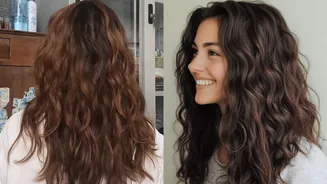
For those genuinely committed to enhancing hair growth and achieving longer locks more rapidly, the most effective strategy involving yogurt is not external application but internal consumption. Consuming yogurt regularly provides your body with essential nutrients that are vital for synthesizing strong, healthy hair from the core. Specifically, it delivers a bioavailable source of dietary protein, which is a fundamental building block for hair. Additionally, yogurt is a good source of calcium and Vitamin B5, also known as pantothenic acid. These components play crucial roles in the body's metabolic processes that support hair structure and vitality. When these nutrients are adequately supplied through diet, the body can efficiently produce robust hair strands. Therefore, ingesting yogurt is a direct way to fuel your hair's growth machinery from within, supporting the entire biological process at its root. This approach targets the internal factors that govern hair health and growth, offering a more impactful solution for acceleration compared to topical treatments. The scientific consensus indicates that applying yogurt directly to the scalp does not promote faster biological hair growth. There is a notable absence of clinical evidence to support the claim that topical dairy applications can stimulate dormant hair follicles to produce new strands at an accelerated pace. The rate at which hair emerges from the scalp is an intrinsically internal biological process. This process is predominantly influenced by a complex interplay of genetic predispositions, hormonal equilibrium, the quality of one's daily diet, and their overall state of physical well-being. Regardless of how diligently one massages yogurt into their scalp, it is not possible to externally alter this fundamental internal biological timeline that dictates hair growth. Therefore, while topical yogurt offers cosmetic and conditioning benefits, it does not have the power to hasten the natural hair growth cycle. The widespread appeal of yogurt masks often stems from a misunderstanding of their primary benefits. While it's true that yogurt won't make your hair grow faster from the root, it excels at improving the condition and retention of the hair you already have. Consider the scenario where new hair growth is minimal, but existing strands are brittle and prone to breakage. In such cases, even if new hair is emerging, significant length is lost due to split ends and snapping. Yogurt acts as a powerful restorative conditioning agent, addressing this issue directly. By enhancing scalp health and fortifying existing hair shafts against damage, it significantly reduces breakage. This improved hair retention means that the length you naturally grow is preserved, leading to the appearance of faster growth over time. It’s essentially creating a more robust hair structure that holds onto length better, rather than directly speeding up the emergence of new hair follicles.