





End of an Era
The International Space Station (ISS), a marvel of international collaboration and scientific endeavor, is scheduled for a controlled deorbit by the year
2030. NASA is committed to maximizing the ISS's operational lifespan while simultaneously paving the way for a new generation of commercially operated platforms in low Earth orbit. This strategic pivot ensures the continuity of vital research and technological development in space. To facilitate this transition, NASA has already entered into significant agreements, totaling $415.6 million, with three prominent American companies: Blue Origin, Nanoracks, and Northrop Grumman. These partnerships aim to foster the design and development of next-generation commercial space stations and other orbital destinations that will support astronauts and ongoing scientific missions. Industry experts anticipate these private stations will offer greater operational flexibility, reduce costs, and significantly expand the possibilities for space-based research and burgeoning space industries.
A New Space Economy
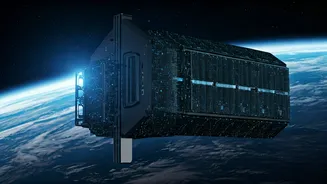
The United States harbors a clear vision for the future of its presence in low Earth orbit: a complete handover of operations to commercially owned and managed facilities. This strategic move is designed to guarantee uninterrupted access to essential research capabilities and advanced technology development. Furthermore, NASA has enlisted SpaceX, led by Elon Musk, to engineer and deploy the specialized Deorbit Vehicle. This critical piece of technology will be instrumental in executing a meticulously controlled deorbit of the ISS, thereby minimizing any potential risks to populated areas on Earth during its descent. This collaboration underscores the shared responsibility and technological innovation driving the next phase of human activity in space.
Commercial Station Contenders
The race is on to build the successors to the ISS, with multiple private entities actively developing commercial space stations. These ambitious projects are targeting launch dates between 2027 and 2029, signaling a rapid acceleration of private space infrastructure. Jeff Bezos' Blue Origin, in partnership with Sierra Space, is developing 'Orbital Reef,' envisioned as a versatile mixed-use business park in orbit, catering to research, commercial ventures, and industrial applications. Axiom Space, a company supported by both government funding and private investment, is progressing with its 'Axiom Station.' Its initial module is slated to dock with the ISS in 2027 before transitioning to independent operations. Starlab Space LLC, a joint venture between Voyager Space and Airbus, has cleared a significant NASA review for its station, with a planned launch in 2029. Vast Space is creating the 'Haven' series, starting with 'Haven-1,' a standalone station, to be followed by a modular 'Haven-2' system for expanded capacity. Lastly, Max Space is innovating with 'Thunderbird Station' using inflatable habitat technology, aiming for a 2029 launch and planning an earlier in-orbit demonstration.
Responsible Deorbit Plan
NASA's paramount objective for the ISS deorbit is the safe and responsible re-entry of the station's structure into a designated, unpopulated ocean area. The decommissioning strategy involves a multifaceted approach. Initially, natural orbital decay will be leveraged to lower the station's altitude as much as possible. This will be augmented by intentional altitude reductions, likely utilizing existing propulsion systems. The final phase involves a precisely controlled re-entry maneuver, executed to target a specific ground track and debris footprint over an uninhabited ocean region. This maneuver will require substantial propellant, hence the emphasis on maximizing atmospheric drag beforehand. Once all crew are safely returned to Earth and final alignment maneuvers are completed, operators will command a significant re-entry burn to ensure a safe atmospheric entry within the planned footprint.