




Lunar Exploration's Next Chapter
The recent Artemis 2 mission marked a significant milestone, with astronauts successfully completing a flyby of the Moon. This journey not only provided
invaluable data for lunar scientists eager to unlock further secrets of our celestial neighbor but also offered astronauts a unique perspective of Earth and the lunar surface. NASA's efforts to prepare crews for these missions, including specialized training to enhance their observational capabilities, underscore the dedication to pushing the boundaries of human spaceflight. The return of the Artemis 2 crew signifies a crucial step forward in humanity's ambitious plans to establish a sustainable presence on the Moon, paving the way for future scientific discovery and exploration. This mission's success fuels anticipation for what lies ahead in lunar science and exploration.
Starship's Powerful Advancements
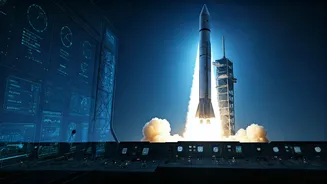
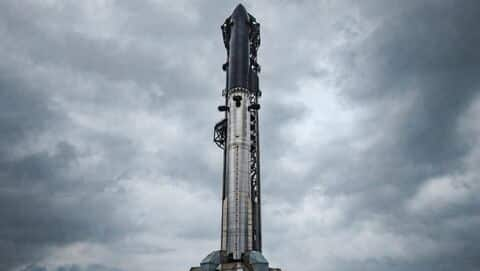
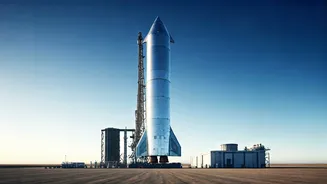
The development of next-generation spacecraft is accelerating, with recent engine tests of SpaceX's 'Version 3' Starship signaling progress towards its highly anticipated May test flight. This cutting-edge rocket, designed for deep space missions and rapid Earth-to-Earth travel, represents a significant leap in rocket engineering. Alongside Starship's progress, other launch vehicles are making their mark. The SpaceX Falcon Heavy recently achieved its first liftoff in 18 months, showcasing its robust capabilities. These advancements in launch technology are critical for enabling future ambitious missions, from lunar bases to interplanetary exploration, and highlight the dynamic evolution of space transportation.
Cargo Missions to the ISS
Ensuring the continued operation and support of astronauts aboard the International Space Station (ISS) relies heavily on successful cargo delivery missions. Recently, a significant payload of over 5 tons of supplies was launched to the ISS via SpaceX's massive 'Cygnus XL' cargo ship. This event follows Northrop Grumman's first 'Cygnus XL' spacecraft departure from the station, indicating a steady flow of logistics. Russian space endeavors also contribute to the ISS resupply, with a 3-ton cargo launch from Kazakhstan. These regular deliveries, including vital equipment and provisions, are crucial for maintaining the ISS as a thriving orbiting laboratory and a testament to international collaboration in space.
Unraveling Earth's Magnetic Field
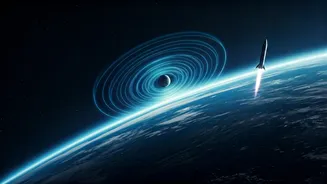
The Earth's mysterious 'ring current,' a toroidal electrical current flowing around the planet's equator, is the subject of intense scientific scrutiny. NASA, in collaboration with the US Space Force, is launching a dedicated mission to unravel its origins and behavior. Understanding this phenomenon is critical as it plays a significant role in space weather, influencing satellite operations and potentially impacting ground-based infrastructure. The mission aims to gather crucial data to better predict and mitigate the effects of this powerful magnetic field component, offering deeper insights into the complex dynamics of our planet's magnetosphere and its interaction with solar activity.
Enduring Spacecraft and New Horizons
After nearly 50 years of dedicated service, NASA's twin Voyager spacecraft are facing power challenges, raising questions about their longevity. These iconic probes have ventured further than any other human-made objects, providing unparalleled data about the outer solar system and interstellar space. Meanwhile, China's mysterious Shenlong space plane has embarked on its fourth mission, sparking curiosity about its objectives and capabilities. Additionally, Europe's first reusable spacecraft, 'Space Rider,' is progressing through key development stages, signaling a move towards more sustainable space operations. These diverse ongoing missions, from the twilight of aging explorers to the dawn of new technologies, showcase the breadth of human ambition in space.