





AI on Mars
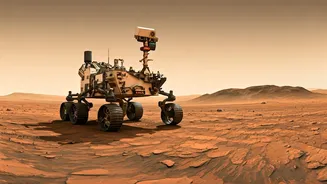
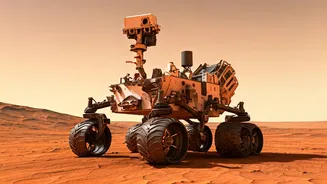
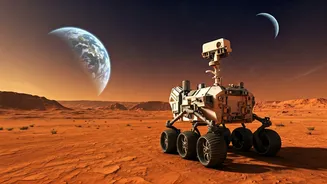
Artificial intelligence is making significant strides in planetary exploration, notably with NASA's Perseverance rover. This advanced rover recently completed
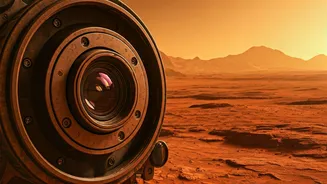
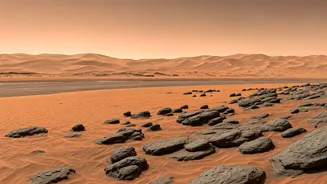
its inaugural drive on Mars, with the entire journey meticulously planned by AI. This development marks a crucial step towards greater autonomy for robotic explorers on distant worlds, reducing the reliance on constant human intervention from Earth. Furthermore, Perseverance is on track to potentially break the record for the longest distance driven by a rover on another planet, showcasing its endurance and technological prowess. The rover has also been instrumental in identifying intriguing geological features, such as megaripples and bleached Martian rocks, which offer fresh evidence suggesting Mars was once a wetter and warmer environment. The origin of these rocks remains a compelling question, hinting at complex geological histories. Alongside these discoveries, the rover has also been observed to be potentially finding its first meteorite after five years on the Martian surface, adding another layer to its scientific contributions.
Return to the Moon
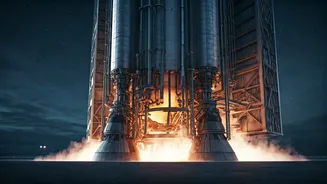
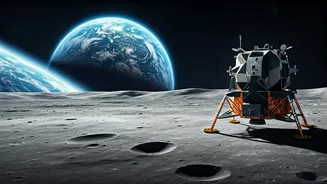
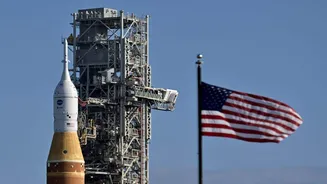
The year 2026 is poised to be a landmark period for lunar exploration, with a significant focus on returning humans to the Moon. NASA's Artemis program is central to this endeavor, with the Artemis 2 mission aiming to pave the way for future lunar landings. The colossal Artemis 2 moon rocket has undergone significant preparations, including its rollout to the launch pad. Despite a minor leak issue, which has been noted as a recurring challenge in large rocket systems, preparations continue. This mission represents a shift in US space strategy, differing from the Apollo era and contrasting with China's more insular space program. The push for lunar presence isn't solely governmental; private spacecraft are also gearing up for lunar landing attempts in 2026, signaling a burgeoning commercial interest in the Moon. Global cooperation, alongside competition, will undoubtedly shape the landscape of lunar exploration in the coming years.
Spacecraft Autonomy
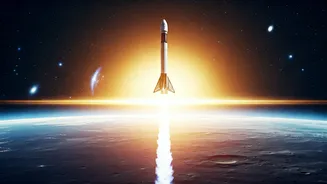
Beyond Mars and the Moon, artificial intelligence is also transforming the operational capabilities of spacecraft in Earth's orbit and beyond. A significant advancement has been demonstrated by an orbiting satellite that successfully reoriented itself using AI, a major stride towards achieving full autonomy in space. This capability is critical for missions operating in environments where real-time communication with ground control is limited or impossible. Moreover, AI is actively contributing to enhancing the efficiency of spacecraft propulsion systems, with potential future applications even leading to the development of nuclear-powered rockets. On the International Space Station (ISS), AI has further showcased its utility by assisting in the piloting of a free-flying robot, marking another first for autonomous operations in space. Even in the realm of space-based observation, AI is proving invaluable, with discoveries of hundreds of previously unseen 'cosmic anomalies' within archival data from the Hubble Telescope.
Cosmic Events & Exploration
The year 2025 and beyond promise a celestial calendar filled with captivating astronomical events and ambitious exploration initiatives. A notable upcoming event is a rare planetary alignment in February, offering a unique opportunity to observe multiple planets simultaneously in what is being called a 'planet parade.' Looking further ahead, space exploration is set to expand its horizons beyond our immediate celestial neighbors. An armada of over 8,000 players in the game Elite Dangerous has embarked on an extensive three-month expedition to chart the Milky Way, demonstrating a virtual yet immersive drive for cosmic discovery. Astronomers have also had a remarkable 2025, with eight significant discoveries having captivated the scientific community. These advancements highlight a growing fascination with the universe, from the intimate details of Martian geology to the vast expanse of our galaxy and the ongoing quest for understanding our place within it.