



Lunar Expedition's Purpose
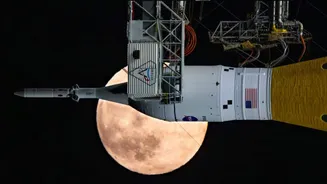
The objective of NASA's lunar missions extends far beyond mere surface exploration; the primary aim involves using the Moon as a scientific laboratory
to investigate the intricacies of water on Earth. Scientists are leveraging the Moon's unique geological context and history to decipher the origins and evolution of water within our solar system, with a particular focus on how Earth's water came to be. This endeavor is rooted in the belief that the Moon’s composition and geological record may provide clues that are not readily available on Earth, due to processes like erosion and plate tectonics, which have significantly altered our planet's early surface. By analyzing lunar samples and conducting detailed studies, researchers aspire to refine current models of water distribution and its historical impact on Earth's climate and the emergence of life. This ambitious scientific pursuit is essential for comprehending the dynamics of water in planetary systems, and by extension, enhances our understanding of the habitability of other planets.
Analyzing Lunar Samples
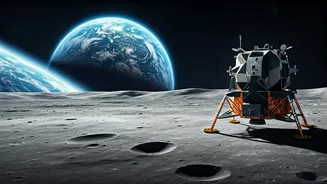
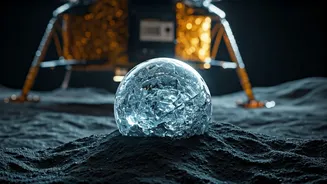
To unravel the Earth's water puzzle, NASA is focusing on the meticulous examination of lunar samples. The strategy involves detailed analysis of the lunar regolith – the layer of loose, fragmented material that covers the Moon's surface – and of rocks brought back during the Apollo missions. These samples are subjected to a battery of tests, including mass spectrometry and isotopic analysis, which identify the chemical composition and the ratios of different isotopes of hydrogen and oxygen within water molecules. Studying these ratios provides crucial information, such as pinpointing the source of Earth's water – whether from asteroids, comets, or possibly even the early solar nebula. Further analyses examine the presence of trace elements and the overall mineral composition, to uncover geological processes. These efforts are aimed at constructing a comprehensive picture of how water was delivered to Earth and subsequently became a fundamental component of the planet's environment. The findings will likely revise current theories about the early Earth and the conditions that fostered the development of life.
Mission's Scientific Impact
The insights gained from these lunar investigations promise far-reaching effects on our scientific understanding. By contrasting the chemical signatures of water found on the Moon with those found on Earth, researchers can validate or challenge prevailing theories about the origins of water. For instance, the results can strengthen the hypothesis that comets or asteroids played a key role in delivering water to Earth, or they may hint at another source. This endeavor could also provide a deeper understanding of how water interacted with Earth's atmosphere and surface, impacting geological processes and the climate over billions of years. Moreover, this knowledge has significance beyond Earth; it will inform our search for habitable planets and the evaluation of the potential for life elsewhere in the cosmos. Understanding the distribution and availability of water resources is critical for future space exploration, particularly for sustained human presence on the Moon and beyond. NASA's lunar studies represent a significant step in unlocking the secrets of water, both here and in the universe.