





Data Center Demand Surge
The relentless expansion of data centers, driven by the insatiable appetite for digital services and artificial intelligence, is placing unprecedented
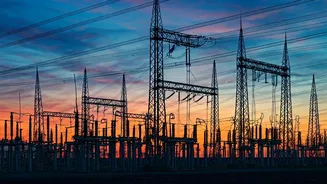
strain on global power grids. Projections indicate a staggering $580 billion in global data center investment by the end of 2025, surpassing even new oil supply expenditures. This rapid growth has created significant infrastructure bottlenecks in regions hosting these massive facilities, leading to heightened risks for the stability and reliability of the electric grid. Power industry leaders are increasingly concerned, demanding assurances that the grid can consistently and sustainably support both businesses and the public without faltering under this intense new load. The need to manage these escalating demands is pushing the boundaries of existing grid management practices, prompting urgent discussions and actions to secure the future of power supply.
Grid Reliability Challenges
The integration of data centers into the existing power infrastructure presents a complex web of technical and operational hurdles for grid operators. A primary concern is the potential for sudden, significant load losses, with up to 2 GW disappearing instantaneously during common grid faults across North America and Europe. Furthermore, data centers introduce dynamic stability issues like forced and subsynchronous oscillations, phenomena not typically managed with more conventional industrial loads. The operational patterns of data centers, particularly those supporting AI, can lead to extremely rapid load changes – often within seconds – a pace grid operators are unaccustomed to managing, as they are typically designed for minute-to-hour variations. These fast ramps and induced oscillations, swings in power flow, voltage, or frequency caused by demand-generation imbalances, can manifest as flickering lights for consumers and potentially damage critical generation equipment. Addressing these challenges locally, by individual utilities and system operators, leads to a patchwork of technical requirements globally, with no clear consensus on optimal solutions and a significant lack of standardized guidelines for safe data center grid interconnection.
Proposed Standardization Efforts
In response to the critical need for harmonized global standards, an IEEE SA Industry Connections group has put forth a set of recommendations aimed at guiding the safe and reliable integration of data centers with the power grid. The report, compiled from various industry efforts, prioritizes the development of new IEEE standards to foster modular data center designs that actively contribute to grid stability. Key high-priority recommendations include establishing common definitions for data center loads and categories, creating a standard for data center performance requirements and interoperability, defining processes and data needs for data center interconnection, and developing a standard for data center modeling in power system studies. Medium-priority suggestions encompass a certification and testing framework, standards for coordinating co-located generation facilities with data centers, and defining data center flexibility requirements. Lower-priority, though still important, considerations include developing a comprehensive framework for incorporating grid requirements throughout the entire data center design lifecycle, from initial chip selection to grid-level strategy.
Collaborative Solution Pathways
Finding effective solutions to the complex challenges posed by data center growth requires a fundamental shift towards open communication and collaboration between power system operators and data center owners. Technical implementations can only be considered when these stakeholders engage in meaningful dialogue. Numerous innovative solutions are emerging, spanning both hardware and software advancements. Battery energy storage systems are proving invaluable, capable of rapidly injecting and absorbing power to balance facility demands and stabilize fluctuations, especially during voltage ride-through events where servers reduce power consumption. Beyond hardware, software-based solutions are being developed to proactively shape workload power profiles, thereby improving operational efficiency and mitigating power and thermal fluctuations that can lead to grid oscillations. It's clear that no single, universal fix will suffice; instead, a diversified approach, combining a suite of evolving solutions, will be necessary to keep pace with the dynamic nature of the data center industry and ensure continued grid resilience.