






The Quantum Advantage Explained
Quantum sensors leverage the unique properties of subatomic particles, like atoms and electron spins, to detect and measure physical phenomena with unparalleled
precision. Unlike conventional sensors that rely on manufactured components prone to drift and aging, quantum sensors utilize inherently identical quantum systems, such as atoms, which remain consistent and less susceptible to environmental changes. This inherent uniformity allows them to respond to exceptionally small disturbances, like faint magnetic fields, with remarkable accuracy. Furthermore, advanced techniques like 'squeezed' light can be employed to manipulate the inherent quantum noise, enhancing the signal-to-noise ratio and enabling more sensitive measurements. This fundamental difference in sensing element and noise management provides quantum sensors with a distinct edge in applications demanding extreme sensitivity and stability.
Brain Scans and Beyond
In the realm of healthcare, quantum sensors are already making significant strides, particularly in neuroscience. Mapping the incredibly weak magnetic signals produced by the human brain, which are billions of times fainter than a refrigerator's magnetic field, requires ultrasensitive detectors and substantial magnetic shielding. Quantum technology is now employed in some hospitals to visualize brain activity before delicate epilepsy surgeries, offering a non-invasive way to map crucial areas. Techniques like Magnetoencephalography (MEG) use quantum sensors to achieve this. Newer developments include room-temperature optically pumped magnetometers, which offer a more flexible alternative to cryogenic superconducting sensors (SQUIDs) and are being explored for their potential in measuring weak bio-magnetic fields from both the brain and heart. Beyond general brain imaging, nitrogen-vacancy centers in diamonds, a type of quantum spin sensor, excel at high-resolution mapping of magnetic fields at the nanometer scale, proving invaluable for studying tiny magnetic structures and analyzing electronic components like computer chips.
Reliable Navigation Systems
When GPS signals become unreliable due to jamming, spoofing, or signal obstruction, navigation systems often revert to accelerometers and gyroscopes. However, these traditional devices suffer from accumulated drift over time, leading to inaccuracies. Quantum navigation systems offer a promising alternative by employing cold-atom sensors. In these systems, a cloud of laser-cooled atoms acts as the sensitive element, with their matter waves interfering in a manner directly proportional to acceleration and rotation. While not yet standard, these advanced quantum navigation solutions are undergoing flight tests by various agencies and companies. They are recognized for their potential to provide a critical layer of navigational resilience when satellite signals are compromised, offering a more robust and dependable fallback. The development focus remains on making these sensitive instruments reliable and resilient for operation outside controlled laboratory environments.
Mapping Earth's Secrets
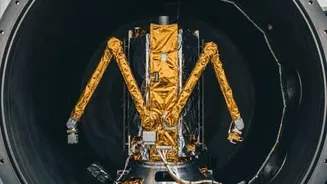
The principles of quantum sensing extend to measuring gravitational fields, enabling us to peer beneath the Earth's surface. By detecting minute variations in gravity across different locations, scientists can infer the presence of underground structures like water aquifers, mineral deposits, or even hidden voids. NASA's Jet Propulsion Laboratory is actively developing a space-based quantum sensor, the , specifically designed for this purpose. This sophisticated instrument utilizes two clouds of ultra-cold rubidium atoms, which behave as waves at temperatures near absolute zero. The system measures the acceleration experienced by these atom clouds, and any subtle differences detected can indicate the presence of mass anomalies underground. Although still in its developmental stages, this gravity sensor promises to unlock new ways of understanding subterranean features from orbit.
Unveiling the Cosmos
Quantum sensing plays a crucial role in advancing astronomical observation, particularly in the detection of faint signals like gravitational waves. Observatories such as LIGO employ a quantum-enhanced sensing technique by splitting laser beams to travel along massive, perpendicular tracks. When a gravitational wave passes through, it causes minuscule changes in the lengths of these tracks, altering the travel time of the laser beams. Quantum physics inherently introduces noise limitations in such precise measurements. However, through methods like 'frequency-dependent squeezing,' a technique that manipulates quantum noise, these observatories can significantly improve their sensitivity. This enhancement allows gravitational-wave detectors to probe a larger volume of the universe and increase the number of cosmic events, like black hole mergers, that they can detect by approximately 60%.