


Volcanic Heartbeat
Iceland's moniker, the 'Land of Fire and Ice,' is deeply rooted in its active geological nature, characterized by intense geothermal activity and fiery
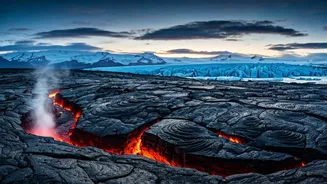
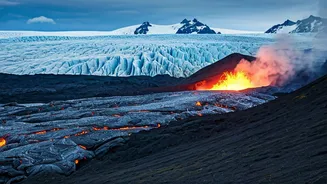
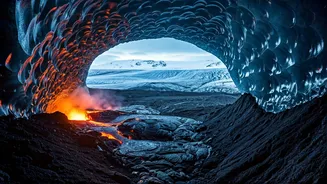
volcanic eruptions. The island sits atop a volcanic hotspot and the Mid-Atlantic Ridge, leading to frequent seismic events and dramatic volcanic displays. Eruptions, such as those witnessed on the Reykjanes Peninsula or the historically significant event at Eyjafjallajökull, vividly illustrate the 'fire' aspect. These events often result in molten lava flowing across stark landscapes, creating a striking visual contrast with any snow or barren terrain present. The constant subterranean heat and the resulting surface phenomena underscore Iceland's dynamic, ever-evolving fiery core, a powerful force that continuously reshapes the land.
Glacial Giants Reign
Complementing its fiery temperament, Iceland is also defined by its immense frozen expanses, embodying the 'ice' in its famous nickname. Vast glaciers cover significant portions of the country, with Vatnajökull standing out as Europe's largest ice cap, sprawling over thousands of square kilometers. These colossal bodies of ice are not static; they are dynamic geological agents that actively sculpt the terrain over millennia, carving out deep valleys and creating breathtaking glacial lagoons as they gradually melt. The sheer scale and slow, powerful movement of these ice sheets are a testament to the enduring icy influence that shapes Iceland's topography, offering a stark, serene counterpoint to its volcanic dynamism.
Fire and Ice Embrace
The true magic of Iceland lies in the extraordinary coexistence of its fiery and icy elements, a duality that is remarkably evident across the landscape. It's common to find ice caps situated directly atop active volcanoes, a geographical phenomenon that perfectly encapsulates the 'fire and ice' paradox. This proximity leads to unique interactions, such as subglacial eruptions that can create spectacular, albeit dangerous, events. The Vatnajökull glacier, for instance, plays host to this phenomenon, where its icy mass conceals a restless volcanic heart. This constant interplay between extreme heat and cold is a defining characteristic of Iceland, forging an environment of unparalleled natural drama and beauty.
Ethereal Auroras Dance
Adding another layer of enchantment to Iceland's dramatic scenery is the frequent appearance of the aurora borealis, commonly known as the Northern Lights. These celestial displays paint the night sky with vibrant hues, creating an ethereal glow that complements the stark beauty of glaciers, volcanoes, and the island's distinctive black sand beaches. The winter months, with their longer periods of darkness, offer the best opportunities to witness this breathtaking natural phenomenon. The aurora's shimmering lights dancing above these already majestic landscapes transform Iceland into an otherworldly spectacle, further solidifying its reputation as one of the most photogenic and awe-inspiring destinations on the planet.
Volcanic Shores Gleam
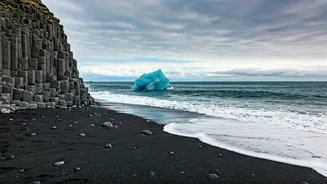
Iceland's volcanic origins are strikingly displayed along its dramatic coastlines, particularly on its renowned black pebble beaches. These shores, often adorned with geometric basalt columns and battered by the powerful waves of the Atlantic Ocean, are a direct testament to the island's fiery past. A particularly captivating scene unfolds at Jökulsárlón lagoon and the adjacent Diamond Beach. Here, icebergs that have calved from the Vatnajökull glacier drift into the sea, eventually washing ashore onto the black volcanic sand. These glittering ice fragments, starkly contrasting with the dark beach, create a magical, jewel-like panorama, especially when viewed against the backdrop of crashing waves and volcanic landscapes.