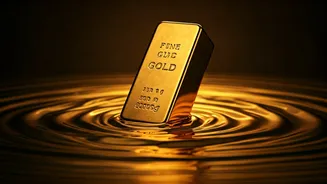









Market's Recent Performance
Gold's value has recently soared, capturing the attention of investors worldwide. This upward trajectory is significant, with prices breaching the $5,500
mark. The factors driving this surge are diverse, encompassing economic uncertainties and shifts in investor sentiment. Observing gold's performance provides insights into broader market trends. Its movement often indicates changes in investor confidence and provides a barometer for economic risks. The recent rally isn't just a fleeting event; it is evidence of underlying shifts, as traders and analysts assess market dynamics. This record-breaking price also highlights the importance of understanding the forces shaping global financial markets. The rise underscores gold's safe-haven status, reflecting concerns about the global economy and the value of assets.
Factors Behind Rally
Several elements contribute to gold's rapid climb. Market participants are increasingly wary about inflation, seeking the metal as a hedge. The debasement trade, which involves the devaluation of currency, also fuels demand for gold. This strategy arises from concerns about financial stability and the potential erosion of purchasing power. The role of major players in the gold market is also relevant. Investors from across the globe are turning to gold as a means of preserving wealth amidst economic uncertainty. Geopolitical events also influence the price, increasing gold's appeal as a secure asset during times of instability. The demand for gold highlights the metal's function in modern finance, influencing investment decisions. All these factors intermingle, forming a complex landscape that dictates the direction of gold prices. Analyzing these drivers is essential to understand market movements and inform future strategies.
Impact of Debasement
The debasement trade is playing a role in the gold price hike. This strategy, driven by devaluation, leads to investors seeking to safeguard their wealth by purchasing gold. The belief behind this is that gold is a reliable store of value when currencies lose purchasing power. As governments might try to inflate their way out of problems, investors seek alternatives. This results in an increased demand for gold, pushing prices higher. This movement highlights the connection between monetary policy and asset prices. The debasement trade, therefore, is not a simple transaction. It is an intricate response to wider economic concerns, affecting investors' perspectives. Understanding this dynamic is crucial for appreciating gold's position within the global financial system. The surge underlines its function in protecting wealth during a time of increased economic anxiety.
Market Participants' Roles
Various groups contribute to gold's surge, including investors and traders. They are responding to market signals, with many seeing the precious metal as a safe haven. Institutional investors, as well as retail traders, are also contributing to the demand. Their buying behavior significantly shapes price patterns. These groups are making investment decisions based on economic forecasts, geopolitical factors, and their personal risk tolerance. The actions of major players, such as hedge funds and investment banks, also have a significant impact. They often take large positions, affecting market liquidity and price volatility. Their investment strategies reflect wider economic trends and have a direct impact on gold prices. Understanding the motivations of these participants provides crucial insights into market behavior, facilitating better predictions.
Looking Ahead: Implications
The current gold price rally presents a variety of implications for both investors and the market. One key aspect is its potential influence on portfolio diversification. With gold’s upward trajectory, it can act as a counterbalance. The rally also has implications for inflation expectations. Rising gold prices can be seen as an indicator that the market anticipates rising inflation. This could influence central bank decisions and overall financial stability. Beyond investments, there are broader socioeconomic effects. High gold prices can impact economic activities that rely on the metal. The current situation thus calls for careful observation. It has the potential to reveal new information and reveal shifts in the financial market. The continued evolution of the market is expected to have far-reaching effects on markets.