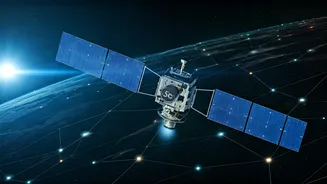







5G in Orbit
The recent completion of initial on-orbit 5G tests by Tyvak International's satellite signifies a crucial step in integrating 5G technology within the
space sector. The tests were designed to assess the functionality of 5G communication protocols in the unique environment of space. These tests included critical parameters like signal strength, data transmission speeds, and overall network stability. By successfully conducting these tests, Tyvak is poised to leverage 5G's benefits, such as enhanced bandwidth and reduced latency, for a variety of space-based applications. This includes improved communications for future satellite missions, offering better data transfer capabilities, and enabling advanced services that depend on robust and rapid data exchange. The successful testing phase demonstrated how 5G can facilitate better connectivity beyond Earth's surface.
Advancing Communication Tech
The use of 5G in space presents numerous possibilities for improving current space-based communication systems. Traditional satellite communication often faces challenges related to latency, data rate limitations, and overall efficiency. 5G technology is designed to tackle these limitations by providing improved bandwidth and reduced lag times. The use of 5G within the space environment facilitates the support of more data-intensive applications. It will enable real-time data streaming and improved communication capabilities for satellites in orbit. The ability to enhance the speed and reliability of data transfer will be essential for tasks such as remote sensing, Earth observation, and facilitating real-time communication. This advancement has the potential to influence how space-based assets operate and how data gathered is managed, leading to more responsive and efficient missions.
Future Prospects
The positive outcome of Tyvak International's on-orbit 5G tests opens doors to further developments in space-based communication technology. The data gathered from these initial tests will provide essential insights for optimizing 5G systems for space applications. Future developments could include the implementation of 5G across entire satellite constellations, enabling a unified global communication network. This would pave the way for continuous global coverage with high-speed, reliable connectivity. Furthermore, the advancements can assist the integration of 5G capabilities within the design of future satellites and space hardware. It would lead to more effective and versatile space-based communication capabilities. This can provide support for an array of applications, including improved Earth observation, real-time weather forecasting, and more efficient management of space resources.