
Dermatologist's Expertise Matters
The primary concern with removing moles at home lies in the lack of proper diagnosis. A dermatologist, a medical professional specializing in skin health,
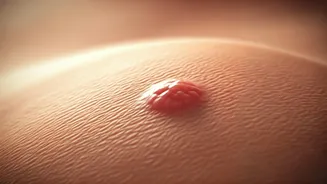
has the expertise to accurately assess a mole. They utilize specialized tools and techniques, like dermoscopy, to evaluate the mole's characteristics and determine if it's benign (non-cancerous) or if there are any signs of skin cancer. Attempting to remove a mole without a dermatologist's assessment is risky. This is because you could mistake a cancerous mole for a harmless one, leading to delayed treatment. Self-removal may also cause infections or scars that could obscure the mole's features, making it challenging for a doctor to assess the underlying skin health accurately if you seek help later. Dermatologists have the necessary training and experience to properly identify moles and provide appropriate treatment.
Risks of DIY Methods
DIY methods for mole removal, such as cutting or burning, carry several significant risks. Firstly, they increase the likelihood of infection. When removing a mole at home without a sterile environment and proper medical tools, bacteria can easily enter the wound, causing infection. These infections can be painful and lead to more serious complications. Secondly, self-removal can result in scarring. Skin scarring is highly probable when a mole is removed without appropriate techniques. The scar's appearance may be worse than the mole itself. The chances of disfigurement are higher. Finally, and most importantly, DIY methods can hinder accurate diagnosis. Without professional analysis, there is no way to know if a mole is cancerous. Removing a cancerous mole at home can allow cancer cells to spread, delaying necessary treatment and potentially worsening the prognosis.
Professional Mole Removal Process
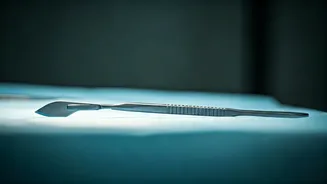
Dermatologists use several professional methods to remove moles safely and effectively. The most common methods include surgical excision and shave excision. Surgical excision involves cutting out the mole and a margin of surrounding skin, followed by stitching the wound closed. This method is often used for suspicious moles and allows for a thorough examination under a microscope to check for cancer. Shave excision is a less invasive procedure where the dermatologist shaves off the mole using a scalpel. This method is suitable for moles that are raised above the skin's surface. In both methods, the removed tissue is sent to a lab for analysis to confirm if it's cancerous. Furthermore, dermatologists use local anesthesia to minimize discomfort during the procedure. The doctor can also provide aftercare instructions to help the wound heal properly and minimize scarring.
When to Seek Help
Regular skin checks are essential for monitoring moles and identifying any changes. It is advised to consult a dermatologist if you notice any changes in the size, shape, color, or texture of a mole. Additionally, if a mole starts to bleed, itch, or become painful, medical attention is immediately needed. The ‘ABCDE’ rule is a useful guide for assessing moles: Asymmetry (one half doesn’t match the other), Border irregularity, Color changes, Diameter (greater than 6mm), and Evolution (changes over time). If a mole exhibits any of these characteristics, it should be examined by a dermatologist. Early detection and treatment of skin cancer are essential for successful outcomes. So, do not hesitate to seek help when needed; it might save your life.