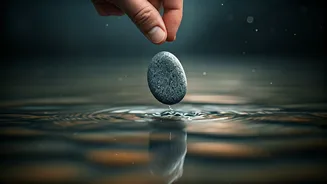









The Illusion of Control
Imagine trying to grasp sand tightly in your hand; the more you squeeze, the more it slips away, leaving only tension. This is akin to our human tendency
to cling to people and situations, mistakenly believing this grip grants us control. However, this forceful holding actually leads to exhaustion and stagnation, preventing life's natural flow. True strength isn't found in rigid control, but in the gentle act of allowing. Like an open palm that can hold a small amount of sand without force, letting go enables what's meant to stay to remain, while what's destined to depart, does so without resistance. Our objective in life isn't to dominate outcomes, but to navigate the constant ebb and flow of holding on and releasing, making space for peace and forward progression.
Acceptance: Strength, Not Surrender
Letting go isn't about erasing memories or dismissing the significance of past or present relationships and events. Instead, it’s about consciously loosening your grip on elements that no longer contribute positively to your well-being. This is where acceptance shines, not as an admission of defeat, but as a quiet, potent form of inner resilience. Consider the rain: instead of fighting it, we adapt. Similarly, acceptance acknowledges reality – 'It is raining' – and empowers us to decide how to proceed. It’s a deliberate shift from resisting what is to engaging with it. Life rarely offers neat conclusions; not all stories conclude perfectly, not all explanations are given, and not every loss is easily understood. Waiting for ideal closure can halt our own journey. Acceptance encourages us to cease this waiting, not because everything is perfect, but because we deserve to continue living regardless.
Nurturing the Releasing Practice
The journey of letting go is not a singular event but a continuous, gentle practice. Some days feel liberating, as if a significant burden has lifted. Other days, familiar thoughts and emotions may resurface, and this is perfectly normal. Letting go doesn't imply the disappearance of a memory or a desire; it simply means these elements no longer exert the same overwhelming influence. To begin, identify what you're holding onto – naming it can be the first step toward release. Allow yourself to feel emotions without the pressure to immediately fix them; resisting them only prolongs their hold. Differentiate between the event itself and the narrative you've attached to it, separating objective facts from subjective feelings. Release the expectation of closure or apologies from others, as waiting for them can prolong your entanglement. Instead, consciously return to the present moment, asking 'What do I need now?' rather than dwelling on 'Why did this happen?'. Creating emotional or physical distance can offer crucial clarity. Practice acceptance in small, everyday moments – these are opportunities to build this vital skill. Patience is paramount, as letting go unfolds organically. Ultimately, holding on becomes more burdensome than releasing, and when your peace of mind takes precedence, a shift occurs. You may not have all the answers, but you begin to loosen your grip, making space for new possibilities to emerge, reminding you that life moves forward.