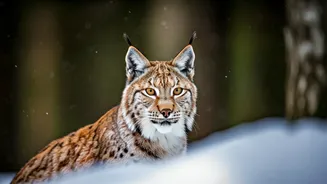

The Elusive Predator
The Eurasian lynx, a magnificent feline, roams the forests of Europe and Asia, but its presence often goes unnoticed. The term "ghost cat" perfectly encapsulates
its elusive nature, as these creatures are incredibly adept at avoiding human detection. Capturing images of a lynx is a feat in itself, requiring patience, skill, and a deep understanding of their behavior. Their camouflage is exceptional, blending seamlessly with their surroundings. They are primarily nocturnal hunters, which further adds to the challenge of spotting them. The lynx's secretive lifestyle makes direct observation a rare occurrence. This makes every sighting, and especially every photograph, a significant achievement, offering a unique window into the life of this captivating predator. The very essence of their survival hinges on their ability to remain hidden.
Habitat and Range
The Eurasian lynx has a wide geographical range, extending across various habitats, from the dense forests of Scandinavia to the mountainous regions of Central Asia. Their adaptability allows them to thrive in diverse environments, but they share a common need: substantial forest cover for shelter and hunting. Lynx prefer territories with minimal human disturbance, which influences their distribution. The presence of prey animals, like deer, hares, and birds, is also crucial. The availability of these food sources dictates the size and quality of their habitat. Conservation efforts frequently center around protecting and expanding their habitat. This includes preserving existing forests, as well as reforestation initiatives in areas where lynx populations are struggling. The conservation strategy also considers the impacts of climate change.
Conservation Challenges
Protecting the Eurasian lynx faces a multitude of challenges. Habitat loss due to deforestation and human encroachment is a major threat, shrinking the available space for these animals to live and hunt. Fragmentation of their habitat isolates lynx populations, hindering genetic diversity and increasing their vulnerability to diseases. Illegal hunting and trapping also pose significant dangers, as they are often targeted for their fur or perceived as a threat to livestock. Climate change presents additional uncertainties, with alterations in weather patterns and the distribution of prey. Conservationists work relentlessly to address these issues. They implement habitat restoration projects, establish protected areas, and enforce anti-poaching measures. They also conduct research to better understand lynx behavior and population dynamics. Collaboration between different countries is also crucial, because lynx populations often span international borders.
Rare Photo Opportunities
Photographing the Eurasian lynx represents a significant achievement for wildlife photographers. It demands a blend of technical expertise, patience, and luck. Setting up camera traps in areas where lynx are known to reside is one of the effective strategies. These cameras, triggered by motion, capture images of the animals as they move through the area. Another approach involves employing long lenses and strategically positioning oneself to wait for the animal to appear. It can take days, weeks, or even months to obtain a photograph. The dedication and understanding of the lynx's behavior are essential. The resulting images offer the public a rare glimpse into the life of this elusive animal. They also serve to inspire admiration for the lynx and promote conservation awareness.