



City Escape to Hills
Increasingly, families and couples are seeking respite from the frenetic pace of Indian metropolises, opting for the calmer ambiance of hill stations like
Bhowali and Nainital. This shift involves trading bustling cityscapes for the serenity of mountain air, smaller communities, and more unhurried lifestyles. Bhowali, a peaceful locale nestled approximately 5,000 feet above sea level in the Kumaon region, near the popular destination of Nainital, exemplifies this trend. It offers a sanctuary where eco-friendly design and slow living principles are paramount, as embodied by boutique resorts like Brij Atmanya. This movement reflects a conscious decision to prioritize well-being and nature over the relentless demands of urban existence, inspiring a growing number of individuals to seek out these tranquil havens for both temporary escapes and permanent relocation.
Journey to Tranquility
The transition to a slower pace begins the moment you leave the city. Our journey commenced before dawn from Delhi, involving a brief flight followed by a scenic drive that gradually ascends into the Kumaon hills. As we progressed, the air itself transformed, becoming noticeably cleaner and quieter. A naturalist later confirmed the ambient air quality index (AQI) in this region hovered around a comfortable 34, a stark contrast to Delhi's recent readings which had surpassed 400. Arriving at Brij Atmanya, situated at nearly 5,000 feet elevation, solidified this feeling of detachment from urban pressures. The absence of incessant traffic noise and congestion was palpable, replaced by the gentle hum of mountain roads winding through dense pine forests, occasionally opening up to reveal breathtaking panoramic views of the valleys below. Bhowali itself, strategically positioned between popular tourist spots like Nainital, Bhimtal, Saatal, and Naukuchiatal, retains a charm of being slightly off the beaten path. Unlike the often crowded promenades and cafes of Nainital, Bhowali offers a more subdued and authentic experience, contributing to its unique appeal.
Nainital's Mythic Roots
The enduring allure of Nainital and its surrounding hills is deeply intertwined with its rich tapestry of mythology, historical significance, and geographical splendor. Ancient Hindu scriptures, such as the Skanda Purana, reference this area as Tri-Rishi-Sarovar, signifying the 'lake of three sages'—Atri, Pulastya, and Pulaha. According to legend, these sages imbued the lake with water from Mansarovar in Tibet during a pilgrimage when they encountered a scarcity of water. Another compelling narrative connects Nainital to the tale of Sati, one of the 64 Shakti Peeths, believed to be the site where Sati's eye fell as Lord Shiva, in his grief, carried her body across the cosmos. The lake's distinctive emerald eye-like shape is said to be the origin of the town's name: 'Naina' meaning eye, and 'Tal' meaning lake. Centuries later, the region's charm captivated the British. In 1839, an English trader named P Barron is credited with discovering the lake while on a hunting expedition. Captivated by the serene landscape, he initiated the establishment of a European settlement around its shores. By the mid-19th century, Nainital had risen to prominence as a key hill station in British India, eventually serving as the summer capital for the United Provinces. Vestiges of this colonial era persist today in the form of venerable schools, churches, and quaint cottages, subtly integrated within the natural surroundings of oak and deodar trees. However, venturing slightly away from the main town towards areas like Bhowali, the atmosphere becomes notably more tranquil, offering a gentler, quieter embrace of the hills.
Serene Mountain Living
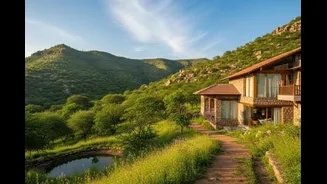
Our stay at Brij Atmanya, a boutique retreat thoughtfully integrated into the hillside at an elevation of approximately 5,000 feet, was a profound experience in mindful living. The resort's architecture harmoniously blends with its natural environment, employing local Kasar Devi stone and pine wood for its construction, with mature trees left undisturbed around the cottages. This commitment to eco-consciousness was evident when the manager, Nitin Bhatt, shared that "not a single tree was cut while building the property; the cottages were built around them." This philosophy permeated the guest experience in subtle yet impactful ways. Upon arrival, we were welcomed with refreshing Buransh juice, a vibrant beverage derived from rhododendron flowers, accompanied by invigorating cucumber-infused water. The in-room minibar eschewed typical packaged soft drinks in favor of homemade coolers like aam panna and amla juice, alongside more Buransh juice. Evenings offered unique wellness rituals, featuring natural skincare treatments crafted from kitchen ingredients, such as a revitalizing scrub of coconut oil, salt, and lemon zest, or a traditional homemade ubtan made with besan, yogurt, and turmeric. The essence of luxury here was not about opulence, but about fostering mindfulness and embracing a slower, more connected way of being.
Daily Rhythms Unfold
Residing in a Panchachuli room with a panoramic view of the surrounding forests and mountains, our mornings began not with jarring alarms, but with the gentle infusion of sunlight across the wooden floors and the melodious symphony of birdsong. The interiors exuded a warm, earthy aesthetic, showcasing local craftsmanship, intricate woodwork, and understated comfort. The king-sized bed, strategically positioned to face the expansive windows, made it incredibly tempting to linger and absorb the tranquil vistas each morning. As Mr. Bhatt casually mentioned, guests are sometimes fortunate enough to witness leopards from their balconies, in addition to the abundant birdlife, with a small stream murmuring below. The entire resort is intentionally designed to encourage relaxation and contemplation; featuring open decks, communal dining areas, spaces for bonfires, a game zone, quiet reading nooks, and strategically placed coffee tables that invite extended conversations or serene contemplation. There was a distinct absence of pressure to constantly be engaged in activities, allowing us to naturally shed our reliance on checking the time, and simply be present in the moment.
Savoring Kumaon's Flavors
A highlight of our retreat was the authentic culinary journey, particularly the traditional Kumaoni meals we savored. During one lunch, Chef Dharma presented a Kumaoni thali that was a true reflection of the region's bountiful produce and climate. The spread included Jhake Aloo, a Kumaoni raita made with cucumber and mustard, Pyaaj Ki Jholi, a hearty Urad dal (Maas ki daal), crisp Maas ke pakore, nutritious Bhaatua greens, and rustic ragi rotis. Accompanying this was a unique, sharp, and smoky Bhaang ki chutney, prepared with cannabis seeds, a common and distinctive ingredient in Kumaoni cuisine. For dessert, we enjoyed a delightful red rice kheer. The non-vegetarian option featured Bhang Ka Murga. Significantly, much of the fresh produce used in these dishes was sourced directly from the resort's own farm, including strawberries, carrots, various herbs, and vegetables cultivated in the very hills that surrounded us, ensuring peak freshness and supporting local sustainability.
Nature's Gentle Pursuits
The beauty of our experience was amplified by the way activities were seamlessly integrated into the slow living ethos. One afternoon, we embarked on a guided bird trail through the surrounding forests with our naturalist. We learned that the region hosts over 200 species of birds, with migratory patterns influencing sightings depending on the season. The walk itself was unhurried, punctuated by insightful discussions about the local flora, traditional mountain life, and the evolving regional ecosystem. Rather than rushing back indoors, the resort organized a unique pine cone painting session amidst the natural beauty of the hills. Sitting outdoors, surrounded by the quietude of the forest and engaging in creative expression with paintbrushes, proved to be a profoundly therapeutic experience. Another evening, the communal bonfire area transformed into a relaxed social space. As films were screened on a projector, the chef grilled fresh vegetables and meats over an open fire, allowing guests to enjoy a delightful meal under the cool mountain air, fostering a sense of shared tranquility.
Spiritual Heart of Hills
Our final morning began early, yet with a distinct sense of peace rather than urgency. No visit to this area is complete without experiencing Kainchi Dham, an ashram located just a scenic 35-minute drive away, best reached in the morning to avoid crowds. Nestled amidst lush forests and rolling hills, the ashram attracts global visitors, many drawn by the profound stories and teachings of Neem Karoli Baba. A widely recounted local legend speaks of a train that allegedly halted its journey after a young sadhu, traveling without a ticket, was ejected. The train is said to have resumed its movement only after the sadhu was respectfully invited back aboard, this individual later becoming revered as Neem Karoli Baba. The power of these narratives, whether interpreted literally or metaphorically, seems to be eclipsed by the palpable sense of calm that pervades the ashram. This spiritual resonance has drawn numerous notable figures over the years, including tech leaders like Steve Jobs and Mark Zuckerberg, acclaimed actress Julia Roberts, and Indian celebrities Virat Kohli and Anushka Sharma.
The Wisdom of Slow
By the culmination of our weekend escape, the decision made by families like the Sharmas to embrace a slower pace no longer seemed unconventional but profoundly sensible. Destinations such as Nainital and Bhowali are increasingly becoming magnets for families seeking more grounded and nature-centric lives. Children here grow up with a closer connection to the natural world, and weekends are filled with invigorating forest walks instead of the mundane routine of navigating crowded shopping malls. Meaningful conversations often supersede the transactional nature of networking events. For those unable to make a permanent transition, short retreats like this offer an equally invaluable benefit: a chance to reset and recalibrate. In the gentle rhythm of sipping Buransh juice, embracing the profound mountain silence, enjoying unhurried breakfasts, and gathering around a bonfire, we rediscovered the sheer exhaustion that constant urgency imposes. The relentless barrage of notifications, traffic jams, endless meetings, and pervasive noise of city life had been replaced by a profound sense of peace. Something within us had shifted, allowing us to experience the simple luxury of waking up without the immediate compulsion to check our phones. This, we realized, is increasingly becoming the ultimate luxury that so many are seeking.