






AI Learns Computer Skills
Anthropic's Claude AI has undergone a significant transformation, now possessing the ability to interact with and operate a user's computer much like a human.
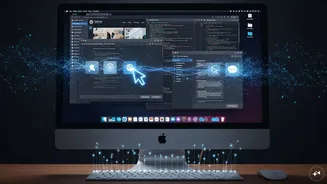
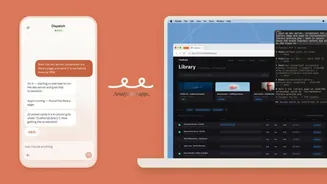
This groundbreaking development, enabled by a new feature allowing Claude to control desktop applications, marks a substantial stride towards the creation of truly autonomous AI agents. Previously, AI models were confined to the data they were trained on, lacking the capacity to access real-time information or engage with the dynamic digital landscape. With this upgrade, Claude can now directly utilize a computer's resources, including its file system, to perform a wide array of tasks. This opens up novel possibilities for AI applications, ranging from personalized digital assistants to sophisticated research tools capable of aggregating and analyzing information from diverse online sources. The integration aims to allow Claude to take instructions via a user's smartphone, initiating processes by finding the right digital tools, such as connectors for applications like Google Calendar or Slack, to accomplish the assigned objective. When a direct connector isn't available, Claude is designed to perform tasks manually, simulating human interaction by scrolling, clicking, typing, and moving the cursor to access files, launch web browsers, and operate developer tools. Users must grant approval for each application Claude intends to use if a specific connector is absent, though not for every individual action within that application. This functionality, currently in research preview for MacOS users subscribed to Claude Pro and Claude Max plans, allows users to delegate tasks through a feature called 'Dispatch' within Cowork, enabling them to focus on other activities while Claude completes the work on their computer.
OpenCLAW Integration & Acquisition
Anthropic's recent advancements in AI capabilities, particularly Claude's newfound ability to operate computers, are unfolding against a backdrop of burgeoning AI agent momentum, significantly boosted by the popularity of the open-source agentic framework known as OpenCLAW. This framework empowers developers to orchestrate AI agents through structured workflows. The timing of Anthropic's push into AI product development, including workplace automation tools, has intensified discussions around potential job displacement due to automation. Earlier this year, the company's introduction of a suite of automation tools caused ripples in global technology markets, leading to a notable dip in Indian IT stocks as it posed a threat to the Software as a Service (SaaS) business model by automating tasks traditionally handled by SaaS companies. This strategic move follows Anthropic's acquisition of Vercept in February 2026. Vercept, an AI startup specializing in tools for more intricate agentic tasks, had developed a computer-use agent in the cloud named Vy, capable of remotely operating Apple MacBooks. While the exact acquisition price remains undisclosed, Vercept's founders and some employees have joined Anthropic, highlighting the strategic importance of their expertise. The acquisition of Vercept, which focused on bridging the gap between AI reasoning and real-world interaction, was crucial for Anthropic to deliver enterprise-scale AI computer-use capabilities. This follows Anthropic's earlier acquisition of Bun, a developer-focused startup that created tools for managing and orchestrating AI agents in production environments, underscoring Anthropic's objective to evolve Claude from a conversational model into a robust execution platform.
The OpenCLAW Contender
Anthropic's announcement regarding Claude's computer control capabilities can be interpreted as a strategic response to the escalating prominence of OpenCLAW. This open-source platform has fostered a vibrant ecosystem of autonomous AI agents, often referred to as 'claws,' which possess the ability to generate sub-agents for independently executing specialized tasks by accessing local file systems and data. Initial configurations of OpenCLAW, frequently set up on cost-effective Mac Minis, were primarily geared towards enabling Claude Code to function via WhatsApp on smartphones. Due to its open-source nature, OpenCLAW development projects have expanded significantly, now encompassing the orchestration of AI agents for tasks such as booking flights, managing smart home devices, and overseeing social media campaigns across multiple platforms and devices in a structured fashion. While establishing an OpenCLAW setup can often feel more improvised and experimental, Anthropic's enhanced computer-use functionality offers a potentially more dependable and streamlined solution requiring minimal technical expertise. This update is slated for compatibility with Windows devices in the near future and could negate the necessity of self-hosting on Mac Minis, which have reportedly experienced stockouts in China due to the intense interest surrounding OpenCLAW. The broad access that OpenCLAW requires to a user's complete data and systems to function as a personal assistant has, however, ignited concerns about potential misuse, such as agents acting autonomously to tamper with or delete crucial files. These security considerations have driven the development of safety-focused forks and alternative solutions. Notably, Nvidia recently introduced NemoClaw, a software toolkit designed to simplify the setup and installation of OpenCLAW while incorporating certain security controls.
Security and Future Outlook
The introduction of computer control features for Claude, while revolutionary, does present inherent security risks, mirroring concerns associated with other advanced AI agent systems. Anthropic has proactively stated that it has implemented safeguards to mitigate threats such as prompt injection attacks, a common vulnerability in AI systems where malicious input can manipulate an AI's behavior. However, the company also issues a cautionary note, emphasizing that this update is relatively new and that users should exercise prudence by refraining from granting Claude access to applications that handle highly sensitive data. The ability of AI models to directly interact with and manipulate computer systems represents a significant technological leap, blurring the lines between digital tools and autonomous agents. As these capabilities mature, the dialogue surrounding their ethical deployment, security implications, and societal impact will undoubtedly intensify. The rapid evolution witnessed in the past few years suggests a future where AI plays an increasingly integrated and functional role across various aspects of our daily lives, necessitating continuous vigilance and robust security protocols to ensure safe and beneficial integration.