





The Unplugged Voyage
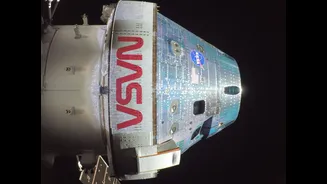
As the Artemis II mission propels humanity back towards the Moon, the Orion spacecraft and its crew are set to experience a profound moment of isolation.
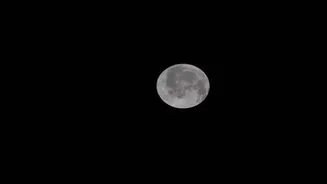
For approximately 40 minutes, commencing around 4:17 am IST on April 6, 2026, the spacecraft will traverse the Moon's far side, entering a zone where direct communication with Earth becomes impossible. This isn't an unforeseen technical glitch, but rather a carefully orchestrated event, a deliberate consequence of celestial mechanics. The vastness of space, with its inherent challenges, reminds us that even as we push the boundaries of exploration, we remain subject to the fundamental laws of physics. This impending silence, though brief, represents a significant milestone, allowing for a unique perspective and testing the crew's resilience and preparedness in a way few experiences can.
Physics of Cosmic Silence
The reason behind this temporary disconnection lies in the fundamental nature of radio and laser signals, which travel in straight lines, much like a beam of light. NASA's critical Deep Space Network relies on a clear, unobstructed line of sight between its ground stations and spacecraft to maintain contact. As the Orion spacecraft ventures behind the Moon's far side, the lunar body itself physically intercepts these signals. The Moon, a massive, solid, rocky celestial object, acts as an impenetrable barrier, completely blocking the transmission of electromagnetic waves. This geometrical alignment ensures that for the duration of the transit, no radio or laser signals can reach or depart the spacecraft, effectively severing the communication link with Mission Control in Houston and rendering the astronauts momentarily out of touch with everyone on Earth.
Astronauts' Lunar Tasks
During this 40-minute period of radio silence, the Artemis II astronauts will not be idle. This unique opportunity, a stark contrast to the constant stream of communication during typical spaceflight, is designated for specific mission-related activities. Commander Reid Wiseman, pilot Victor Glover, mission specialists Christina Koch and Jeremy Hansen will utilize this time to conduct crucial lunar flyby tasks. This includes capturing high-resolution photographs of the lunar surface, analyzing geological features with a closer perspective, and continuing with ongoing scientific research experiments. Beyond the procedural tasks, there is an intrinsic emotional and psychological dimension to this experience – observing Earth diminish into a distant, pale blue dot and confronting the immense scale of space firsthand, fostering introspection and a deep sense of solitude.
Echoes of Apollo's Silence
The experience of communication blackout is not unprecedented in human spaceflight history. During the Apollo 11 mission, astronaut Michael Collins spent 48 minutes in solitary orbit around the Moon while his crewmates walked on the lunar surface. Collins famously described this period in his memoir as feeling "truly alone" and "isolated from any known life," yet he also found a sense of peace and tranquility in the absence of constant communication. This echoes the sentiments voiced by Artemis II pilot Victor Glover, who views the blackout as an "opportunity" for reflection and encourages the world to send positive thoughts. The shared experience across decades highlights the enduring psychological impact of deep space exploration and the human capacity to find calm amidst isolation.
Earthbound Anticipation
Back on Earth, the mission control teams and global observers will experience a unique blend of apprehension and excitement during the 40-minute blackout. At facilities like Goonhilly Earth Station, where a significant antenna is tracking Orion's trajectory, the moment the spacecraft disappears behind the Moon will be met with a degree of nervousness. Chief Technology Officer Matt Cosby noted the historical significance of tracking a crewed spacecraft, anticipating both the tension of the signal loss and the immense relief and joy upon re-establishing contact. This collective anticipation underscores the interconnectedness of the mission, where the entire planet shares in the journey and eagerly awaits confirmation of the crew's safe passage and continued progress towards their lunar objectives.