









Launch Details Revealed
SpaceX is gearing up for the 12th test flight of its ambitious Starship program, targeting Thursday, May 21, for liftoff. The primary launch window opens
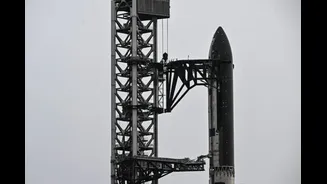
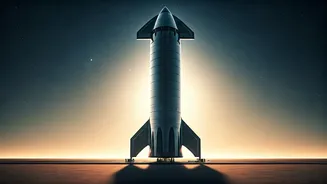
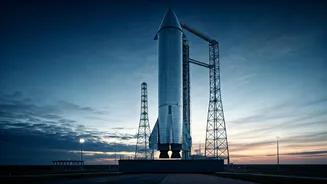
at 6:30 p.m. EDT (2230 GMT), extending for 90 minutes until 8 p.m. EDT (0000 GMT on May 22). While the initial target date of May 19 was adjusted, SpaceX did not publicly state a reason, though final testing and preparation are likely causes for the slight delay. This mission marks the inaugural flight of the Starship V3 configuration, representing a significant evolution in the megarocket's design and capabilities, aiming for enhanced power and effectiveness in its more than 400-foot stature.
Where to Watch Live
For those eager to witness Starship Flight 12, multiple online viewing platforms are available. SpaceX itself will broadcast the launch with live feeds starting approximately 45 minutes before liftoff, around 5:45 p.m. EDT (2145 GMT), on its official website and YouTube channel. Additionally, Space.com will be providing a simulcast of the webcast on its homepage. For an earlier glimpse into the countdown and pre-flight activities, NASASpaceflight will begin its stream at 3:30 p.m. EDT (1930 GMT), featuring extensive camera coverage from the Starbase facility and live commentary. While SpaceX doesn't designate an official viewing site for in-person spectators, areas like the Cameron County Amphitheater in Isla Blanca Park and the shoreline facing Starbase at Port Isabel offer clear sightlines to the launchpad, though heavy traffic is anticipated near launch time, suggesting an early arrival is advisable.
Mission Objectives & Upgrades
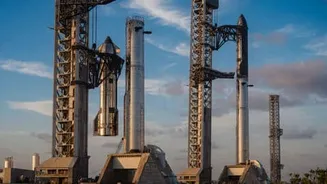
Starship Flight 12 is poised to be a pivotal test, lasting just over an hour and closely mirroring the trajectory of Flight 11. However, the inclusion of the new V3 design introduces substantial upgrades aimed at facilitating rapid and full reusability, incorporating lessons learned from years of development. This flight will be the first to launch from SpaceX's upgraded Pad 2 at Starbase, featuring quicker capture arms for booster recovery. The Super Heavy booster has undergone modifications, including the removal of one grid fin to enhance reentry control, with the remaining fins now larger. The Starship V3 itself boasts further enhancements, detailed in the company's overview, all designed to push the boundaries of rocket technology and its operational efficiency.
Flight Profile and Goals
The Starship Flight 12 mission is designed to meticulously test the new V3 Starship architecture, with a primary goal of demonstrating a series of new upgrades in an operational flight environment. This includes experimental actions to stress the vehicle’s structural limits and dynamic banking maneuvers to simulate future return trajectories. Notably, neither the Super Heavy booster nor the Ship upper stage will attempt a land landing and capture during this test flight. Instead, the Super Heavy booster is slated for a water landing in the Gulf of Mexico off the coast of Starbase. The Ship upper stage will embark on a suborbital journey, culminating in a splashdown in the Indian Ocean after deploying approximately 22 dummy Starlink satellites. Two of these dummy satellites will carry cameras to provide imagery of Starship’s heat shield, crucial for assessing readiness for future return-to-launch-site scenarios. Another experiment involves removing a single heat shield tile to analyze aerodynamic stresses on adjacent tiles.
Contingency and Future
In the event that Starship Flight 12 cannot proceed as planned on May 21, SpaceX typically reserves backup launch days, with Friday, May 22, being a potential alternative. Past launch attempts have seen authorities issue temporary closures for areas around the launch site, such as Boca Chica Beach, in anticipation of liftoff, though these are often adjusted. The successful execution of Flight 12 and its V3 configuration is a critical step towards SpaceX's long-term vision of frequent, rapid reuse of its Starship system, paving the way for more ambitious missions and interplanetary exploration. The data gathered from this test flight, particularly regarding the new V3 design and experimental maneuvers, will be instrumental in refining the technology for future operational flights and the eventual return of both stages to the launch site.