
Telescope's Revolutionary Design
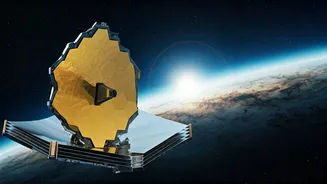
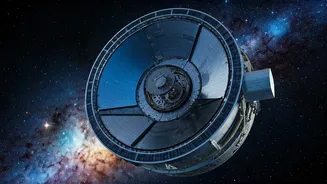
The construction of NASA's newest space telescope signifies a monumental stride in astronomical observation. Unlike previous generations, this telescope integrates
sophisticated technologies, leading to remarkable enhancements in its observational capabilities. It has been designed to capture a wider spectrum of light, providing a more comprehensive view of celestial objects. The telescope's advanced optics, coupled with highly sensitive detectors, allow it to see objects that were previously beyond our reach. These innovations contribute to its capacity to observe extremely faint and distant objects, revealing the early stages of the universe's formation and the evolution of galaxies. This design ensures higher resolution images, leading to a significant increase in the amount of data scientists can collect and analyze. Furthermore, the telescope's design prioritizes operational efficiency, allowing it to perform various tasks more rapidly, ultimately contributing to a more in-depth exploration of space.
Unprecedented Observational Power
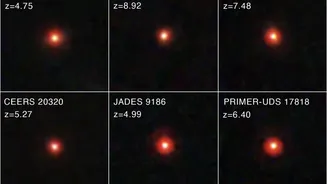
This cutting-edge space telescope possesses an unparalleled capacity to delve into the depths of space, significantly surpassing the capabilities of its predecessors. Its main advantage is its extraordinary sensitivity, which allows it to detect the faintest light signals emitted by distant celestial bodies. This feature is essential for studying the early universe, as it helps to observe light from objects that are billions of light-years away, allowing scientists to gain invaluable insights into the conditions immediately after the Big Bang. Moreover, the telescope can also analyze the composition of the atmospheres of exoplanets, which are planets orbiting stars outside of our solar system. This analysis can reveal the presence of gases such as water, methane, and oxygen, which could indicate the possibility of life. With its advanced instrumentation, the telescope is poised to revolutionize our understanding of planetary systems, star formation, and the evolution of galaxies. It will provide unparalleled opportunities to observe the universe and unlock new secrets about its origins, structure, and composition.
Scientific Discovery Prospects
The launch of NASA's newest space telescope heralds an era of unprecedented scientific discovery, offering the potential to transform our knowledge of the universe. One of its primary objectives is to observe the first galaxies and stars that formed after the Big Bang, which will give us a unique perspective on the cosmos' early stages. Furthermore, the telescope will provide opportunities to study the formation and evolution of galaxies, as it seeks to reveal how they cluster, merge, and change over time. By analyzing the light from distant objects, scientists can determine the composition of exoplanet atmospheres, identifying the building blocks of life. Moreover, it will contribute to our understanding of dark matter and dark energy, the mysterious components that make up the majority of the universe's mass and energy, to investigate the expansion of the cosmos. The research carried out using this telescope is set to rewrite textbooks and stimulate a wave of new discoveries, forever changing our understanding of the universe.
Technological Marvel Features
NASA's newest space telescope represents the apex of current technological innovation, combining several advanced components for maximum efficiency and data collection. The telescope integrates advanced mirrors, enabling it to collect and focus light from distant cosmic sources. These mirrors are designed to minimize aberrations, ensuring sharper and more detailed images. Furthermore, the telescope contains a range of detectors that capture light across various wavelengths, including visible, infrared, and ultraviolet, allowing for the observation of a wider spectrum of celestial phenomena. Its robust data processing capabilities are designed to handle the huge amounts of data produced by the instrument. This data includes sophisticated algorithms, which are able to remove noise and other errors, producing highly accurate images and measurements. The integration of these features results in a potent scientific instrument that will deliver unprecedented views of the universe, pushing the boundaries of what is possible in astronomical research.
Looking Ahead, Excitement Grows
With the successful launch and deployment of this groundbreaking telescope, scientists and space enthusiasts alike are filled with anticipation for the revelations it will bring. The data collected by the telescope will be crucial in the ongoing efforts to understand the fundamental nature of the universe. Researchers are looking forward to the opportunities to explore a vast array of topics, from the properties of dark matter to the atmospheric compositions of exoplanets. The telescope is already producing its first images, which will be released to the public, igniting curiosity and inspiring future generations of scientists. The scientific community has high expectations for the instrument's longevity and its continued production of high-quality data. The telescope is set to reshape our understanding of the universe, bringing us closer to answering some of the deepest questions of existence.