




The Viral Food Feud
A seemingly lighthearted online exchange regarding the merits of rasgulla and idli took an unexpected turn, evolving into a broader societal conversation
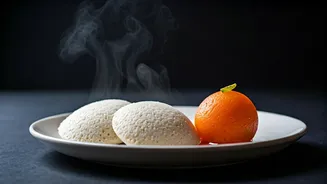
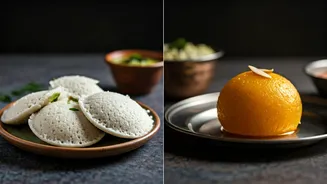
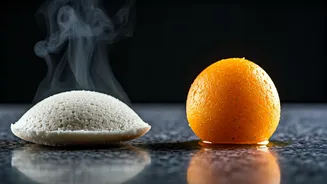
about the deep-seated emotional and cultural connections Indians have with their regional cuisines. The spark ignited when a user humorously equated rasgulla to an 'idli dipped in sugar syrup,' a comparison that quickly caught the attention of many, including prominent public figures. This prompted an array of responses, from playful agreement to fervent defense, underscoring how deeply intertwined food choices are with personal and collective identities. The debate wasn't just about taste or texture; it touched upon regional pride and the unique heritage each dish represents, proving that food conversations in India can quickly transcend simple culinary opinions to become matters of cultural importance, sparking widespread engagement and shared experiences among netizens.
Tharoor's Eloquent Defense
Stepping into the burgeoning debate, Shashi Tharoor offered a meticulously articulated defense of the humble idli, reframing the simplistic comparison as a "profound cosmological misunderstanding." He elaborated on the fundamental differences between rasgulla and idli, emphasizing their distinct origins and preparation. Tharoor explained that rasgulla is crafted from chhena, a delicate curd of milk, while idli originates from a carefully fermented batter of parboiled rice and urad dal. He highlighted that these ingredients belong to "entirely different kingdoms," leading to vastly dissimilar culinary outcomes. His argument extended beyond mere composition, detailing how the airy, syrup-trapping nature of rasgulla contrasts sharply with the dense, steamed matrix of the idli, a wholesome blend of carbohydrates and proteins. This nuanced explanation underscored that their taste, texture, structural integrity, and indeed, their very purpose, are worlds apart, dismantling the superficial analogy with intellectual precision.
Idli: A Biotechnical Marvel
Tharoor's impassioned defense elevated the idli from a mere 'bland cake' to a "masterclass in biotechnology," a descriptor that resonated deeply with those appreciating the science behind everyday foods. He detailed the intricate process of fermentation, a cornerstone of achieving the perfect idli. This ancient technique, he explained, involves balancing delicate microflora through a cold, overnight fermentation, resulting in a steamed delicacy that is both light and incredibly beneficial for gut health. The idli, in this context, is presented not just as a food item but as a triumph of nutritional balance and a testament to indigenous food science. Described as a "savoury monolith of South Indian culinary genius," it is engineered to perfectly complement the sharp tang of sambar or the spicy kick of molaga-podi, showcasing its versatility and sophisticated design. Tharoor concluded with a witty yet firm assertion of the idli's inherent dignity, stating it would "even consent to being drowned in sugar syrup" is a fundamental misunderstanding of its esteemed place.
Culinary Experts Weigh In
Food author and chef Sadaf Hussain lent his professional insight, affirming that the comparison between rasgulla and idli is "technically inaccurate" due to their fundamentally different compositions and preparation methods. He pointed out that while both might share a somewhat spongy texture, rasgulla is primarily a celebratory dessert, whereas idlis serve as a daily staple. Celebrity chef Ananya Banerjee further clarified the distinctions, explaining that rasgulla is made from kneaded chenna balls simmered in syrup, resulting in a spongy texture, while idli is a steamed savory cake from fermented rice and lentil batter, yielding a porous structure. The differing cooking techniques—boiling in syrup for rasgulla versus steaming for idli—and distinct ingredients and mouthfeel make the analogy misleading. Hussain also cautioned against making such comparisons, likening it to comparing pancakes and luchi, as even dishes with similar base ingredients can possess entirely different identities and cultural experiences.
Food as Cultural Identity
Food author Alok Singh highlights that such comparisons often go beyond mere culinary observations, inadvertently diminishing the "distinct technical and cultural labour associated with those regions." In India, regional pride is deeply tied to traditional culinary practices, often referred to as 'Terroir.' The idli symbolizes South India's patience and mastery of fermentation, while the rasgulla represents a significant advancement in Bengali and Odia confectionery history, particularly concerning the innovative use of chhena. When these dishes are trivialized, it can feel like an attack on a community's collective memory and heritage. Singh emphasizes that food is often a primary carrier of culture, cherished by those who migrate and held onto as a symbol of their identity even as they assimilate into new environments. Therefore, defending these dishes is akin to protecting a vital part of cultural heritage.
Mastering the Idli's Art
The seemingly simple idli presents a significant challenge in achieving perfection, with fermentation being the paramount factor, according to Chef Hussain. Incorrect fermentation can lead to dense idlis instead of the desired soft and airy texture, explaining why homemade versions might not always match restaurant quality. Chef Banerjee elaborates that achieving the ideal idli requires a precise alignment of several elements: the specific ratio of rice to lentil, the quality of fermentation, the grinding texture of the batter, its aeration, and the steaming duration. Even minor shifts in climate or the fermentation process can drastically alter the final outcome. This intricate interplay of factors underscores the skill and tradition involved in creating this South Indian staple, making it far more complex than its unassuming appearance might suggest.
Ancient Biotechnology in Fermentation
Food science expert Alok Singh corroborates Shashi Tharoor's description of the idli as a "masterclass in biotechnology," a practice honed by Indian ancestors long before the advent of modern scientific tools. Fermentation served as an original method for food preservation and nutrient enhancement in India's tropical climate, preventing rapid spoilage of fresh ingredients. By strategically introducing beneficial microbes, ancient Indians could not only extend the shelf life of foods but also improve their digestibility. The science behind idli preparation is remarkable, with the soaking of urad dal and rice encouraging the growth of specific bacteria like Leuconostoc mesenteroides and Lactobacillus bulgaricus. These microbes efficiently break down complex starches and neutralize anti-nutrients such as phytic acid, thereby enhancing mineral absorption. Furthermore, this process enriches the food with essential B-vitamins, crucial for diets often reliant on simple grains. This entire process, deeply integrated into the rhythm of daily life, involved careful consideration of factors like grinder placement, kitchen temperature, and even the touch of hands introducing local microflora, showcasing an ancient, intuitive understanding of biological processes.