






Mission Control's Core
The heart of any space mission, Mission Control, is where critical decisions are made in real-time, and any issues that arise are swiftly addressed. Flight
directors, the key decision-makers, communicate instructions to the crew via the capsule communicator, who is often an astronaut. This central command post ensures the safe and successful execution of the mission. The fundamental requirement for essential spacecraft systems, such as propulsion and navigation, remains constant throughout these evolving programs. This continuity highlights the foundational engineering principles that have guided space exploration since its inception.
Apollo vs. Artemis
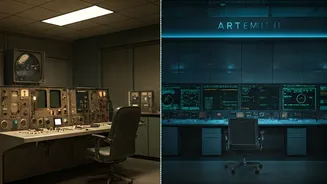
Comparing Mission Control then and now reveals a significant transformation. While the fundamental operations of managing spacecraft systems like propulsion and navigation have not changed, the physical environment and technological capabilities have. The Apollo era's mission control featured wooden desks and mainframe computers, a stark contrast to the modern setup. Today's control room boasts advanced technology, with three massive screens displaying vital flight data and live camera feeds from the spacecraft. A monitor prominently displays countdowns to crucial mission milestones, such as surpassing the Apollo 13 distance record, initiating the lunar flyby, and the final Pacific Ocean splashdown. The presence of dedicated 'Science' officers, a new addition since Apollo, underscores the enhanced focus on scientific objectives during lunar missions, collaborating directly with astronauts during their orbital passes.
Workplace and Tributes
Beyond the high-tech equipment, Mission Control is a functional workplace, filled with the everyday items of its dedicated staff: lunchboxes, water bottles, backpacks, and smartphones. This human element underscores the dedication and long hours put in by the teams. Adding a touch of warmth and remembrance to the sterile environment, a vase of roses graces the room's center. This tradition began after the Challenger disaster in 1986, with a couple in Houston sending over a hundred bouquets to commemorate space launches and honor the memory of fallen astronauts. These floral tributes serve as a poignant reminder of the risks involved and the profound sacrifices made in the pursuit of space exploration.
Evolving Infrastructure
The physical space of Mission Control has undergone a dramatic overhaul, moving from the utilitarian aesthetics of the Apollo era to a more modern and efficient design. Gone are the days of green metal mainframes, ashtrays, and rotary dial phones; they have been replaced by sleek workstations and advanced digital communication systems. This evolution reflects not only technological advancements but also changes in workplace culture and safety standards. The functional layout, now featuring individual desks for specific subsystems, allows for more focused attention on each critical component of the spacecraft's operation, enhancing overall mission management efficiency and responsiveness.