
Warm-up & Prep
Before diving into the exercises, it is essential to warm up your body. A proper warm-up prepares your muscles and joints for activity, reducing the risk
of injury. Start with a few minutes of light cardio, such as jogging in place or jumping jacks, to increase your heart rate and blood flow. Follow this with dynamic stretching, which involves movements that take your joints through their full range of motion. Examples include arm circles, leg swings, and torso twists. Dynamic stretches are superior to static stretches before exercise because they enhance muscle readiness. Focus on mobilizing all major muscle groups, including your shoulders, hips, and core, for a comprehensive preparation.
Classic Push-ups
Push-ups are a fundamental exercise that works multiple muscle groups simultaneously, making them an excellent choice for a full-body workout. To perform a push-up, begin in a plank position with your hands shoulder-width apart, your body forming a straight line from head to heels. Lower your body by bending your elbows until your chest nearly touches the floor. Maintain a straight back throughout the movement. Push back up to the starting position by extending your arms. Engage your core to stabilize your body and avoid sagging. If standard push-ups are too challenging, modify them by performing them on your knees. As you gain strength, you can progress to more challenging variations, like incline or decline push-ups, or even explosive push-ups to further stimulate muscle growth.
Effective Squats
Squats are crucial for lower-body strength and are also effective for boosting metabolism. Stand with your feet shoulder-width apart, toes pointing slightly outward. Keep your back straight, chest up, and core engaged. Lower your hips as if you are sitting in a chair, keeping your weight on your heels. Aim for your thighs to be parallel to the ground or as low as your flexibility allows. Make sure your knees track over your toes and don't extend past them. Push back up to the starting position by engaging your glutes and quads. Focus on controlling the descent and ascent to maximize the effectiveness of each repetition. If you're a beginner, start with bodyweight squats. As you get stronger, you can explore variations such as jump squats or adding weights to increase the difficulty.
Plank for Core
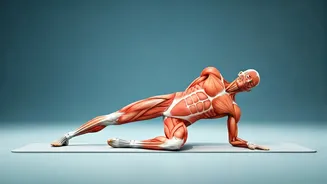
The plank is an exceptional exercise for strengthening your core muscles, which include your abdominal muscles and back muscles. Get into a push-up position, but instead of resting on your hands, support your body on your forearms, elbows directly beneath your shoulders. Your body should form a straight line from head to heels. Keep your core engaged and avoid arching your back or letting your hips sag. Hold this position for as long as you can maintain good form. Start with shorter holds and gradually increase the duration. Plank variations, such as side planks or plank with leg lifts, can challenge your core in diverse ways. Regular planking contributes to improved posture, balance, and overall core strength, critical for various movements and activities.
Lunges for Legs
Lunges are an incredible exercise that can enhance the strength and stability of your legs and glutes. Start by standing with your feet shoulder-width apart. Step forward with one leg, lowering your body until both knees are bent at a 90-degree angle. Ensure your front knee is over your ankle and your back knee hovers just above the ground. Your torso should remain upright throughout the movement. Push back up to the starting position using the front leg. Alternate legs for each repetition. Lunges can be modified, by adding weights or performing walking lunges to ramp up the intensity. Lunges are highly beneficial for improving balance and coordination, making them a well-rounded exercise for lower-body development. It promotes strength in the legs.