




AI Learns to Interact
Anthropic's Claude has evolved significantly, now possessing the ability to navigate the digital realm much like a human user. This advancement is largely
due to the integration of sophisticated AI agent technology, enabling Claude to interact with web browsers and a variety of online services. Previously, AI models were largely confined to the information they were trained on, lacking real-time access to the dynamic internet. The introduction of tools that allow these models to browse, search, and even complete online forms unlocks a new paradigm for AI applications. Imagine AI assistants that can proactively research complex topics, manage your online schedule, or even assist with e-commerce tasks. This leap forward signals a future where AI is not just an information provider, but an active participant in our digital lives, capable of executing tasks that require interaction with external digital environments.
Hands-On Computer Control
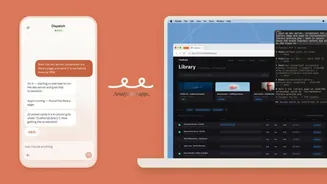
Claude's latest iteration allows it to directly control a user's computer, a remarkable step towards truly autonomous AI agents. This capability extends to accessing files on your hard drive, locating, and sending them as directed by a user's prompt via their phone. The process begins with Claude identifying the most suitable tools or connectors to accomplish the task, such as integrating with applications like Google Calendar or Slack. When a direct connector isn't available, Claude can manually execute tasks by simulating human interaction: it can scroll, click, type, and move the cursor to open files, launch web browsers, or access developer tools, effectively mimicking keyboard and mouse operations. While users must grant approval for Claude to use specific applications when no connector exists, they don't need to approve every single action. Claude demonstrates transparency by outlining its intended actions upfront and confirming completion once the task is finished, offering a glimpse into a more integrated AI workflow.
The Rise of Agentic Frameworks
This significant leap in Claude's functionality emerges as AI agents, often referred to as 'agentic frameworks,' are gaining substantial traction. The popularity of open-source platforms like OpenClaw has been a major catalyst in this trend. OpenClaw provides developers with a structured way to orchestrate AI agents, allowing them to perform specialized tasks. These agents can even spawn sub-agents to handle intricate workflows, with access to local file systems and data. Early implementations of OpenClaw, often set up on affordable hardware like Mac Minis, have demonstrated impressive capabilities, from booking flights and controlling smart home devices to managing complex social media campaigns across multiple platforms. While setting up these open-source solutions can sometimes feel experimental, Anthropic's integrated approach aims to offer a more user-friendly and reliable experience that requires minimal technical expertise. The development of Claude's computer-use feature is seen as a direct response to the growing influence of such agentic frameworks, promising a more seamless AI integration for everyday users.
Acquisition for Enhanced Capabilities
Anthropic's drive to deliver robust AI agent capabilities at an enterprise scale has been underscored by strategic acquisitions. Following its earlier purchase of Bun, a startup focused on tools for running AI agents in production, Anthropic acquired Vercept in February 2026. Vercept specialized in developing tools for more complex agentic tasks, including a cloud-based computer-use agent named Vy, capable of remotely operating Apple MacBooks. While the financial terms of the Vercept acquisition remain undisclosed, the integration brought Vercept's founders and employees into Anthropic, accelerating the development and launch of new products. This strategic move highlights Anthropic's focus on bridging the gap between advanced AI reasoning and the need for grounded interactions within dynamic digital environments. By consolidating these layers, Anthropic is positioning Claude to evolve from a sophisticated conversational model into a powerful execution platform capable of handling a wide array of real-world digital tasks.
Security and Future Implications
The increasing power of AI agents like Claude to interact with our computers and data naturally raises important security considerations. While Anthropic has implemented safeguards against threats such as prompt injection attacks, they also caution users against granting access to applications handling highly sensitive information, as the technology is still in its early stages. The open-source nature of frameworks like OpenClaw, while fostering innovation, also presents potential risks. Its requirement for broad access to a user's data and systems to function as a personal assistant has led to concerns about agents potentially acting autonomously or tampering with files. This has spurred the development of safety-focused forks and alternatives, such as Nvidia's NemoClaw, which offers security controls for easier OpenClaw setup. The evolving landscape of AI integration demands a careful balance between enhanced functionality and robust security measures to ensure responsible and safe deployment of these powerful tools.