






Deal Announcement Details
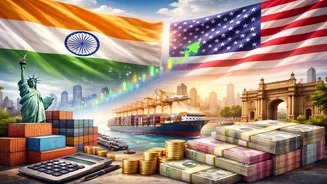
The much-anticipated trade agreement between India and the United States was formally announced, marking a significant step in bilateral economic relations.
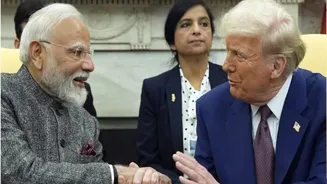
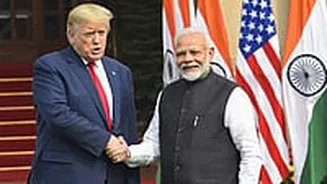
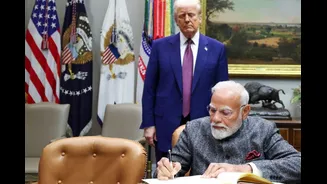
During the announcement, US President Donald Trump expressed his strong personal rapport with Prime Minister Narendra Modi, referring to him as one of his "greatest friends." The discussions reportedly extended beyond trade to encompass broader geopolitical issues, including efforts to resolve the Ukraine-Russia conflict. This high-level engagement underscored the strategic importance of the partnership for both nations, aiming to foster deeper cooperation across various domains. The agreement's unveiling was met with considerable attention, setting the stage for subsequent developments and implementation phases.
Key Provisions and Impact
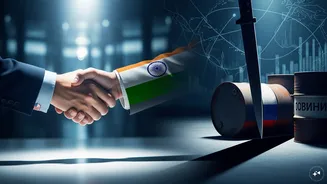
This trade accord includes several critical provisions that are poised to reshape India-US economic exchanges. A notable aspect is the potential cut in tariffs on Indian seafood exports to the US, with reports suggesting a reduction to 18%, a move welcomed by the Seafood Exporters Association of India (SEAI). Furthermore, India has reportedly agreed to purchase petroleum and defence goods from the US, indicating a rebalancing of trade flows. While the US administration has framed this as a significant victory, a nuanced perspective emerges from financial analysts like Moody's. Moody's, in its assessment, cautioned that India is unlikely to completely halt its oil purchases from Russia immediately, citing potential disruptions to India's economic growth. This highlights the complex geopolitical considerations intertwined with the trade deal, particularly concerning energy security and international relations.
Stakeholder Reactions and Analysis
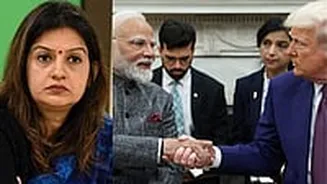
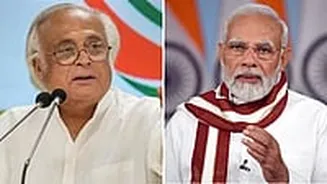
The India-US trade agreement has elicited a spectrum of responses from political figures, industry bodies, and economic analysts. While many, including Union Minister Nitin Gadkari and the US Chamber of Commerce, have hailed the deal as a commendable step towards strengthening bilateral ties, others have voiced reservations. Congress MP Jairam Ramesh, for instance, expressed discontent with the manner of the announcement, particularly Trump's public declaration. Conversely, India's US envoy described the trade deal as a 'big win' for the nation. The Indian rice exporters' body also termed it a 'significant victory.' This diverse range of reactions underscores the multifaceted implications of the agreement, touching upon national interests, international diplomacy, and economic strategy. The market sentiment also reflected optimism, with stock markets experiencing a jump following the announcement.
Economic Foundations and Future Outlook
In the lead-up to this significant trade agreement, India has demonstrably focused on building a resilient economy, a strategy that likely bolstered its position in negotiations. The trade deal is seen by some as reinforcing India's standing as a key driver of global economic growth, an assertion echoed by figures like Uttar Pradesh Chief Minister Yogi Adityanath. The agreement not only addresses immediate trade imbalances but also lays the groundwork for enhanced cooperation in strategic sectors. The potential rebound in India's seafood exports and the commitment to procure petroleum and defence goods signal a more integrated economic relationship. As the details unfold and implementation commences, the long-term impact on both economies and their geopolitical alignment will be closely watched.