







Bridging Biology and Computation
Current artificial intelligence (AI) systems, particularly neural networks, are remarkably power-hungry, demanding approximately one million times more
energy than the human brain. This stark inefficiency poses a significant challenge as AI technology continues its rapid advancement. Researchers are therefore exploring innovative avenues to bridge the gap between biological intelligence and computational power. One promising frontier involves integrating living brain cells with programmable electronic systems, aiming to harness the inherent efficiency and complexity of biological networks. Previous attempts to utilize live neurons in computing faced considerable hurdles. Early 2D neural cultures exhibited unnatural interactions and gene expression patterns, limiting their longevity and ability to mimic in vivo brain activity. More sophisticated in vitro networks, such as brain organoids derived from stem cells, have shown some progress but suffer from inconsistencies and vulnerabilities to issues like hypoxia and necrosis. These limitations highlight the need for a more robust and stable platform for biological computation.
The 3D Polymer Scaffold Innovation
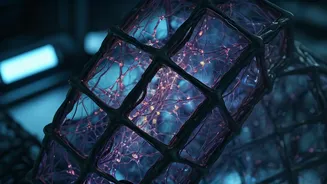
A groundbreaking approach to biological neural networks (BNNs) involves the creation of advanced 3D scaffolds. These structures are designed to meticulously reconstruct the brain's intricate neural networks in a reproducible and durable manner. The goal is to achieve both dense and sparse neural connections, mirroring the brain's own architecture to manage data flow effectively and prevent overload. Researchers at Princeton University, including Tian-Ming Fu, James Sturm, and Kumar Mritunjay, have developed a novel solution using electrodes and microscopic metal wires. They constructed a flexible 3D polymer mesh scaffold, capable of supporting tens of thousands of living neurons. This innovative design allows neurons to grow and form a functional network while operating with exceptionally low energy requirements. This fusion of biology and machinery represents a significant leap forward in the quest for more efficient computing.
3D-MIND: A New Era
The development of the 3D-MIND (3D Micro-Instrumented Neural network Device) emerged from a desire to understand brain function more deeply, but quickly revealed its potential as a powerful biological neural network. Drawing inspiration from origami, the initial design was two-dimensional, embedding precise electronic components equivalent to a neuron's function before being folded into a three-dimensional layered structure. Subsequently, living neurons were integrated into this system. While human neurons have not yet been used, rat neurons, specifically from the hippocampus—a region crucial for learning and memory—were cultured on this advanced scaffold. This intricate device was then enveloped in a thin gel coating. This protective and functional layer incorporated proteins that actively support neurons in establishing robust connections. It also included glial cells, which are vital for holding neural structures together, supplying essential nutrients, performing immune functions, regulating the chemical environment, and providing the myelin sheath for insulation, ensuring clear signaling pathways.
Neuron Growth and Communication
Within the 3D-MIND scaffold, researchers observed a remarkable phenomenon: neurons naturally oriented themselves and established connections in a three-dimensional orientation. These biological components remained stable, allowing for extended periods of observation and tracking. The team successfully documented the growth and development of the neural network. Crucially, they were able to record action potentials, which are the electrical impulses that neurons use to communicate with each other. This observation confirms the viability of the scaffold in supporting functional neural activity. While acknowledging the significant challenges in scaling this system to larger capacities, the researchers are optimistic about its potential. The energy efficiency demonstrated by these biological neural networks far surpasses that of current, energy-intensive AI systems, offering a compelling glimpse into a more sustainable future for advanced computation.