



Marvel at Mendenhall Glacier
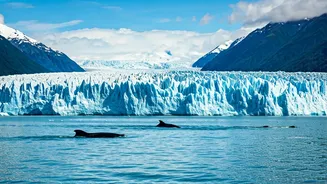
No journey to Juneau is complete without experiencing the awe-inspiring Mendenhall Glacier, a magnificent ice formation just a short drive from the city
center. Accessible year-round, this colossal glacier offers multiple vantage points for visitors. The dedicated visitor center provides insightful exhibits on glaciology, while various hiking trails, such as the Photo Point Trail and Steep Creek Trail, allow for closer exploration. For a truly immersive experience, consider a guided glacier trek, which can span a full day of moderate to strenuous activity, or opt for a canoe trip across Mendenhall Lake to witness the glacier's face up close. Between July and September, you might even spot salmon spawning and bears foraging near the viewing decks. Accessible via public bus for a budget-friendly option, though a short walk is required to reach the visitor center.
Immerse in Downtown Culture
Spend a day exploring Juneau's vibrant downtown, easily navigable on foot from the waterfront. Begin at the Sealaska Heritage Institute to gain insight into the rich Tlingit, Haida, and Tsimshian cultures, distinguished by prominent totem poles and carved entrance panels. Delve further into the city's heritage at the Alaska State Capitol, the Juneau-Douglas City Museum, and the historic St. Nicholas Russian Orthodox Church, a testament to Alaska's Russian past. For a taste of local flavors, indulge in fresh king crab and crab bisque at Tracy's King Crab Shack, or savor exceptional halibut dishes at The Hanger on the Wharf. Tour operators are readily available at the cruise ship terminal, offering a convenient hub for booking whale watching, salmon fishing, and bear viewing excursions.
Soar Above the Icefield
Witness the grandeur of the Juneau Icefield, a vast expanse of shimmering ice covering 1,500 square miles and feeding the Mendenhall Glacier. As the fifth-largest icefield in the Northern Hemisphere, it comprises over 30 individual glaciers. The most breathtaking way to appreciate its scale is through a helicopter tour, which often includes landings on the icy rivers of ice. These exhilarating trips can be combined with activities like ice climbing, icefield treks, or even excursions to the dramatic Tracy Arm Fjord. It's advisable to build flexibility into your travel plans due to Alaska's unpredictable weather, which can necessitate rescheduling. Booking in advance is recommended for this unique aerial perspective.
Explore Tongass Forest
Venture into the Tongass National Forest, the largest national forest in the United States, encompassing the majority of the Alexander Archipelago's islands and mainland sections. This region boasts the world's largest temperate rainforest, teeming with Sitka spruce, western hemlock, and red cedar, alongside wetlands, ice sheets, and alpine terrain. For a rustic experience, consider staying in one of the 150 off-grid cabins, many accessible only by boat or floatplane, or utilize one of the 13 campgrounds, four of which are free to use. Numerous operators offer boat, plane, and hiking tours into the forest, and resources are available for information on recreation areas, permits, and safety advice, particularly regarding bear encounters.
Embark on Whale Watching
The Gulf of Alaska is a prime location for observing marine wildlife, with humpback whales, orcas, and seals frequently spotted. Between April and September, the chances of seeing these magnificent creatures, especially humpback whales and orcas, are high. Many Inside Passage cruises offer opportunities to view them from the ship's deck. Alternatively, numerous companies along the Juneau waterfront offer dedicated whale-watching tours aboard single or double-decker boats, providing closer encounters and ample time for photography. These excursions typically last 3 to 4 hours, so it's essential to wear warm, waterproof clothing. Opt for tour operators who adhere to ethical wildlife-watching guidelines to ensure responsible viewing practices.
Ascend Mount Roberts
A short walk from the cruise ship docks leads to the Mount Roberts Goldbelt Tram, which transports visitors from sea level to an elevation of approximately 1,800 feet. From the summit, panoramic views unfold, encompassing the Gastineau Channel, Douglas Island, and distant mountain ranges. For the active traveler, a network of hiking trails awaits, including the popular short hike to Father Brown's Cross and more challenging ascents to Mount Gastineau and the summit of Mount Roberts. After your exploration, enjoy refreshments with exceptional harbor views at the Skybridge Cafe. While the tram offers convenience and stunning vistas, it comes at a cost, with day passes available for unlimited rides. For those preferring to hike, the Mount Roberts Trail offers an alternative ascent.
Trek Juneau's Trails
Juneau boasts an impressive array of hiking trails suitable for various skill levels, with many starting near the city center or further north "out the road." Proper weather-appropriate attire and bear awareness are essential for all hikes. The 3-mile Perseverance Trail is highly recommended, linking historical mining sites and providing access to the Mount Juneau Trail and Granite Creek Trail for those seeking more challenging routes and the chance to spot wildlife like mountain goats and bears. For a moderate outing, the 5-mile Herbert Glacier Trail offers easy terrain for the initial 3.5 miles, also suitable for mountain biking. The Amalga Trail, or Eagle Glacier Trail, is a nearly level 7.5-mile path to Eagle Glacier, requiring a full day for a round trip. Booking USFS cabins in advance is crucial for multi-day trips, especially during peak season.
Spot Bears at Admiralty Island
Admiralty Island, particularly its extensive tidal flats, becomes a prime location for observing brown bears during July and August, drawn by the abundant salmon runs. This makes it one of Alaska's premier bear-watching destinations. Access is typically via floatplane from Juneau, where visitors are briefed by a ranger on wildlife viewing protocols before embarking on a short hike to an observation tower overlooking the creek frequented by bears. While all-inclusive guided trips are available, individuals can also arrange their own permits through the U.S. Forest Service and charter a floatplane independently to manage costs. Planning ahead is essential for securing permits and flights.
Experience Glacier Flightseeing
Combine glacier viewing, salmon bakes, and aerial exploration with a "flightseeing" tour over Juneau's dramatic landscapes. Local floatplane companies offer excursions in de Havilland Otter aircraft, flying over numerous glaciers to reach remote lodges where visitors can enjoy wild salmon meals. These trips are popular additions to cruise ship itineraries, meaning you may share the experience with others. It is crucial to check weather conditions before booking, as clear skies are essential for appreciating the stunning glacial vistas. Sign-ups for these unforgettable aerial adventures are typically available at offices located on Juneau's waterfront.
Unearth Mining History
Explore the remnants of Juneau's gold mining past, notably the Treadwell Mine, once the world's largest gold mine, which eventually succumbed to the sea in 1917. Today, a well-marked historical trail south of the Douglas Bridge, near Savikko Park, reveals spooky traces of this abandoned mining town. Within walking distance of downtown, the Juneau-Douglas City Museum provides insights into the Alaska-Juneau Gold Mining Company, showcasing artifacts, the remains of its compressor house, and a recreated mining tunnel. A 3D glass map vividly illustrates the immense scale of the former operation. Visiting the Mining Museum and combining it with a hike to other mining ruins offers a comprehensive afternoon of historical exploration.
Discover Alaska State Museum
The Alaska State Museum offers an extensive collection dedicated to Alaska Native cultures and the state's compelling history. Exhibits detail the Russian colonial period, the transfer of Alaska to the United States in 1867, and the excitement of the Gold Rush era. The museum also addresses the complex legacy of American missionary efforts, including boarding schools, and the subsequent fight for civil rights by Indigenous Alaskans. Furthermore, it features displays on Alaskan shipwrecks, Japan's WWII invasion of the Aleutian Islands, and key modern industries like fishing and petroleum extraction. Visitors are encouraged to look closely at all displays, including those with drawers, to uncover hidden historical treasures.