






Fueling the Future
A significant advancement in sustainable energy has been unveiled at the team's facility in Faenza, Italy. This new cogeneration Fuel Cell plant represents
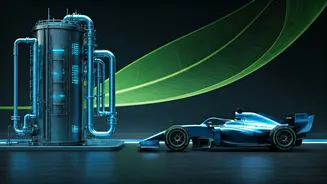
a major stride towards eco-friendly operations within the racing world. Situated within a sprawling 14,500 square meter "Green Energy Park," the facility is strategically located next to the team's main headquarters. The project was a collaborative effort with a key supplier, meticulously aligning with the environmental goals set forth by Formula 1 and the FIA. At its core, the installation utilizes a Solid Oxide Fuel Cell system, designed to run exclusively on certified biomethane obtained from regional sources. This system is further enhanced by an integrated photovoltaic setup, creating a completely self-sufficient energy network for the entire Faenza site. The team anticipates this innovative Fuel Cell will generate approximately 4.6 GWh of electricity annually, entirely free of carbon emissions. Furthermore, the heat generated by the process is fully utilized to meet the site's heating demands, eliminating the need for external heating sources. The plant's water-free operation also contributes to a reduced consumption of resources and a lower overall environmental impact. Its design prioritizes minimizing emissions and eliminating noise pollution, establishing a new internal standard for energy efficiency across the organization.
Energy Autonomy Achieved
The pursuit of true energy independence and a minimized environmental impact has reached a new height with this state-of-the-art facility. The director of Facility Management and HSE expressed immense pride in the team's commitment to reducing its operational carbon footprint. This achievement is largely thanks to robust partnerships forged with local suppliers. These collaborations not only help cut down on emissions but also serve as catalysts for innovation and economic growth within the surrounding community. By actively seeking out synergies with the local area, the team is cultivating development in specialized skills and fostering mutually beneficial partnerships. This approach ensures that advancements in sustainability contribute positively to everyone involved, creating a ripple effect of progress. This strategic integration with local resources and expertise underscores a holistic strategy for achieving both operational excellence and environmental stewardship, setting a compelling example for the industry.
Engineering for Progress
The inauguration of this advanced plant is deeply rooted in a long-standing tradition of engineering excellence and a forward-thinking vision. Representatives from the collaborating company highlighted their founding mission, established decades ago, which was centered on applying sophisticated engineering to drive progress. This new project, exactly one year after the commencement of their partnership with the racing team, marks a pivotal moment, seamlessly projecting that same dedication into the realm of future sustainability. The NOVA SOLUTION plant, developed by Cefla, is now fully operational and integrated, a testament to their engineering prowess. It represents a proud addition to a history rich with significant accomplishments, now enhanced by a new chapter where Italian technological innovation provides energy self-sufficiency to a highly respected partner. This collaboration underscores the power of combining heritage with innovation to address contemporary challenges, particularly in the critical area of sustainable energy solutions for demanding applications.
Local Collaboration, Global Impact
This cutting-edge Fuel Cell plant stands as a powerful demonstration of what can be accomplished when advanced technology meets a profound commitment to environmental responsibility. The facility is a unique offering in the current market, featuring 550 kW of fuel cell capacity that is directly powered by biomethane produced at a nearby facility. This direct utilization of locally sourced biomethane ensures zero emissions are released into the environment during the energy generation process. Beyond its technological distinctiveness, the plant serves as an exemplary model of how local entities can effectively collaborate to achieve significant environmental goals. The involved companies express immense pride in actively contributing to such impactful projects, showcasing a local network united for a sustainable future. This initiative not only pushes the boundaries of what's technically feasible but also cultivates a spirit of shared responsibility and collective action among regional businesses and organizations.