






Physical Appearance Nuances
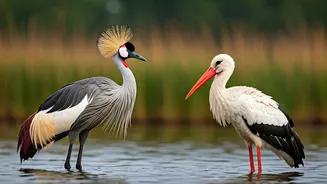
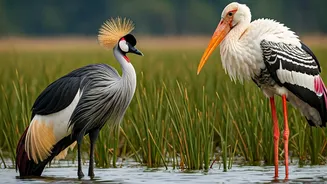
While both cranes and storks possess that iconic long-legged, long-necked silhouette, a closer look reveals key physical disparities. Cranes tend to present
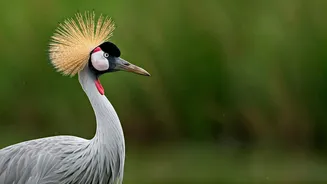
a more slender physique, characterized by their necks held straight and extended, both when standing and in flight. In contrast, storks often appear more robust, featuring heavier builds and bills that are longer and more substantial. A notable difference lies in their heads; cranes frequently display patches of bare red skin or a distinct crown, whereas storks typically have fully feathered heads. Although both stand tall on elongated legs, cranes exude an air of elegance, while storks project a sturdier presence. The way they hold their necks at rest further accentuates this divergence: cranes maintain a straighter posture, while storks are more inclined to curve theirs inwards.
Size and Wingspan Distinctions
The aerial presence of cranes and storks can also be a giveaway, particularly concerning their size and wingspan. Cranes generally boast a more impressive wingspan, ranging from a substantial 5.5 to over 8 feet, with species like the Sarus crane ranking among the tallest avian flyers. Storks typically have wingspans between 5 and 7.5 feet, although some, like the Marabou stork, can rival certain crane species in sheer breadth. Visually, cranes often seem to hold themselves with a more upright poise, giving the impression of greater height. Storks, on the other hand, appear more heavily built. While size naturally varies across different species within each group, cranes generally have the advantage in height, often making them appear as if they are towering over their counterparts in open fields.
Behavioral Contrasts Unveiled
The social interactions and vocalizations of cranes and storks offer a fascinating contrast. Cranes are known for their elaborate courtship rituals, which involve intricate dances featuring bows, jumps, and the tossing of small objects, often performed as a lifelong pair bond is established. Their communication is also striking, as they engage in loud duets, their trumpeting calls echoing across distances. Storks, by comparison, are considerably quieter birds. Instead of vocalizations, they rely on bill-clattering as a primary form of communication. Furthermore, cranes are more gregarious, often flocking in large numbers during migration. Storks, conversely, tend to forage individually or in smaller, less organized groups. While cranes express a more flamboyant, passionate approach to bonding and communication, storks often exhibit a more pragmatic focus on hunting and sustenance.
Flight Patterns and Dietary Habits
Observing how these birds navigate the skies and what they consume further highlights their unique characteristics. Cranes typically fly with a steady wingbeat, often forming distinct V-formations, their necks held straight ahead as they emit their characteristic trumpeting calls mid-flight. Storks, in contrast, are masters of soaring, riding thermal currents effortlessly and gliding silently through the air with a more buoyant motion. Their diets also diverge significantly: cranes have a varied diet that includes seeds, roots, insects, and amphibians like frogs. Storks, however, are more carnivorous, primarily preying on fish, reptiles, and small mammals caught in shallow waters. Some species are also known to scavenge when opportunities arise, demonstrating a more opportunistic approach to feeding.
Nesting Strategies Explored
The choices cranes and storks make when it comes to building their homes reveal distinct priorities and strategies. Cranes generally opt for ground-nesting in wetland environments, carefully constructing their nests within marshes or reeds. They typically lay one to two eggs, and both parents participate actively in guarding their clutch fiercely. Storks, on the other hand, favor elevated nesting sites. They build substantial, often enormous, nests in trees, on cliffs, or even on human-made structures like rooftops. These nests are frequently reused and expanded upon over years, sometimes reaching impressive sizes and weights. Storks usually lay between two and five eggs. This preference for height offers them a measure of safety, while cranes, choosing to stay low to the ground, rely on their vigilance and vocalizations for defense. Cranes are bold defenders of their low-lying territories, whereas storks secure their broods in lofty, protected locations.